
Dense Mega-Earth GJ 523b Defies Conventional Planet Formation
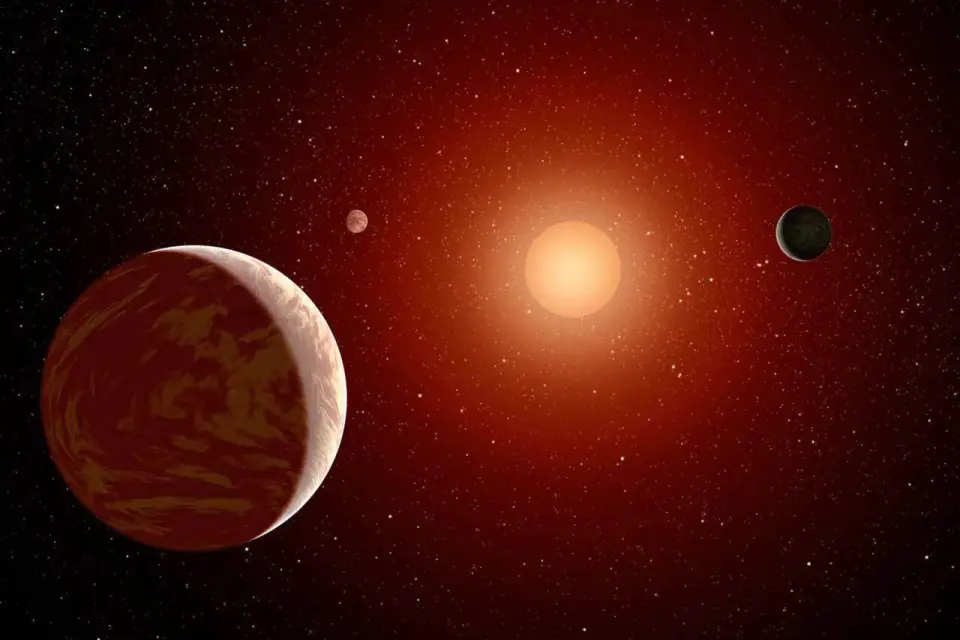
TL;DR
Astronomers confirm GJ 523b, a rock-dominated mega-Earth about 23 Earth masses and 2.5 Earth radii in a 170-million-year-old system, orbiting its star every 17.75 days. Its extreme density and thin atmosphere challenge standard models that would normally push such a core to become a gas giant, prompting theories like atmospheric stripping from stellar heat or a head-on collision of rocky protoplanets. This discovery provides a rare glimpse into how ultra-dense worlds form and evolve.
- NASA’s newest planet discovery is unlike anything seen before geekspin
- Astronomers discover a giant, rocky 'mega-Earth' 23 times more massive than our planet Space
- New 'mega-Earth' found in space. What did astronomers discover? Detroit Free Press
- Researchers identify ‘Mega-Earth,’ prompting questions of how it formed NewsNation
- Mega-Earth GJ 523b is 23 times as massive as our planet—but only 2.5 times as wide Phys.org
Want the full story? Read the original reporting
Read on geekspin