
ESA hunts life clues in Martian clay with Rosalind Franklin rover
TL;DR
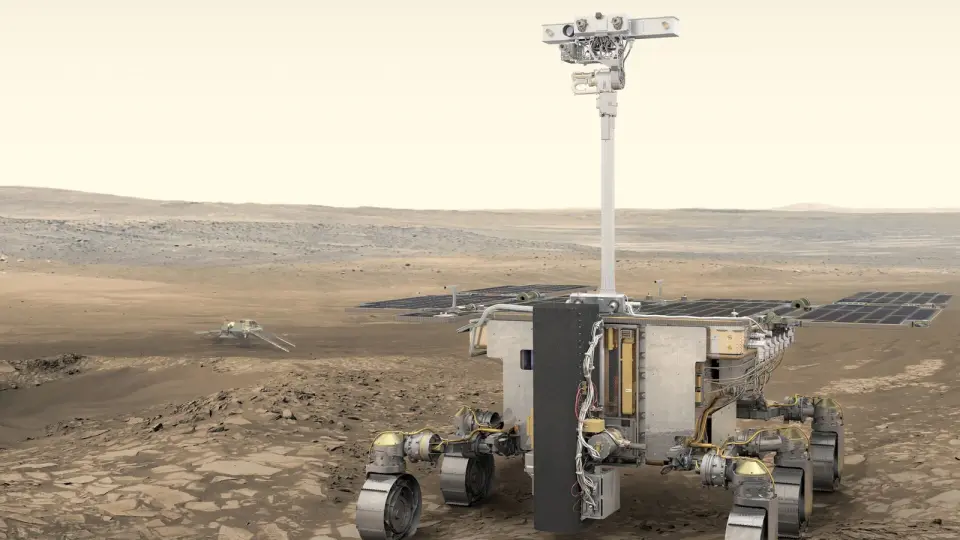
Europe’s ESA plans to send the Rosalind Franklin rover to Mars, targeting Oxia Planum where orbiters have detected extensive clay deposits that could record a watery past; the rover will drill beneath the surface to search for signs of ancient life, with the clay-rich region possibly extending toward Mawrth Vallis as part of the ExoMars mission slated for a 2028 launch.
- Could evidence of life on Mars be hiding in clay? Europe wants to send a rover to check Space
- In a 3.5-billion-year-old clay-rich rock from Gale Crater, NASA’s Curiosity rover identified 21 carbon-based molecules — including a nitrogen-bearing ring structure linked to the chemistry that can precede RNA and DNA — showing that ancient Martian sedime Space Daily
- A martian rock has lots of carbon on it, and it’s not clear why Ars Technica
- NASA rover takes a closer look at organic carbon on Mars Reuters
- ESA equips Rosalind Franklin rover to detect chiral biosignatures on Mars Межа. Новини України.
Want the full story? Read the original reporting
Read on Space