
Hubble’s Slews Without Fuel: Wheels and Earth’s Field Do the Pointing
TL;DR Summary
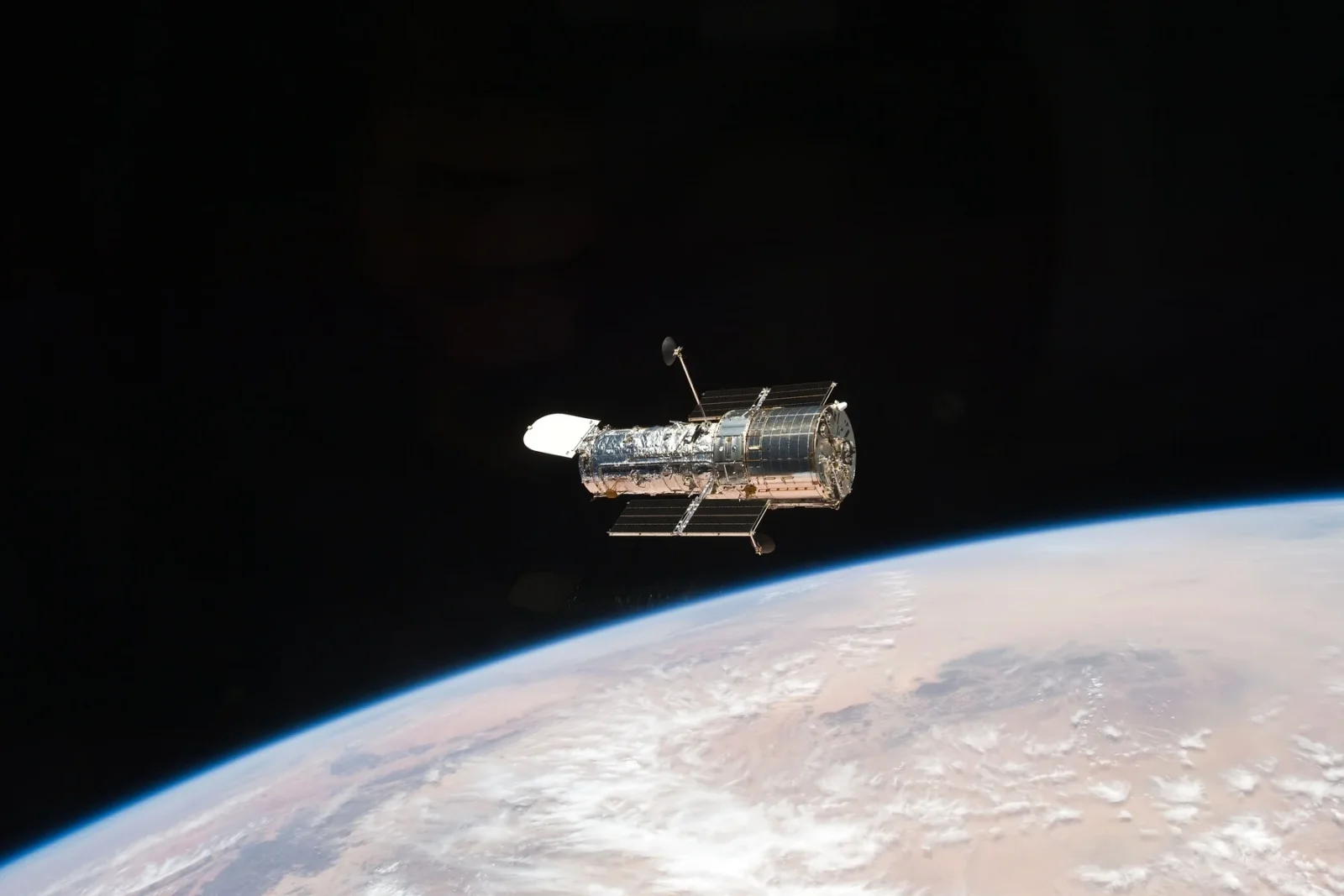
Hubble steers by trading angular momentum among four internal reaction wheels and using magnetic torquer bars to transfer excess momentum to Earth’s magnetic field, a propellant-free attitude-control method that avoids contamination. The system provides three-axis redundancy, and slews are deliberately slow (about 14 minutes for a 90-degree turn) to ensure accuracy, with gyros sensing motion and wheels applying the torque. Magnetic unloading replaces thrusters (which would eject exhaust), keeping the telescope stable for observations; servicing has allowed extensions, but the platform cannot raise its orbit on its own.
Topics:science#attitude-control#hubble-space-telescope#magnetic-torquer-bars#momentum-desaturation#reaction-wheels#space
Reading Insights
Total Reads
0
Unique Readers
4
Time Saved
13 min
vs 14 min read
Condensed
97%
2,677 → 88 words
Want the full story? Read the original article
Read on Space Daily