Tag

Attitude Control

All articles tagged with #attitude control

Software patch steadies LINK as it closes in on NASA's Swift
space16 days ago

Software patch steadies LINK as it closes in on NASA's Swift

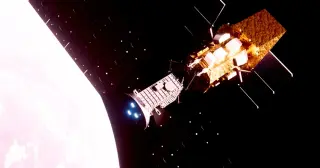
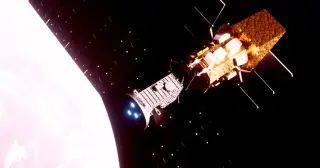
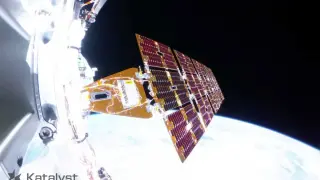
LINK's two failed reaction wheels caused a tumble during its mission to rescue NASA's Swift Observatory. Engineers uploaded a flight software update to stabilize LINK's attitude control and enable the planned burns to raise Swift's orbit, extending the observatory's life. Swift, launched in 2004, currently sits about 216 miles up and faces a roughly 50% chance of uncontrolled reentry by mid-2026.

Katalyst Space edges toward Swift boost after attitude-control recovery
technology19 days ago

Katalyst Space edges toward Swift boost after attitude-control recovery

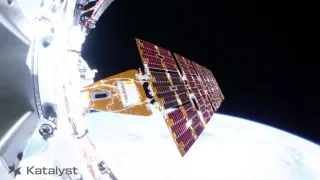
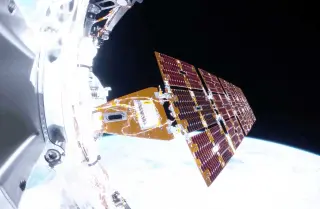
Katalyst Space Technologies reports progress in stabilizing its Link servicing spacecraft after a post-launch spin problem, slowing rotation from about 9 degrees per second to 1.47 deg/s with a thruster and conserving propellant, with a major flight software update planned to regain attitude control and set up a grapple with NASA’s Swift Observatory to raise its decaying orbit before Swift deorbits later this year.

LINK Battles Spin as NASA Tries to Save Swift Observatory
science1 month ago

LINK Battles Spin as NASA Tries to Save Swift Observatory

NASA's LINK spacecraft, built to dock with and tug the Swift Observatory into a higher orbit, is having attitude-control problems and is spinning, disrupting communications. Two of its three reaction wheels are nonfunctional and its cold-gas thrusters have degraded, but ground teams plan to use electric propulsion to stop the spin and reestablish guidance so a rendezvous with Swift can be reassessed; the mission remains active as Swift continues to decay due to increased atmospheric drag from solar activity.

NASA’s Swift Rescue Dives Into Crisis as Space Tug Loses Control
space-and-astronomy1 month ago

NASA’s Swift Rescue Dives Into Crisis as Space Tug Loses Control

NASA’s risky plan to rescue its aging Swift gamma-ray observatory with the LINK space tug is unraveling after LINK begins tumbling, with preliminary findings showing two of its three reaction wheels are inoperable and its cold‑gas thruster system degraded. Ground teams can still communicate with Swift, but engineers must halt LINK’s spin before reassessing next steps; the mission cost was about $30 million, and time is running out as Swift could re-enter the Earth’s atmosphere in the coming months.

NASA’s Swift Rescue Plan Spirals Into Trouble
space1 month ago

NASA’s Swift Rescue Plan Spirals Into Trouble

NASA’s high‑risk plan to save the aging Swift gamma‑ray observatory with a space tug called LINK has hit a snag: LINK began tumbling after launch due to two failed reaction wheels and partial thruster loss, leaving ground teams scrambling to regain attitude control and maintain communications. If unresolved, Swift’s orbit could decay and it may burn up in coming months, despite the $30 million mission being pursued as a bold but valuable test.

Reaction wheel woes push Swift rescue mission into a spin
space1 month ago

Reaction wheel woes push Swift rescue mission into a spin

NASA and Katalyst’s Link rescue satellite are grappling with attitude-control problems after launch, with two of Link’s three reaction wheels inoperable and partial loss of its cold gas thruster, causing the craft to spin and suffer intermittent communications. Engineers are repurposing the electric thrusters to stabilize Link’s attitude and plan revised rendezvous with NASA’s Swift gamma-ray observatory to extend its life and test commercial satellite servicing, a high-stakes tech demonstration that aims to prevent Swift’s reentry.

Voyager 1's 37-Year Dormant Thrusters Fire Again to Preserve Link to Earth
space1 month ago

Voyager 1's 37-Year Dormant Thrusters Fire Again to Preserve Link to Earth

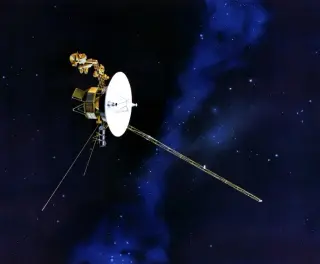
NASA’s Voyager 1 kept its interstellar link alive by reviving a back-up attitude-control thruster set that hadn’t been used since 1980, a 37-year restart that let the antenna stay pointed at Earth and continue transmitting despite the aging energy supply from its RTGs, which are fading by roughly four watts per year. The operation underscores the careful power budgeting, redundancy, and disciplined planning needed in deep-space maintenance, with 2025 thruster restorations and 2024 communications glitches illustrating that continuity—not perpetual hardware—keeps these probes alive.

Dormant thrusters awaken: Voyager 1’s 37-year silence ends to keep Earth in touch
space1 month ago

Dormant thrusters awaken: Voyager 1’s 37-year silence ends to keep Earth in touch

NASA’s Jet Propulsion Laboratory revived four attitude-control hydrazine thrusters on Voyager 1 in 2017 after they had been idle since 1980, firing 10-millisecond pulses at a distance of about 21 billion kilometers to keep the spacecraft’s dish pointed at Earth. The 19-hour-35-minute signal lag meant there was no real-time control, so engineers reconstructed the dormant branch’s behavior from old records and code and used a spare trajectory-correction thruster set. The test, enabled by hardware redundancy, extended the probe’s life by a few years as power and aging continue to challenge the mission, underscoring how careful engineering and cross-generational knowledge keep deep-space hardware operational.