
JWST Discovers a Planet’s ‘Second Life’ Around a White Dwarf
TL;DR
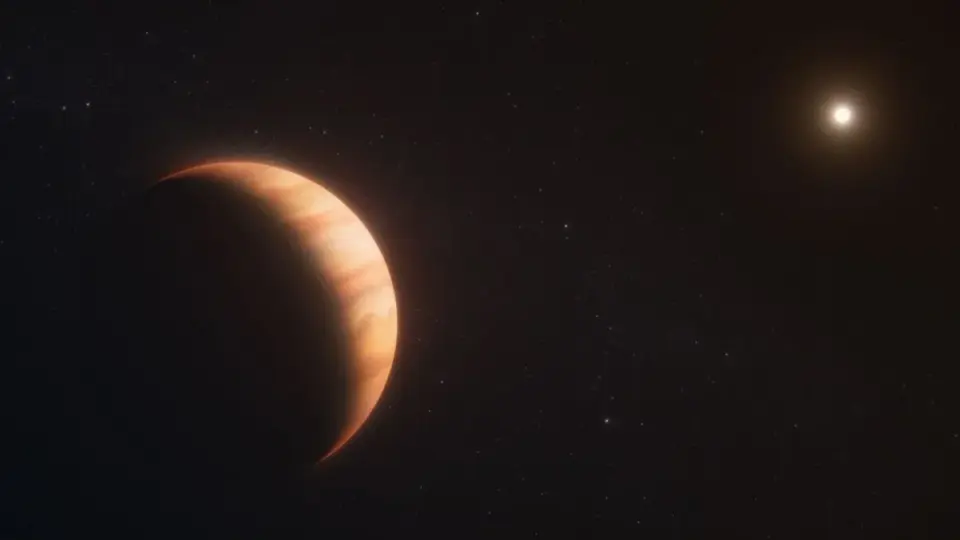
Using JWST, scientists observed WD 1856b, a giant planet about 82 light-years away that orbits a white dwarf, finding its atmosphere and surprisingly high temperature (~126 C) and mass (~7 Jupiter masses). The system features the deepest known exoplanet transit (56%), and the results suggest a “second life” for giant planets after their star dies—potentially heated by a nearby binary—and open a new field of post-main-sequence planetary atmospheres, while the idea of a rocky planet in a white-dwarf habitable zone remains speculative.
- Scientists Just Found a Planet That Got a Second Life After Its Star Died ScienceAlert
- Aerosols and hydrocarbons in the atmosphere of a white dwarf planet Nature
- Webb studies how a planet survived the death of its star European Space Agency
- NASA’s Webb Studies How Planet Survived Death of its Star NASA Science (.gov)
- How a giant planet survived its star's death, then migrated inward Phys.org
Want the full story? Read the original reporting
Read on ScienceAlert