
Lucy’s Close Encounter Reveals a Water-Rich Fragment from a Violent Ancient Collision
TL;DR
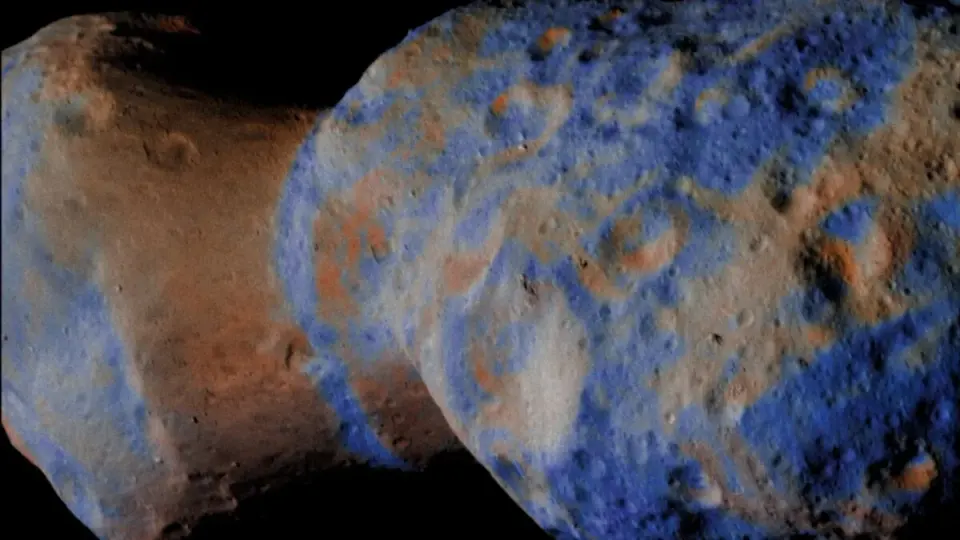
NASA’s Lucy spacecraft captured Donaldjohanson during a 2025 flyby, revealing a peanut-shaped, cratered asteroid about 8 km by 3.5 km that likely formed when a 80 km parent body shattered ~155 million years ago, placing it in the Erigone family. Its two-lobed shape, crater pattern, and recent surface-reset hints (smaller craters erased) support a violent origin with seismic reshaping, while iron-bearing phyllosilicates indicate past liquid water. The findings help constrain how near-Earth asteroids and the solar system evolved, and Lucy heads to the Trojan asteroids in 2027.
Topics:sciencespace#donaldjohanson#erigone-family#lucy-mission#phyllosilicates#space#two-lobed-asteroid#water-evidence
Want the full story? Read the original reporting
Read on Gizmodo