
NASA's ERNEST Rover Proves Agile Autonomy for Future Moon Missions
TL;DR
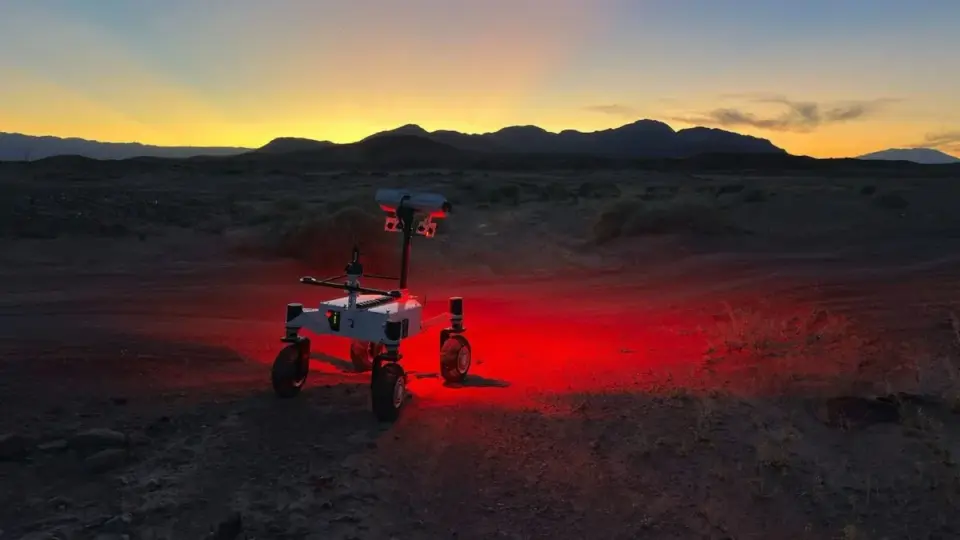
NASA's Jet Propulsion Laboratory is field-testing ERNEST, a compact autonomous rover designed to move faster across rugged terrain for future Moon and Mars missions. In a desert trial, ERNEST reached up to 0.6 mph and covered about 16 miles over roughly 37 hours, using mesh-wheeled propulsion, four steerable wheels, and two powered front joints to switch among gaits like squirming, wheel-walking, and obstacle-climbing. Trained with reinforcement learning, the rover can navigate autonomously and even drive sideways, aiming to reach previously inaccessible regions on upcoming missions.
- Meet ERNEST, NASA’s Next-Generation Rover Designed to Be Faster and Tougher Gizmodo
- NASA Testing Advanced Capabilities for Moon, Mars Rovers NASA Jet Propulsion Laboratory (JPL) (.gov)
- NASA’s new prototype rover navigates 16-miles in extreme terrain Interesting Engineering
- NASA Advances Planetary Rover Technology with ERNEST Prototype eurekamagazine.co.uk
- NASA’s ERNEST Rover Drove 16 Miles Alone in the Desert Gadget Review
Want the full story? Read the original reporting
Read on Gizmodo