Tag

Jpl

All articles tagged with #jpl

NASA opens JPL to new management, inviting bids to replace Caltech after 70 years
space12 minutes ago

NASA opens JPL to new management, inviting bids to replace Caltech after 70 years

NASA announced it will solicit bids to operate the Jet Propulsion Laboratory when Caltech's 68-year management contract ends in 2028, marking the biggest leadership shakeup in JPL's history. As a federally funded R&D center, JPL has faced cost pressures amid a booming private space sector, and NASA seeks a cheaper operator—potential bidders include Boeing, Lockheed Martin, and universities such as Caltech. The change could preserve JPL's robotic-mission legacy while shifting efficiency and work culture, though funding and missions remain controlled by Congress and NASA HQ.

JPL Contract Up for Bid as NASA Signals a Reboot of Its Space Lab
space2 days ago

JPL Contract Up for Bid as NASA Signals a Reboot of Its Space Lab

NASA will competitively bid the management and operation of the Jet Propulsion Laboratory (JPL), the Caltech-run lab that has operated under a long-standing arrangement since 1958. The move, tied to NASA’s broader realignment and focus on faster, more cost-conscious delivery, could test whether JPL’s distinctive culture and staff can survive a change in operator—or require NASA to remake parts of its own space enterprise. The contract, currently valued at up to $30 billion and slated to run through Sept. 30, 2028, marks more than routine procurement by examining how much continuity of culture, incentives, and mission focus would endure under new leadership.

NASA opens JPL management to bids, forcing Caltech to compete for control
space3 days ago

NASA opens JPL management to bids, forcing Caltech to compete for control

NASA will open the Jet Propulsion Laboratory’s management to competitive bidding for the first time, meaning Caltech must compete to keep control of the lab it has run since 1958; the 10-year contract is worth up to $30 billion and runs through September 30, 2028, as part of a broader NASA reorganization aimed at boosting efficiency and mission outcomes.

NASA to open bid to operate JPL, ending Caltech’s near-century leadership
space3 days ago

NASA to open bid to operate JPL, ending Caltech’s near-century leadership

NASA announced it will competitively bid for operating the Jet Propulsion Laboratory (JPL), a Caltech-run lab for NASA since its early days, as part of a broader agency restructuring to increase center specialization and merge mission directorates. The plan could change how JPL is run and governed, though NASA says there will be no layoffs or program cancellations. A new operator could alter day-to-day management while preserving the lab’s scientific capabilities as the agency pursues ambitious Artemis-era goals.

NASA to Open JPL Management Contract to Competitive Bids
space4 days ago

NASA to Open JPL Management Contract to Competitive Bids

NASA announced it will compete the contract to manage the Jet Propulsion Laboratory (JPL), the federally funded R&D center run by Caltech since the 1930s. The current contract runs Oct. 1, 2018–Sept. 30, 2028 with a potential value up to $30 billion; the competition will evaluate whether alternative management approaches can boost mission performance, innovation, and cost efficiency while preserving continuity, the facility’s Southern California location, and ongoing missions. The procurement process has begun to ensure a fair, open competition in line with federal practices.

Ingenuity’s 72 Martian Flights Redefine NASA’s Mars Aircraft Roadmap
space6 days ago

Ingenuity’s 72 Martian Flights Redefine NASA’s Mars Aircraft Roadmap

Ingenuity flew 72 times over nearly three years in Mars’ ultra-thin atmosphere, far surpassing its five-flight design goal before a January 2024 rotor-blade failure grounded it; NASA is using the experience to shape next-generation Mars aircraft, including the six-rotor Mars Chopper, and to explore lighter, commercially available hardware rather than heavy, radiation-hardened systems.

Voyager 1 Endures on 22 Watts as NASA Plans a New 'Big Bang' Power Strategy
space11 days ago

Voyager 1 Endures on 22 Watts as NASA Plans a New 'Big Bang' Power Strategy

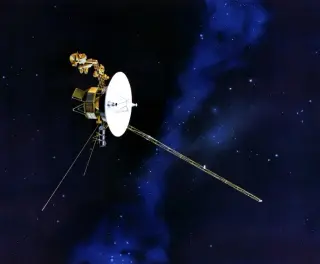
Voyager 1, about 172.6 AU from Earth, continues to transmit from beyond the heliosphere on roughly 22 watts; seven of its ten original instruments are shut down to conserve power, with only the Plasma Wave Subsystem and magnetometer remaining and a small 0.5-watt motor kept spinning to preserve revival chances. The RTGs now deliver around 220 watts total, and NASA plans a long-term 'Big Bang' power-swap strategy—starting with Voyager 2 in mid-2026—to extend telemetry into the 2030s, though one-way signals already take about 23 hours to reach Earth.

NASA Extends Voyager 1’s Deep-Space Mission by Shutting Down a 49-Year-Old Sensor
science19 days ago

NASA Extends Voyager 1’s Deep-Space Mission by Shutting Down a 49-Year-Old Sensor

To conserve dwindling power from its plutonium RTG, NASA turned off the Low-energy Charged Particles (LECP) instrument on Voyager 1 after 49 years, a decision that preserves essential systems and could buy roughly one more year of operation in interstellar space; a small portion of LECP will stay active, and engineers plan a broader, lower-energy 'Big Bang' power-saving approach to be tested on Voyager 2 in 2026 and possibly applied to Voyager 1 afterward.

Power-Saving Move Extends Voyager 1’s Lifespan
space1 month ago

Power-Saving Move Extends Voyager 1’s Lifespan

NASA has shut down the Low-energy Charged Particles (LECP) instrument on Voyager 1 to conserve power and extend the mission, keeping two other instruments active as the spacecraft—more than 15 billion miles from Earth—drifts through deep space; a 0.5-watt motor on LECP remains running to keep the door open for possible reactivation, while the RTG’s power slowly declines by about 4 watts per year.

FBI widens probe into deaths and disappearances of scientists tied to sensitive research
science1 month ago

FBI widens probe into deaths and disappearances of scientists tied to sensitive research

The FBI has launched a broad inquiry into the deaths or disappearances of at least 10 scientists tied to highly sensitive research, including four in the Los Angeles area connected to NASA's Jet Propulsion Laboratory and Caltech. The cases, dating from 2023 to 2026, involve Michael Hicks (died 2023) and Frank Maiwald (died 2024), Monica Jacinto Reza (disappeared 2025), and Caltech astrophysicist Carl Grillmair (shot and killed in 2026), with Freddy Snyder charged in Grillmair’s murder. NASA says there’s no current national-security threat, and officials caution there’s no proven connection among the cases, though Congress is seeking more information from involved agencies.

Voyager 1 Shuts Down a Sensor to Stretch Its Interstellar Mission
space1 month ago

Voyager 1 Shuts Down a Sensor to Stretch Its Interstellar Mission

NASA’s Voyager 1 cut power to the Low-energy Charged Particles instrument to conserve energy after a power drop, leaving two instruments still operating as the aging probe drifts through interstellar space. The shutdown buys about a year while engineers pursue a long-term, lower-power “Big Bang” fix to swap in efficient hardware and extend the mission's life.

Trump’s 2027 NASA cuts threaten JPL science missions and Mars-Venus research
science1 month ago

Trump’s 2027 NASA cuts threaten JPL science missions and Mars-Venus research

Trump’s 2027 budget proposal would slash NASA science funding by about 46% and total NASA funding by roughly 23%, risking dozens of canceled missions and added strain at Caltech-managed JPL, including potential reductions to the Perseverance rover’s operations and shelving the Venus Veritas mission. The plan has drawn bipartisan criticism as Congress previously rejected similar cuts, raising concerns about job stability and the long-term pace of space science amid Artemis momentum.

Perseverance Gains GPS-like Self-Localization on Mars
space3 months ago

Perseverance Gains GPS-like Self-Localization on Mars

NASA's Perseverance rover can now determine its precise location on Mars autonomously using Mars Global Localization, matching navigation camera panoramas to orbital imagery in about two minutes to pinpoint its position within roughly 25 centimeters. This enables longer, safer drives without Earth-based input, complements existing auto-navigation, and signals broader use of onboard AI for future missions including lunar exploration.

AI Maps the Way: Mars Rover Executes AI-Generated Routes
technology3 months ago

AI Maps the Way: Mars Rover Executes AI-Generated Routes

NASA's Perseverance rover completed two drives on Mars guided by artificial intelligence, using Anthropic's Claude to generate safe route waypoints tested in a digital twin. The 689-foot and 807-foot routes showed the rover could deviate from plans based on terrain data, marking the first AI-planned drives on another world. With interplanetary delays preventing real-time remote control, AI-assisted path planning could speed future missions to the Moon and Mars.