
SpaceX captures Starship upper stage from orbit for first time, but booster lost in Gulf
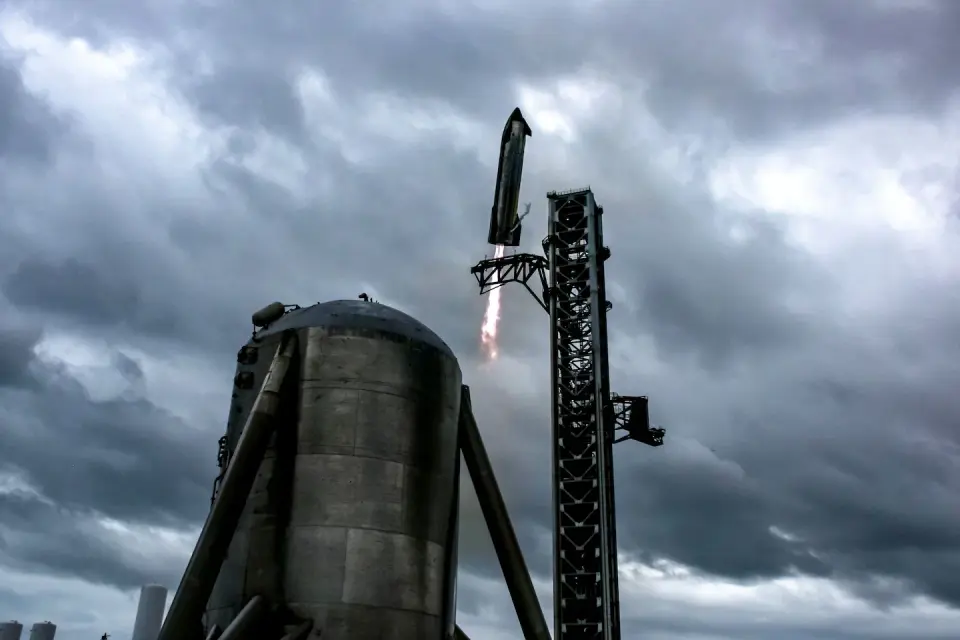
SpaceX successfully caught its Starship upper stage from orbit on Nov. 14, 2026, marking a historic milestone for reusable rockets. However, the mission was not fully successful as the Super Heavy booster exploded in the Gulf of Mexico after aborting its landing attempt.
Key points
- SpaceX captured the Starship upper stage (Ship 42) at its Starbase facility in Texas on Nov. 14, 2026, using mechanical arms on the launch tower.
- The upper stage completed 14 orbits and deployed 26 Starlink V3 satellites before returning to Earth after approximately 22.5 hours.
- The Super Heavy booster failed to land, diverting to a splashdown in the Gulf of Mexico after a guidance issue or low-fuel alarm aborted the catch attempt.
- This is the first time an orbital spacecraft has been caught from orbit, a critical step toward fully reusable rockets and future lunar missions.
- SpaceX aims to reliably reuse Starship by NASA’s Artemis IV moon mission in 2028, though it must still demonstrate orbital refueling capabilities.
Background
SpaceX has previously caught its Super Heavy booster on three earlier test flights, first in October 2024, but had never attempted to catch the upper stage from orbit. The Starship system, standing 407 feet tall, is designed to be fully reusable, unlike the Falcon 9, whose upper stages are discarded. The company has been working toward rapid reflight capabilities to support its ambitious launch cadence goals and deep-space missions.
How outlets are covering it
The Washington Post and The New York Times emphasize the historic nature of catching the upper stage from orbit, highlighting it as a major step toward fully reusable rockets. Yahoo Finance notes the mixed outcome, pointing out the booster’s loss in the Gulf of Mexico and the subsequent drop in SpaceX’s stock price. Space.com focuses on the technical challenges ahead, including the need for orbital refueling and the timeline for NASA’s Artemis missions. All sources agree that the upper stage catch was a significant achievement, but they differ in their emphasis on the booster failure and the implications for SpaceX’s future plans.
Why it matters
The successful catch of the Starship upper stage is a critical milestone for SpaceX’s goal of fully reusable rockets, which could drastically reduce launch costs and enable more frequent missions. This achievement supports NASA’s Artemis program and SpaceX’s plans for deep-space exploration, including potential Mars colonization. However, the booster failure highlights the ongoing challenges in achieving full reusability and rapid reflight capabilities.
What to watch
SpaceX plans to attempt a double catch of both stages on its next test flight, Flight 16, which could be the first launch from its revamped Kennedy Space Center pad in Florida. The company is also working on demonstrating orbital refueling capabilities, a necessary step for deep-space missions. Additionally, SpaceX aims to reliably reuse Starship by NASA’s Artemis IV moon mission in 2028, though it must first complete the development of a crew cabin and life-support system.
- SpaceX catches Starship rocket on return to Earth The Washington Post
- SpaceX completes first-ever spaceship capture DW.com
- SpaceX caught Starship from orbit with ‘robot chopsticks’ in a world 1st — but lost its booster in the Gulf of Mexico Yahoo Finance
- SpaceX Makes History With Successful Rocket Catch in Texas The New York Times
- What's next for SpaceX's Starship after epic Flight 15 chopsticks catch? Space
Want the full story? Read the original reporting
Read on The Washington Post