
US firm achieves brief net-positive power from underwater volcano off Oregon
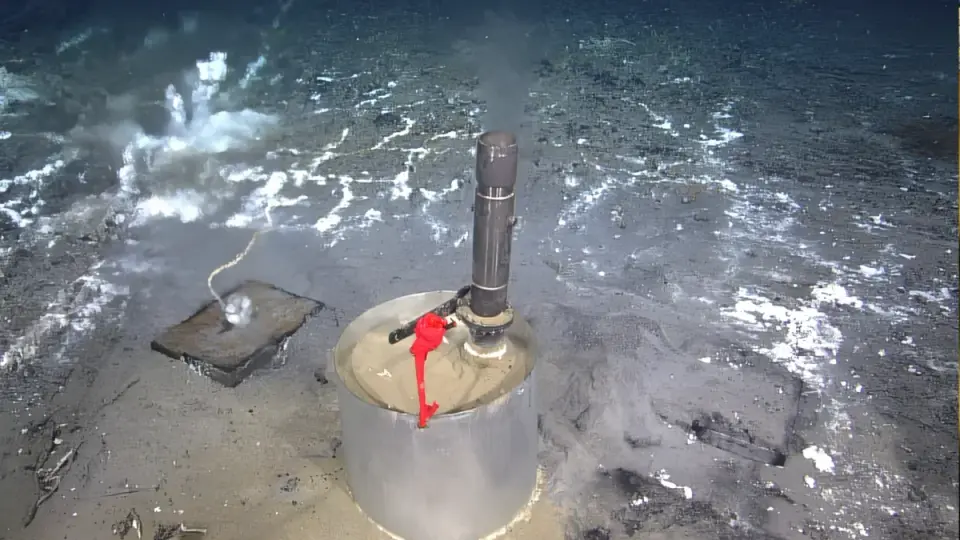
Endurance Energy successfully tested its Adélie prototype at Axial Seamount, an underwater volcano off Oregon, generating a net power surplus for 8.7 seconds. The system utilized heat from hydrothermal vents to spin a turbine, achieving a peak output of 16.5 kilowatts after accounting for operational costs. Although the test confirmed technical feasibility, the run ended due to a safety trigger, and the company faces challenges in achieving sustained, long-term generation.
Key points
- Endurance Energy’s Adélie prototype generated a median net surplus of 2 kilowatts and a peak of 16.5 kilowatts during an 8.7-second test on September 27.
- The experiment took place at Axial Seamount, approximately 480 kilometers off Oregon, at a depth of 1,500 meters where hydrothermal vents release water at 281 degrees Celsius.
- The system relied on a nearby natural vent for sufficient water flow, as the drilled well’s output was too restricted to power the generator independently.
- The test concluded when a battery protection system activated, followed by a pump cable failure during a restart attempt ten minutes later.
- The company plans to deploy a larger 100-kilowatt unit called Gentoo this winter and aims for its first commercial project in Tonga by 2027.
Background
Geothermal energy has traditionally relied on land-based plants using underground heat. While a 2016 Chinese study demonstrated small-scale power generation from seafloor vents, producing only a few watts, Endurance Energy’s test represents a significant step toward scalable underwater geothermal technology. The company’s long-term goal is to provide stable power to land-based customers, particularly in regions dependent on imported diesel, such as Tonga.
How outlets are covering it
Both ScienceAlert and UA.NEWS report the same core metrics: an 8.7-second net-positive run with a peak of 16.5 kilowatts. However, ScienceAlert provides more detail on the technical setup, including the 26,000 RPM turbine speed and the use of the Regional Cabled Array for remote control from Seattle. UA.NEWS focuses more on the limitations, emphasizing that the results are not peer-reviewed and do not account for the energy costs of shipping and installation. Both sources agree that environmental impacts remain uncertain, though Endurance claims no immediate negative effects on local ecosystems.
Why it matters
This test demonstrates that underwater geothermal energy can technically produce a net power surplus, a critical milestone for renewable energy innovation. If Endurance Energy can achieve sustained operation, it could provide a reliable, weather-independent power source for remote islands and coastal communities, reducing reliance on fossil fuels. The success of this prototype could pave the way for larger-scale deployments and new drilling technologies capable of accessing deeper, more productive vents.
What to watch
Endurance Energy plans to deploy its next-generation 100-kilowatt generator, Gentoo, this winter to test higher power output and longer run times. The company is also developing a new drilling rig capable of reaching 500 meters depth to improve water flow. The first commercial project is targeted for 2027 in Tonga, but the company must first solve issues related to sustained generation and equipment reliability over months or years.
Want the full story? Read the original reporting
Read on ScienceAlert