
ZiroEDA Brings KiCad 10.0.6 to Web Browsers via TypeScript Port
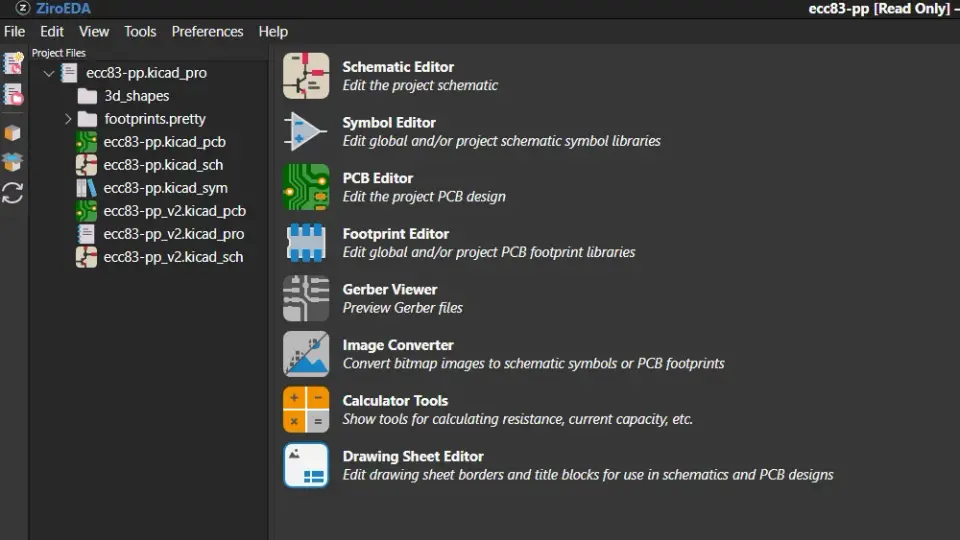
Developer Akshay Rukade has created ZiroEDA, a browser-based alternative to the KiCad PCB design suite. This tool ports KiCad 10.0.6’s C++ code to TypeScript, allowing users to run schematic and PCB editors without local installation. It supports standard .kicad_pro files and matches KiCad’s zone fill accuracy, though it remains a work in progress with missing dialogs.
Key points
- ZiroEDA is a TypeScript port of KiCad 10.0.6’s C++ source code, enabling PCB design directly in web browsers.
- The tool includes the schematic editor, PCB editor, interactive router, and design rule checkers, supporting standard .kicad_pro file formats.
- Testing using KiCad’s kicad-cli confirmed that zone fills generated by ZiroEDA are vertex-identical to those produced by the native software.
- The project is still under development, with some original KiCad dialogs currently missing, and features end-to-end encryption for projects.
- Source code is available on GitHub for those interested in inspecting the implementation or contributing to the project.
Background
KiCad is a widely used open-source electronic design automation software for creating printed circuit boards. Previous innovations in this space include GPU-accelerated autorouters, highlighting ongoing efforts to enhance PCB design workflows through software optimization and new platforms.
Why it matters
ZiroEDA addresses accessibility barriers for engineers working in restricted environments where installing desktop software is not permitted. By porting KiCad to the web, it allows users to continue PCB design tasks without compromising their workflow, while maintaining compatibility with existing project files and ensuring high fidelity in critical design elements like zone fills.
What to watch
The project will likely continue to develop by adding missing dialogs and improving stability. As it matures, it may become a viable option for teams needing secure, cloud-based PCB design capabilities without local installations.
Want the full story? Read the original reporting
Read on Hackaday