Framework teases a 'Next Gen' event for April 21 with a video full of Linux imagery, suggesting a Linux-centered reveal while noting global expansion (NZ, Norway, Switzerland, Singapore) and reaffirming its hardware-ownership stance amid AI-driven supply pressures.
Meta unveils Muse Spark, the first AI model from its Meta Superintelligence Labs, built for everyday tasks and future agent-based capabilities, with open-source releases planned and a Contemplating mode to boost reasoning; Spark is live at meta.ai and in the Meta AI app, with private API previews for select users. Benchmark results are mixed against frontier models and are not independently verified yet.
Swift has completed the design phase of its blockchain-based shared ledger and is moving to a 24/7 MVP to enable interoperable, tokenised-deposits-enabled cross-border payments; the open-source, EVM-compatible stack (Hyperledger Besu) will be live for real-world transactions later this year, with banks running their own environments and Swift orchestrating interbank workflows while leveraging existing RTGS and settlement mechanisms to improve liquidity visibility and reduce reconciliation across more than 11,500 institutions in 200+ countries and 40,000+ payment routes.
OpenClaw is a free, open-source agent that links large language models to local apps and system tools, enabling it to read/write files, run commands, browse the web, email, and automate workflows. Originating as Clawdbot, later Moltbot, it was renamed OpenClaw in early 2026 and quickly went viral, amassing 100k+ GitHub stars. It uses a plugin system called “skills” with 100+ built-ins and support for custom scripts, allowing agents to perform end-to-end tasks rather than just chat. The article covers how it works, real-world use cases (multi-agent collaboration, app integrations, and Moltbook), and risks like security vulnerabilities, malware in third-party skills, and unintended destructive actions. It suggests OpenClaw could mark a shift toward autonomous AI agents in everyday computing.
Betterleaks is an open-source secrets scanner pitched as the successor to Gitleaks. It can scan directories, files, and Git repositories to detect sensitive credentials using CEL-based rules, employs efficient BPE tokenization for high recall, is implemented in pure Go, and supports parallel Git scanning. The project expands its rule set, can handle encoded secrets, and plans future features like AI-assisted analysis and automatic secret revocation, all under the MIT license with contributions from Aikido and partners including RBC, Red Hat, and Amazon.
The open‑source platformer SuperTux releases version 0.7 after more than four years, bringing revamped graphics, a complete level and story redesign, new movement abilities (slope sliding, rock rolling, crawling), new music, local multiplayer, revived Android support, and Flatpak/AppImage builds, with the release available on GitHub.
An open-source Linux kernel module named GreenBoost adds system RAM and NVMe storage as a CUDA-accessible extension to NVIDIA GPU memory, enabling larger AI models by caching data outside of VRAM. It uses a kernel component to pin memory and export it as DMA-BUF, and a CUDA shim (LD_PRELOAD) to intercept and redirect large allocations to the extended memory pool, while small allocations pass through. The setup is complementary to NVIDIA’s drivers and includes a watchdog to monitor RAM/NVMe pressure; it could allow running models bigger than VRAM (e.g., a 31.8GB model on a 12GB RTX) but requires careful handling of symbol resolution for certain frameworks like Ollama.
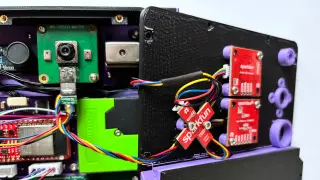
Hackaday covers Bigcrimping’s BHG-2000, a pin‑compatible DIY replacement for the now unobtainable HSN‑1000 nuclear event detector. The build uses four BPW34S PIN diodes coated to block visible light, aiming to detect the characteristic gamma pulse that signifies a nuclear event, with a two‑stage amp chain to output a warning. Calibration remains unverified without exposure to gamma sources, and the creator is seeking European testers with Cs‑137 or Co‑60 sources. The project is open‑source, and Hackaday cautions that nuclear explosions are best avoided while noting the detector concept could in principle warn of blasts.
Nvidia is reportedly developing NemoClaw, an open-source AI agent platform intended to compete with OpenClaw, and has pitched it to corporate partners like Salesforce, Cisco, Google, Adobe, and CrowdStrike ahead of its developer conference. NemoClaw is described as running on machines without Nvidia GPUs and will include security and privacy tools to win enterprise trust, potentially boosting Nvidia’s hardware and services ecosystem amid broader AI agent tooling developments.
Nvidia previews NemoClaw, an open-source AI platform for enterprise workflows aimed at expanding its AI footprint beyond CUDA; it’s courting partners such as Salesforce, Google, Cisco, Adobe and CrowdStrike, and the news helped NVDA rise about 2% in regular trading, with analysts remaining bullish—pointing to a potential ~49% upside with a $272 price target.
Nvidia plans NemoClaw, an open-source platform to dispatch AI agents for enterprise use across hardware, with security and privacy tools, and has begun courting major software partners ahead of its developer conference.
Rust Coreutils 0.7 is a performance-focused release that speeds up dozens of utilities with faster hash maps, ASCII fast paths, and reduced malloc allocations, while refactoring unsafe Rust code for safer abstractions; GNU Test Suite compatibility sits at 94.5% after adding 19 new tests from GNU Coreutils 9.10, with more tests causing increased skips and failures; the update also includes build fixes for NetBSD and PowerPC and is available on GitHub.
Windows Central reviews FluentTaskScheduler, a free, open-source wrapper built by a lone developer that modernizes Task Scheduler by using WinUI 3 and .NET 8 to provide a Fluent-designed dashboard, live activity stream, and enhanced automation controls while still leveraging the existing Task Scheduler API. It offers time-based and event triggers, task repetition, a centralized Script Library, system tray and startup integration, and CLI support, all aimed at a more approachable daily-use experience. However, it lacks some usability niceties (like creating folders and adding scripts) and isn’t Microsoft-supported, making it a promising but imperfect replacement interface rather than a full overhaul. The piece ends by asking readers whether Microsoft should ship a native, modern Task Scheduler similar to this design.
Ars Technica reports Evo 2, an open-source large genome model trained on 8.8 trillion bases from bacteria, archaea, eukaryotes, and related viruses, enabling it to identify genes, regulatory DNA, and splice sites without task-specific tuning. Built on a StripedHyena 2 CNN, Evo 2 underwent two training stages—short, feature-rich segments then long-range sequences—and was released with model weights, training/inference code, and the OpenGenome2 dataset. While it shows strong genome-annotation capabilities and can recognize features across domains and some mutation effects, its ability to design functional new proteins remains unproven and early tests of regulatory sequence activity yielded only modest results. The researchers anticipate many possible uses and further specialization, with the code and data open for community exploration.
Evo 2 is a large, open biological foundation model trained on 9 trillion base pairs across all life, with a 1‑million‑token context, available in 7B and 40B sizes. It predicts mutational effects on DNA, RNA and proteins without task-specific fine-tuning, can generate genome-scale sequences and chromatin-accessibility designs, and supports exon–intron annotation and variant-effect prediction across diverse species. The model and data (OpenGenome2) are fully open-source, with training/inference code and tools (Evo Designer, Evo Mech Interp), plus safety safeguards such as virus-data exclusions to mitigate misuse.