
AMD KVM Vulnerability CVE-2026-99312 Exposes Host Memory to Guest VMs
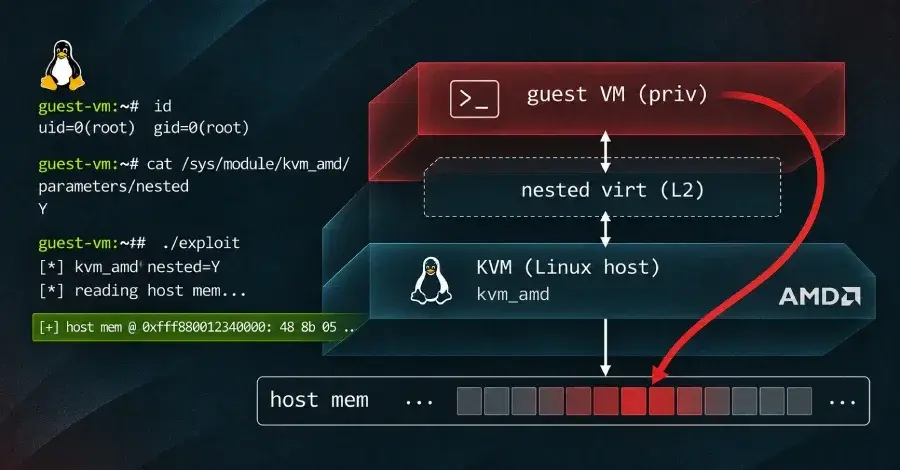
A critical flaw in Linux KVM allows guest VMs on AMD hosts with nested virtualization enabled to read and write host memory. Researchers demonstrated access to 127 GB of RAM on a cloud provider’s server. Fixes are available in updated kernels, but operators must reboot hosts or disable nested virtualization to mitigate the risk.
Key points
- CVE-2026-99312 affects KVM on AMD processors when nested virtualization is enabled.
- The flaw allows guest VMs to access host memory due to a pointer error after an INIT signal.
- Researchers read 127 GB of host RAM and wrote 32 bytes to host kernel memory in tests.
- Fixes were merged upstream on November 2, 2026, and shipped in stable kernel 7.3.5.
- Intel-based KVM hosts are not affected, and no active exploitation has been reported.
- Operators can mitigate by disabling nested virtualization or updating and rebooting the host kernel.
Background
This vulnerability follows a series of KVM isolation failures disclosed in 2026, including a 16-year-old shadow memory management flaw and the PwnEscape issue in Linux networking code. It also aligns with recent hypervisor vulnerabilities, such as the Xen flaws disclosed in November 2026, which allowed cross-VM memory access. The current issue highlights ongoing risks in virtualization layers, particularly when nested virtualization is enabled on AMD hardware.
Why it matters
The vulnerability poses a significant risk to cloud providers and operators using AMD hosts with nested virtualization, as it could expose sensitive data from other customers’ VMs. Although no active exploitation has been reported, the ease of exploitation from a guest VM and the potential for host memory access make it a critical concern. Timely updates and mitigation steps are essential to prevent potential breaches.
What to watch
Operators should update their host kernels to the fixed versions or disable nested virtualization to mitigate the risk. Cloud providers have already patched their fleets, but users must ensure their hosts are rebooted with the updated kernels. Monitoring for further disclosures or exploitation attempts is recommended, as no detection guidance currently exists.
Want the full story? Read the original reporting
Read on The Hacker News