Tag

Security

All articles tagged with #security

Treasury’s FinCEN takes systems offline after unauthorized access, extending filing deadlines amid broader government security alerts
security22 minutes ago

Treasury’s FinCEN takes systems offline after unauthorized access, extending filing deadlines amid broader government security alerts

The Financial Crimes Enforcement Network (FinCEN) disclosed a cybersecurity incident involving unauthorized access to a limited subset of its systems, prompting the bureau to take some systems offline as a precaution. FinCEN has extended Bank Secrecy Act filing deadlines until December 30 for affected institutions and confirmed that its Financial Institutions Hotline remains operational. The disclosure follows recent reports of breaches at the CIA, ODNI, and DoD, though no link has been established between the incidents.
Samba Active Directory Flaw Allows Low-Privilege Users to Crash Domain Controllers
security1 hour ago

Samba Active Directory Flaw Allows Low-Privilege Users to Crash Domain Controllers

A medium-severity vulnerability in Samba's Active Directory domain controller allows low-privileged users to crash the directory service by manipulating DNS host names or service principal names. The flaw, identified as CVE-2026-125634, stems from a null pointer dereference in ACL validation functions. Red Hat has issued advisories for affected Enterprise Linux versions, and a fix is available via a Samba merge request.

Keycloak Admin API Flaw Leaks Client Existence via Error Responses
security1 hour ago

Keycloak Admin API Flaw Leaks Client Existence via Error Responses

A medium-severity vulnerability in Red Hat’s Keycloak identity platform allows authenticated users to determine if specific client IDs exist by observing distinct error responses. The flaw, tracked as CVE-2026-136703, stems from the Admin REST API v2 validating payloads before checking permissions. While Red Hat has not released a specific workaround, the issue affects Red Hat Build of Keycloak and Red Hat Single Sign-On 7.

XunRuiCMS 4.7.4 Flaw Allows Remote Unrestricted File Uploads
security1 hour ago

XunRuiCMS 4.7.4 Flaw Allows Remote Unrestricted File Uploads

A medium-severity vulnerability, CVE-2026-136692, has been disclosed in dayrui XunRuiCMS versions 4.7.0 through 4.7.4. The flaw resides in the 'down' function within the Attachment Download API, specifically in the file dayrui/Fcms/Library/Api.php. By manipulating the 'ID' argument, remote attackers can upload files of dangerous types without restriction. A proof-of-concept exploit is publicly available, and the vendor has not responded to the disclosure.

OpenText APM Patched for High-Severity XSS Flaw in Custom Link Actions
security2 hours ago

OpenText APM Patched for High-Severity XSS Flaw in Custom Link Actions

OpenText has released a security update for Application Performance Management (APM) to address CVE-2024-7431, a high-severity cross-site scripting vulnerability. The flaw, rated 8.4 on the CVSS scale, affects versions prior to 9.60 IP4 and stems from improper input validation in the Custom Link Actions module. Attackers can exploit this to inject scripts that execute in users' browsers, potentially leading to data theft or session hijacking. The vendor advises upgrading to version 9.60 IP4 or later to mitigate the risk.

CISA Mandates Urgent Patch for Drupal 'Fail2Install' RCE Flaw Amid Active Exploitation
security2 hours ago

CISA Mandates Urgent Patch for Drupal 'Fail2Install' RCE Flaw Amid Active Exploitation

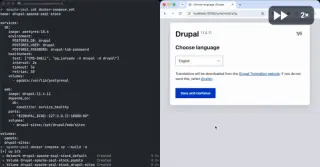
CISA has added a critical remote code execution vulnerability in Drupal core, known as Fail2Install, to its Known Exploited Vulnerabilities catalog. The flaw, tracked as CVE-2026-132165 with a CVSS score of 9.8, allows unauthenticated attackers to take over sites by exploiting resource exhaustion to bypass installation checks. Federal agencies must apply patches by November 27, 2026, as active exploitation was reported as early as November 19.

CVE-2026-78096: Apache JSPWIKI PageTab XSS Flaw Fixed in 3.0.1
security2 hours ago

CVE-2026-78096: Apache JSPWIKI PageTab XSS Flaw Fixed in 3.0.1

Apache Software Foundation has released version 3.0.1 of JSPWIKI to address CVE-2026-78096, a cross-site scripting vulnerability in the PageTab component. The flaw affects versions 2.10 through 3.0.0 and allows attackers to bypass input encoding by crafting specific wiki pages and sharing custom URLs. This enables malicious code to render and execute in victim browsers. Users are advised to upgrade immediately to mitigate the risk.

Apache JSPWIKI 3.0.1 Patch Resolves Markdown Plugin XSS Vulnerability
security2 hours ago

Apache JSPWIKI 3.0.1 Patch Resolves Markdown Plugin XSS Vulnerability

Apache Software Foundation released version 3.0.1 of JSPWIKI to fix a cross-site scripting vulnerability in the Markdown plugin. The flaw, identified as CVE-2026-78095, affects versions 2.4.0 through 3.0.0 and allows attackers to bypass HTML encoding to inject raw HTML or JavaScript into user browsers. MITRE rates the likelihood of exploitation for this weakness type as high. Users are advised to upgrade immediately to mitigate the risk.

Apache JSPWIKI 3.0.1 Patch Resolves Stored XSS in Attachment Servlet
security2 hours ago

Apache JSPWIKI 3.0.1 Patch Resolves Stored XSS in Attachment Servlet

Apache Software Foundation has released version 3.0.1 of JSPWIKI to fix a stored cross-site scripting vulnerability (CVE-2026-78092) in the attachment servlet. The flaw affects all versions up to 3.0.0 and allows attackers to upload malicious HTML files that may be rendered in browsers due to insufficient input neutralization. MITRE rates the likelihood of exploitation for this weakness type as high. Users are advised to upgrade immediately to mitigate the risk.

Apache JSPWiki 3.0.1 Patch Resolves XSS in ReferringUndefinedPagesPlugin
security2 hours ago

Apache JSPWiki 3.0.1 Patch Resolves XSS in ReferringUndefinedPagesPlugin

Apache Software Foundation has released version 3.0.1 of JSPWiki to address a cross-site scripting vulnerability identified as CVE-2026-78091. The flaw affects versions 2.10 through 3.0.0 and allows unescaped content to be rendered in the ReferringUndefinedPagesPlugin. Users are advised to upgrade immediately to mitigate the risk.

Apache JSPWiki 3.0.1 Patch Resolves New XSS Flaw in Page Creation
security2 hours ago

Apache JSPWiki 3.0.1 Patch Resolves New XSS Flaw in Page Creation

Apache Software Foundation has identified a cross-site scripting vulnerability in Apache JSPWiki versions 2.1.37 through 3.0.0, designated as CVE-2026-78090. The flaw allows attackers to inject unescaped inputs into new pages, potentially executing malicious scripts in visitors' browsers. The issue stems from improper input neutralization during web page generation, a weakness type that MITRE rates as having a high likelihood of exploitation. Users are advised to upgrade to version 3.0.1, which contains the necessary fixes. This latest patch follows a series of other XSS-related updates released for the same software earlier in the day.

Patchstack Advises Update for TranslatePress Plugin After XSS Flaw Disclosure
security3 hours ago

Patchstack Advises Update for TranslatePress Plugin After XSS Flaw Disclosure

A medium-severity cross-site scripting (XSS) vulnerability, identified as CVE-2026-135931, has been disclosed in the Cozmoslabs TranslatePress plugin for WordPress. The flaw affects versions 3.4 and earlier, allowing attackers to inject malicious code via improper neutralization of script-related HTML tags. Patchstack, which reported the issue, recommends updating to version 3.4.1 or later to mitigate the risk. The vulnerability carries a CVSS 3.1 score of 5.3, indicating a moderate threat level that requires no user interaction or special privileges to exploit.

WordPress AWP Classifieds Plugin Flaw Exposes Access Control Issues
technology3 hours ago

WordPress AWP Classifieds Plugin Flaw Exposes Access Control Issues

A medium-severity broken access control vulnerability, designated CVE-2026-28000, has been identified in the WordPress AWP Classifieds plugin. The flaw affects versions 4.4.10 and earlier, allowing attackers to exploit incorrectly configured security levels. Patchstack, which disclosed the issue, advises users to update to version 4.4.11 or later to mitigate the risk. The vulnerability carries a CVSS 3.1 score of 5.3, indicating a moderate threat level that requires no user interaction or special privileges to exploit.