
Compilation Highlights 31 Instances of Confident Public Misinformation
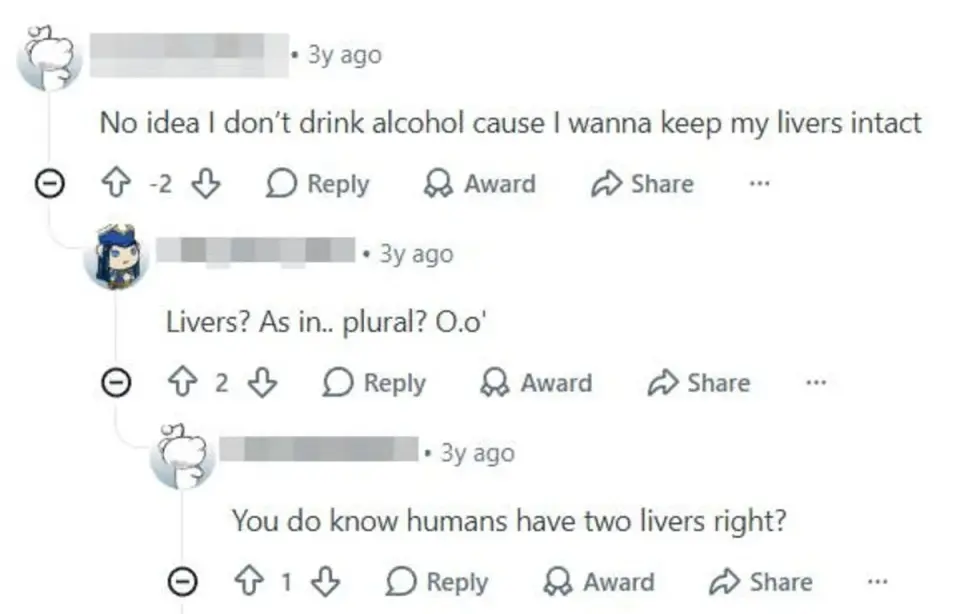
A recent compilation aggregates 31 screenshots from social media platforms, illustrating instances where users confidently assert incorrect facts. The collection spans various topics, including historical events, scientific concepts, and linguistic usage, highlighting the prevalence of misinformation in online discourse. Notable examples include users denying the existence of historical genocides, misidentifying chemical compounds, and challenging dictionary definitions. The compilation serves as a humorous yet critical look at how individuals often prioritize personal opinion over established facts, sometimes leading to absurd conclusions. It underscores the importance of verifying information before sharing it publicly, as many of the errors stem from a lack of basic knowledge or a refusal to accept standard definitions. The post aims to educate readers through humor, demonstrating that even simple concepts like math, geography, and language can be misunderstood by those who are overly confident in their incorrect assumptions.
Key points
- The compilation features 31 screenshots of users making confident but incorrect statements on social media.
- Errors include denying historical genocides, misidentifying propane as carbon monoxide, and challenging dictionary definitions.
- Some users incorrectly assert that one million times eight equals one billion, highlighting basic math errors.
- The collection includes instances where users misinterpret geographic locations and historical facts.
- The post concludes with a lesson on the importance of verifying facts before correcting others, citing advice from Stephen King.
Background
This type of content is common in internet culture, where users often share humorous or educational compilations of online mistakes. Previous articles in this genre have focused on similar themes, such as viral fails and humorous social media posts, aiming to engage readers through relatable and often absurd examples of human error. The compilation serves as a reminder of the challenges of misinformation in the digital age, where confidence does not always equate to accuracy.
Why it matters
The compilation highlights the widespread issue of misinformation on social media, where users often share incorrect facts with high confidence. This can lead to the spread of false information, affecting public understanding of important topics such as history, science, and language. By showcasing these errors, the compilation encourages readers to be more cautious about the information they consume and share, promoting a culture of fact-checking and critical thinking. It also serves as a humorous reminder that even simple concepts can be misunderstood, emphasizing the need for education and awareness in combating misinformation.
What to watch
The compilation is likely to be shared and discussed on social media, potentially leading to further discussions about misinformation and the importance of fact-checking. It may also inspire similar compilations or discussions about other common misconceptions. The post could be used as an educational tool to highlight the dangers of confident misinformation and the need for critical thinking in online discourse.
Want the full story? Read the original reporting
Read on Yahoo News UK