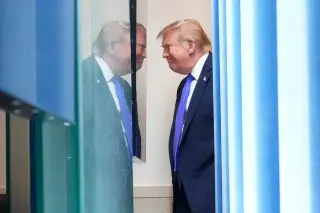
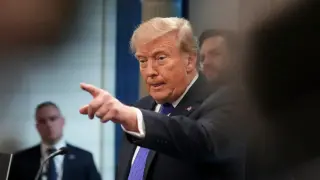
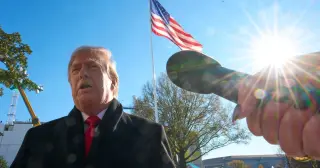
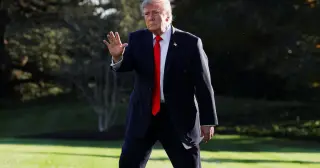
President Trump held a 90-minute news conference to promote his Asia trip, but fact-checkers found multiple false or misleading claims regarding gas prices, manufacturing records, and crime statistics. While he touted trade deals with Thailand and the Philippines, critics noted his defensive tone following the GOP’s midterm losses and his continued praise for authoritarian leaders.
President Trump held a 90-minute news conference to highlight his Asia trip achievements, including trade deals and a trilateral meeting with China and Russia. He defended the Iran conflict and suggested potential bipartisan cooperation, though fact-checkers disputed his economic and crime claims. Vice President Vance and Secretary of State Marco Rubio attended, while new Chief of Staff Stephen Miller also spoke.
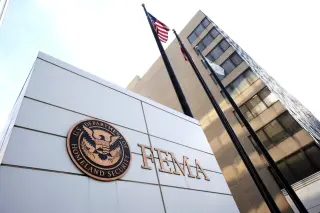
The Federal Emergency Management Agency (FEMA) conducted a routine nationwide test of the Emergency Alert System (EAS) on Tuesday, November 17, 2026. The one-minute alert, broadcast on radio and television at 2:20 p.m. Eastern Time, was a legal requirement mandated every three years. While the test coincided with recent high-profile tech outages that fueled public anxiety and conspiracy theories about a grid blackout, officials confirmed the event was a standard drill with no actual emergency. Wireless alerts to cellphones were not part of this specific test, which focused solely on broadcast media.
A routine U.S. Emergency Alert System test on Nov. 17 has sparked viral false claims of a 90-day nationwide blackout. Fact-checkers confirm the alert is a standard legal requirement, not a warning of power outages. Officials urge calm, noting recent tech glitches and unrelated military resilience projects fueled the panic.
A recent compilation aggregates 31 screenshots from social media platforms, illustrating instances where users confidently assert incorrect facts. The collection spans various topics, including historical events, scientific concepts, and linguistic usage, highlighting the prevalence of misinformation in online discourse. Notable examples include users denying the existence of historical genocides, misidentifying chemical compounds, and challenging dictionary definitions. The compilation serves as a humorous yet critical look at how individuals often prioritize personal opinion over established facts, sometimes leading to absurd conclusions. It underscores the importance of verifying information before sharing it publicly, as many of the errors stem from a lack of basic knowledge or a refusal to accept standard definitions. The post aims to educate readers through humor, demonstrating that even simple concepts like math, geography, and language can be misunderstood by those who are overly confident in their incorrect assumptions.
Ashton Forbes, a Minnesota healthcare IT consultant, has built a massive online following by claiming the U.S. military used secret fusion technology to teleport Malaysia Airlines Flight 370 in 2014. Despite lacking credible evidence and facing debunking from visual effects experts, Forbes leverages public distrust and recent UAP disclosures to promote his theory, which has expanded into claims about free energy and government secrecy.
The White House released a 127-item list of claimed accomplishments on the eve of the 2026 midterm elections. Critics note several claims rely on creative accounting, such as rebranding an asylum app as a deportation tool or citing gas prices that exceeded previous records. The release coincides with internal fears of a Democratic sweep and rising fuel costs linked to the Iran conflict.
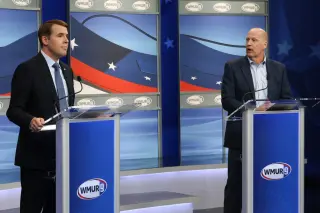
In a final debate before the November 3 election, New Hampshire Senate candidates John Sununu and Chris Pappas clashed over tariffs, the Iran conflict, and personal finances. PolitiFact found that both candidates exaggerated or omitted context in their claims. Sununu’s stance on the Iran war shifted from support to criticism, while Pappas’s claims about Sununu’s wealth and tax votes were rated as exaggerated or mostly true. The race remains a toss-up, with Sununu attempting to distance himself from President Trump.
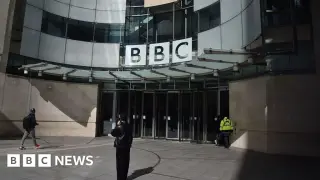
The BBC has suspended its secondment program for government statisticians to its fact-checking unit, BBC Verify, following allegations that embedded civil servants were involved in editorial tasks. The move follows a report by The Telegraph suggesting a breach of impartiality rules, prompting the corporation to review the roles and pause recruitment for the 2027 cycle.
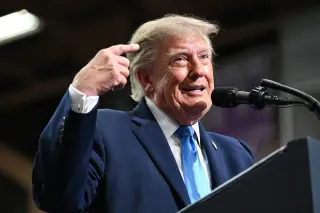
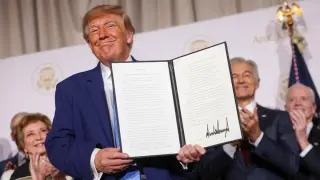
Donald Trump claimed at an Italian-American event that Hollywood once banned Italian names in mob films, citing a gangster named 'Alan Jones.' Fact-checkers and film historians confirm no such film exists, noting that Italian names have been standard in gangster movies since the 1950s, with only a brief exception during the early Hays Code era.
Incumbent Gov. Maura Healey and challenger Mike Minogue engaged in a heated final debate in Needham, focusing on affordability, housing, and state scandals. Healey blamed federal policies for rising costs, while Minogue criticized state bureaucracy and leadership failures. PolitiFact and WBUR analyzed the exchange, noting Healey maintained her lead but faced sharp attacks on her handling of the LaMar Cook cocaine case and state police misconduct.
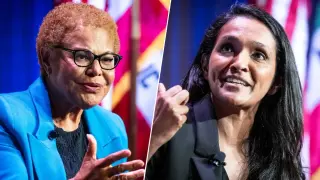
In the final televised debate before the November 3 election, fact-checkers found that Mayor Karen Bass’s claim of an 11% reduction in homelessness lacked supporting data, while challenger Nithya Raman’s 50% drop in unsheltered homelessness in her district was accurate but not representative of citywide trends. The debate highlighted deep divisions over the cost of the Inside Safe program and police data sharing, with Raman maintaining a significant polling lead despite Bass’s more polished performance.
A viral claim that President Trump’s executive order rebranding 'artificial intelligence' as 'super intelligence' was a scheme to profit from Slovenian '.si' domain names remains unproven. While registration data shows a massive spike in '.si' domains following the order, independent fact-checkers could not verify that the President or his associates financially benefited from the purchases or leaked the policy in advance. The White House denied the allegations, and the domain registrar cited broader trends in European country-code domains rather than a specific insider scheme.
The newly launched America.gov AI portal, powered by Google Gemini and xAI Grok, is delivering inconsistent answers to politically sensitive questions. While it initially contradicted President Trump’s claims regarding the 2020 election and Jan. 6, it later refused to answer similar queries, citing a lack of political commentary. Experts warn that these fluctuations may stem from probabilistic model behaviors or hidden ideological guardrails, raising concerns about the reliability of a system intended to serve as the primary digital interface for federal services.
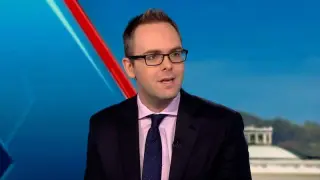
CNN fact-checker Daniel Dale marks a decade of tracking Donald Trump’s false claims, documenting over 8,500 falsehoods since 2016. Dale identifies recurring patterns in Trump’s dishonesty, including a surge in lies during political crises and the use of fabricated anecdotes to project dominance. While the volume of disinformation has overwhelmed mainstream newsrooms, Dale argues that millions of Americans still seek accurate information, and that Trump’s lies have caused tangible harm to democracy, public health, and safety.