
Hawaii Duo Relies on 7,000-Gallon Pool for Off-Grid Water Supply
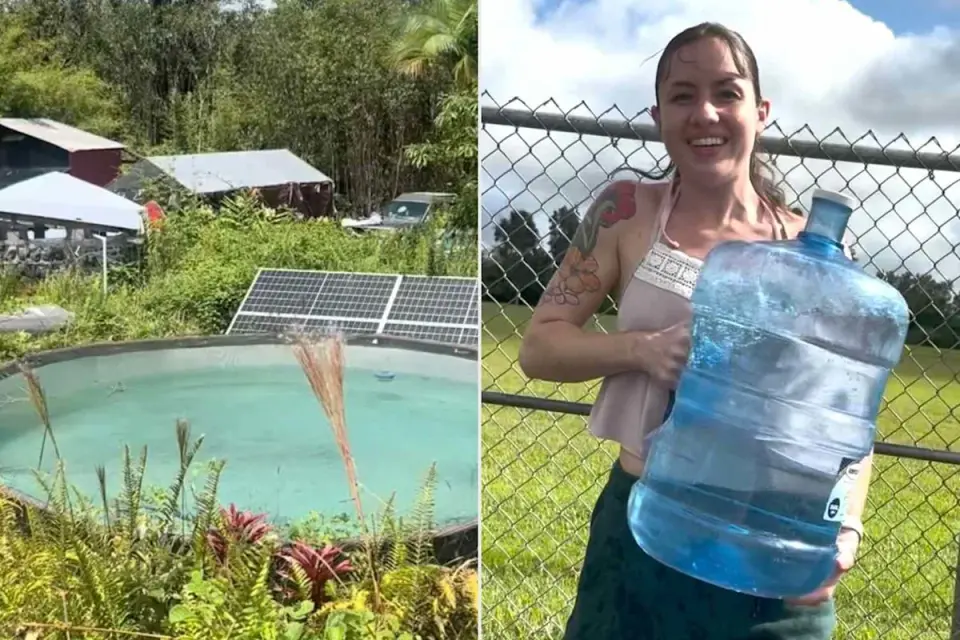
Ellie Rose and her fiancé live on a 1-acre Big Island property purchased for $70,000 in 2021, using a 7,000-gallon above-ground pool to collect rainwater for household needs. The couple relies on solar panels and a generator for power, but dry spells force them to ration drinking water and skip daily chores. While the lifestyle offers financial independence from high rents, it requires constant maintenance and resource management.
Key points
- The couple bought a forested lot with a cabin for approximately $70,000 in August 2021 to escape high rental costs in Hawaii.
- A 7,000-gallon above-ground pool serves as a rain catchment system, supplying water for showers, cleaning, and the water heater via a pump.
- Drinking water is not sourced from the rain catchment; Rose drives to public spigots to fill containers for consumption.
- During dry spells, the couple has had to use drinking water to flush toilets and skip daily showers and dishwashing until water trucks arrive.
- Power is generated by four 330-watt solar panels and four lead-acid batteries, with a backup generator used for refrigeration, lighting, and the water pump.
- The remote location lacks cell service, requiring the couple to drive 15 minutes away to download videos or upload content when Wi-Fi fails.
Background
Previous coverage in October 2026 noted that the couple previously paid up to $1,200 monthly for a 400-square-foot rental unit. The current report expands on the specific mechanics of their water and power systems, detailing the challenges of dry seasons and the labor-intensive nature of maintaining their off-grid lifestyle.
Why it matters
This story illustrates the practical realities and trade-offs of off-grid living, highlighting how resource scarcity and maintenance demands can outweigh the perceived freedom of escaping urban costs. It serves as a case study in sustainable living, showing how infrastructure like rain catchment and solar power can replace municipal services but requires significant manual labor and planning.
What to watch
The couple is uncertain about the long-term viability of this lifestyle, particularly if they decide to start a family. They remain committed to maintaining their current setup for now, valuing the independence and financial stability it provides despite the daily challenges.
Want the full story? Read the original reporting
Read on Yahoo