
Brazilian physicist finds Star Trek’s 'Picard maneuver' creates three images, not two
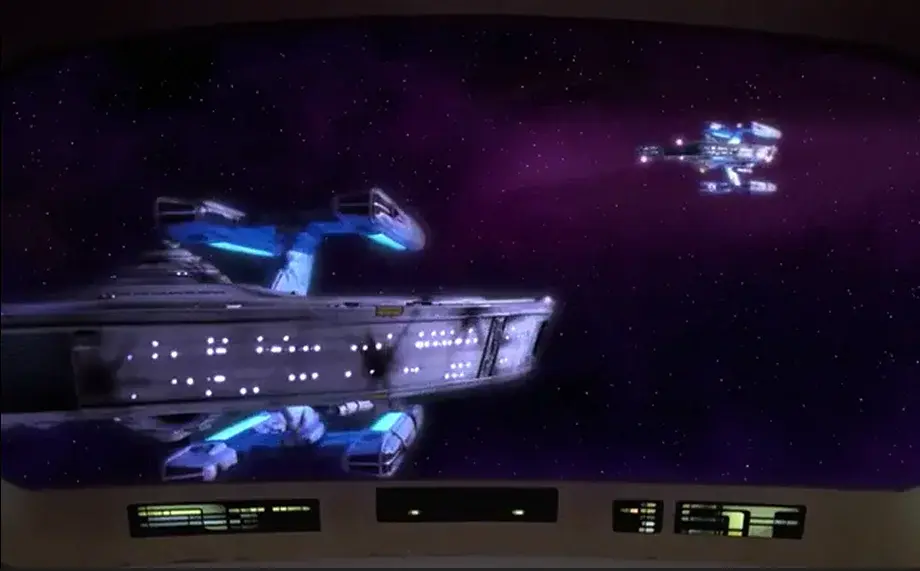
A Brazilian physicist analyzed the 'Picard maneuver' from Star Trek: The Next Generation and determined that the fictional tactic would actually be more effective in reality than depicted. By accounting for the ship's acceleration and deceleration, he calculated that an enemy vessel would see three images of the starship rather than the two shown in the episode, enhancing the tactical advantage. This analysis connects science fiction to real-world physics concepts like Cherenkov radiation and the memory effect in electromagnetic waves.
Key points
- Níckolas de Aguiar Alves, a physicist at the Federal University of ABC in Brazil, analyzed the 'Picard maneuver' from the Star Trek: The Next Generation episode 'The Battle.'
- In the episode, Captain Picard uses warp speed to create a visual confusion, believing the enemy sees two images of his ship: one where it entered warp and one where it stopped.
- De Aguiar Alves determined that because the ship accelerates to warp and then decelerates to stop, the enemy would actually see three distinct images at certain times, making the maneuver more effective than the writers realized.
- The physicist noted that while faster-than-light travel is impossible, the underlying math applies to particles moving faster than light in a medium, such as water, which produces Cherenkov radiation.
- The analysis was inspired by de Aguiar Alves’s work on the 'memory effect' in electromagnetic waves, a phenomenon difficult to detect but theoretically more dramatic in media with limited light speed.
Background
This analysis arrives during the 60th anniversary of Star Trek, a period marked by various tributes and critical reassessments of the franchise. Recent coverage has highlighted the franchise's legacy, including NASA’s mapping of Star Trek’s desert world on Earth and ESA astronaut Sophie Adenot wearing a Starfleet badge on the ISS. However, the franchise has also faced criticism from writers who argue that Paramount’s stewardship has led to a decline in quality, with some series deemed misfires. This physics analysis offers a fresh perspective on the franchise’s scientific accuracy, contrasting with broader criticisms of its recent narrative direction.
Why it matters
This finding bridges the gap between popular science fiction and theoretical physics, demonstrating how fictional scenarios can illuminate real-world phenomena. It highlights the educational value of science fiction in explaining complex concepts like Cherenkov radiation and the memory effect, while also showcasing the enduring relevance of Star Trek’s scientific ideas decades after their initial broadcast.
What to watch
There are no immediate next steps mentioned in the source. The physicist’s work is primarily an academic and educational exercise, connecting his research on the memory effect to a popular culture reference. No further developments in the Star Trek franchise or related physics research are indicated by this specific analysis.
Want the full story? Read the original reporting
Read on Ars Technica