
Mathematicians Split Over AI's Role in Proving Theorems
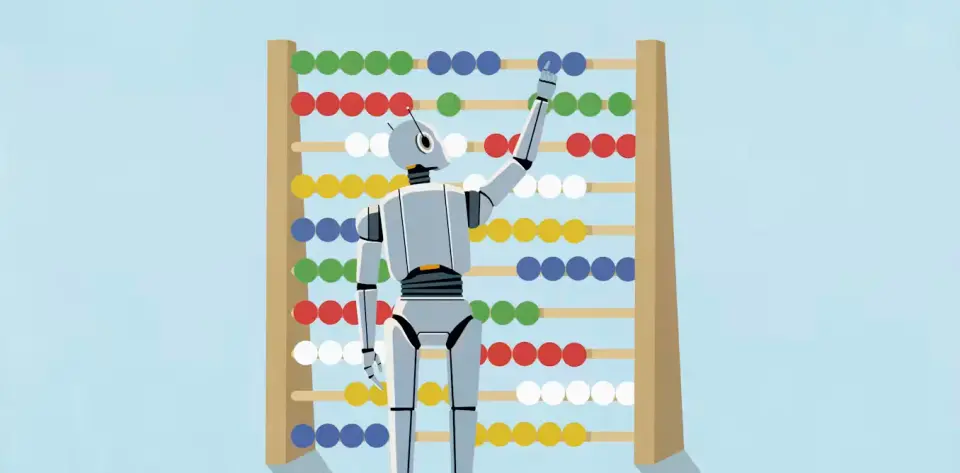
OpenAI recently announced ten mathematical breakthroughs using its unreleased model Astra, sparking a debate in the academic community. While some researchers embrace AI as a tool for rapid discovery, others reject it on ethical grounds. The field is currently grappling with questions of attribution, transparency, and the fundamental nature of mathematical creativity.
Key points
- OpenAI announced ten advances in fields like geometry and cryptography using its unreleased model Astra, accompanied by a statement on responsibility to the mathematical community.
- The Leiden Declaration, signed by thousands of mathematicians, argues that AI should augment rather than replace human creativity, emphasizing transparency and proper attribution.
- Terence Tao, a Fields medallist, recently urged the community to think ahead about how to incorporate AI systems to strengthen the culture of mathematics.
- Melissa Lee and Saul Freedman solved the 'semiregularity problem' without using AI due to concerns about environmental and social impacts, while colleague Aluna Rizzoli used an OpenAI model to find a specific object in 43 hours.
- Rizzoli invited Lee and her collaborators to co-author a paper based on his AI-assisted discovery, demonstrating a model of collaboration that respects research etiquette despite the use of generative tools.
Background
This development follows a period of rapid integration of large language models into academic research, where institutions are increasingly developing policies for their use. The current situation highlights a shift from debating the capability of AI to negotiating its place within established norms of intellectual integrity and collaboration in the mathematical sciences.
Why it matters
The divergence in attitudes among mathematicians signals a broader transformation in how scientific discovery is conducted. As AI tools become capable of generating proofs and complex algorithms, the discipline must redefine its values around transparency and accountability to maintain credibility. This debate extends beyond mathematics, influencing how other academic fields will manage the ethical and practical implications of automated research assistance.
What to watch
The mathematical community is expected to continue developing specific guidelines for AI usage in research and teaching. Funding agencies are likely to formalize policies governing acceptable AI use in grant applications and assessments. The focus will remain on balancing the efficiency of AI-assisted discovery with the traditional values of human collaboration and intellectual integrity.
Want the full story? Read the original reporting
Read on The Conversation