science-tech11.84 min read
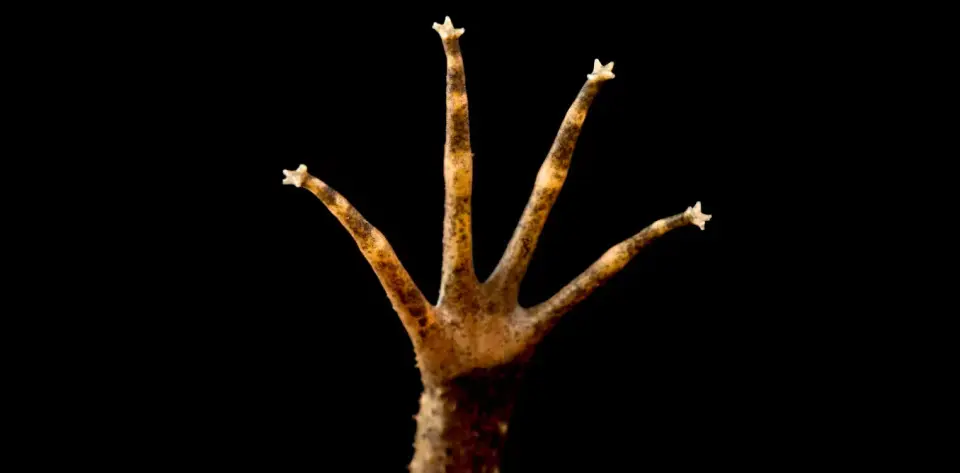
Amphibians and Reptiles Rely on Hidden Senses Beyond Human Perception
3 days ago•Source: The Conversation

The latest science tech stories, each synthesized from multiple sources with added background and context.

Researchers used the EAGLE supercomputer simulation to map the universe's most habitable regions, finding that the Sun's location in the Milky Way is among the safest and most chemically suitable spots for life. The study identifies 'Goldilocks zones' at galactic and circumstellar levels, avoiding extreme radiation, stellar collisions, and heavy element imbalances. While smaller galaxies are more hazardous, the Milky Way offers a stable environment where life-annihilating events are rare, suggesting our cosmic neighborhood is exceptionally favorable for biological emergence.

The Conversation•10 days ago
The Conversation•10 days ago
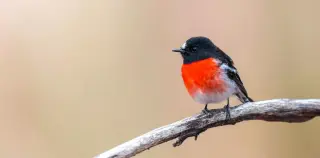
Songbirds, which constitute nearly half of all bird species, originated in Australia and spread globally from the ancient supercontinent Gondwana. While traditionally viewed as tools for mating and territory, their complex vocal learning capabilities also offer significant mental health benefits, including reduced stress and improved attention, making them valuable subjects for both scientific study and human well-being.

As AI systems grow more capable, the question of machine consciousness could become a major societal fault line: a US study finds deep public disagreement on whether future AI can be conscious (45% say no, 23% say yes). With potential rights, welfare, and safety implications, and with experts split (e.g., Anil Seth arguing biology may be required vs. David Chalmers suggesting it could be possible), the piece argues for cautious, evidence-based public debate to avoid mislabeling or ignoring AI welfare.

The Conversation argues that today’s anxieties about science journalism reflect real economic shifts and political pressures that mirror the 1986 ’science crash,’ when many science magazines folded, yet the field persisted by evolving formats and training. While major print titles like Popular Science and National Geographic have cut staff or ceased print, the internet has expanded access to science content through web outlets, YouTube, and platforms like Substack. The piece concludes that the current downturn is partly a moral panic and partly warranted; sustaining rigorous science reporting will require innovative business models and investment to balance the demand for accessible science with the rigorous, investigative journalism that underpins public trust.

OpenAI says its AI swarm found a solution to the Navier-Stokes Millennium Prize problem, running 10,000 agents to produce a result in about 88 hours with verification in 17 hours; however, the prize won’t be awarded until two years after publication, and the claim has sparked debate over AI-assisted discovery, potential use of unpublished human work, and calls for principled credit and open science. Allegations that OpenAI pressed to remove a co-author’s name due to corporate ties have been denied by OpenAI while researchers raise privacy and IP concerns as data handling comes under scrutiny.

Researchers used ultralight multisensor geolocator backpacks on Alaska-bred Myrtle warblers to map their migrations, revealing a 6,800‑mile round trip that travels east across Canada before veering south to the Gulf Coast—longer and more circuitous than expected. Barometric data, paired with light data and weather modeling (GeoPressureR), yields more precise locations and flight altitudes, helping identify key stopover and wintering sites and informing conservation and collision-risk assessments. The findings echo glacial-era range expansion and may be genetically encoded, with future work planned to tag birds on California wintering grounds to pin down breeding origins.

Star Trek’s Infinite Diversity in Infinite Combinations helped inspire NASA’s inclusive shift in spaceflight, from casting broad recruitment and the Enterprise shuttle naming to Nichelle Nichols’ NASA outreach; today, Artemis II’s diverse crew echoes Trek’s vision, and a broad base of space professionals cite the show as a influence. However, ongoing rollbacks of diversity, equity, and inclusion programs threaten to dim this legacy, underscoring that Trek’s inclusive ideal remains aspirational rather than fully realized.
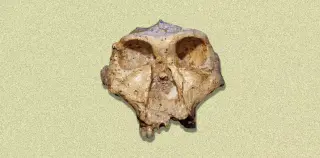
New fossil data and genetic analyses suggest the traditional three-genus classification of human relatives (Homo, Australopithecus, Paranthropus) doesn’t reflect true evolutionary branches, with evidence that Australopithecus and Paranthropus may not form real clades; some researchers propose folding them into an expanded Homo genus to better map our family tree, though this would erase familiar distinctions and require changes in language and interpretation of human evolution.
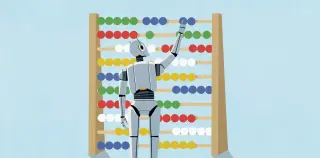
Generative AI is reshaping mathematics by accelerating discoveries across geometry, cryptography, and coding theory (OpenAI’s Astra highlighted with ten advances). This has sparked debates on attribution, correctness, and what constitutes mathematical creativity, as AI-assisted work floods journals and arXiv. Mathematicians diverge on how to integrate AI: some ethically exclude it, others embrace it as a collaborator. Case studies show both paths—one team avoided AI, another used it to achieve in 43 hours what previously took years—leading to joint papers. The field is grappling with how to reconcile AI's capabilities with transparency, integrity, and human collaborative values, signaling a nuanced future for math where machines help but human discernment remains central.
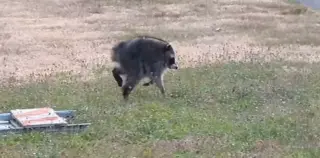
A neuroscientist analyzes Jimothy, a Seattle raccoon with a rare short spine syndrome, whose viral fame underscores how a sophisticated raccoon brain—high neuron density and specialized cells—paired with persistent maternal care enables survival in the wild. Raccoons’ dexterous forepaws and brain architecture likely help Jimothy navigate obstacles, while his mother’s prolonged, hands-on guidance mirrors raccoon “homeschooling” and enhances adaptive resilience. The piece frames this as illustrating two mammalian evolutionary feats: brain-based adaptability and enduring parental investment that can turn disability into a survivable advantage.
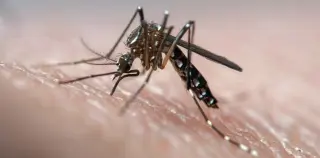
Australian field trials releasing Wolbachia‑infected male mosquitoes into three towns showed rapid population suppression of Aedes aegypti—mosquito numbers declined within about four weeks, with one town reaching roughly 95% suppression after a year. The results support Google/Alphabet’s plan to release tens of millions of sterile males in the US and suggest ecological impact would be small, though success hinges on local ecology and ongoing releases, plus strong community engagement. The effort also highlights the value of collaboration across universities and Verily in translating lab concepts to real‑world solutions.