
Exotic Atoms Revive Cold Fusion’s Legacy Through Precision Physics
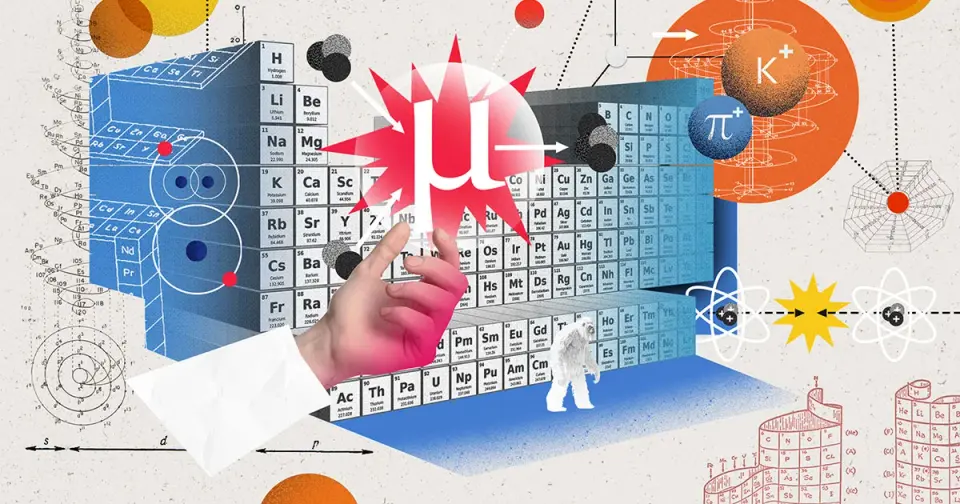
While the 1989 cold fusion scandal collapsed due to irreproducible results and data manipulation, a distinct research program persists. Physicists now study muon-catalyzed fusion and exotic atoms, which replace electrons with heavier particles like muons or antiprotons. These shrunken atoms allow scientists to test quantum electrodynamics at extreme precision and probe nuclear structures, offering scientific value even without achieving net energy gain.
Key points
- The 1989 cold fusion announcement by two chemists failed after global labs could not replicate the results, leading to a rapid scientific takedown.
- Philosopher Huw Price argues scientists were overly dismissive of anomalous phenomena, a view supported by venture capitalist Matt Trevithick, who helped destigmatize related research in 2019.
- Muon-catalyzed fusion, distinct from the 1989 claims, involves muons acting as catalysts to fuse hydrogen nuclei at room temperature, a process observed since the 1950s.
- Exotic atoms, such as muonic or antiprotonic hydrogen, are up to 1,800 times smaller than standard atoms, creating electric fields strong enough to stress-test quantum electrodynamics.
- Recent experiments, including a 2026 study on muonic hydrogen molecules, focus on measuring nuclear structures and fundamental physics rather than achieving energy breakeven.
Background
The original cold fusion controversy began in March 1989 when two chemists claimed a tabletop experiment produced excess energy through nuclear fusion. The announcement caused a brief political and scientific frenzy but collapsed within months when other laboratories failed to replicate the findings. Subsequent investigations revealed data fudging and retracted corroborating experiments, leading to the field's discreditation. However, the underlying physics of muon-catalyzed fusion, which predates the 1989 claims, remained a niche area of study. Recent efforts by researchers like Matt Trevithick have sought to separate the legitimate study of hydrogenated metals and exotic atoms from the fraudulent 1989 claims, arguing that the broader field offers valuable insights into fundamental physics even if it does not solve the energy crisis.
Why it matters
This story highlights the distinction between sensationalized energy claims and rigorous fundamental physics. While the 1989 cold fusion episode was a failure of scientific integrity, the ongoing research into exotic atoms provides a platform to test the limits of quantum electrodynamics and measure nuclear structures with unprecedented precision. These experiments, such as those using the Antiproton Decelerator at CERN, offer insights into particle physics and potential applications in medical isotope synthesis, demonstrating that scientific value can persist even when the initial hype proves unfounded.
What to watch
Researchers continue to refine the creation and measurement of exotic atoms, such as muonic hydrogen molecules, to probe fundamental constants and nuclear structures. While achieving energy breakeven in muon-catalyzed fusion remains unlikely, the focus has shifted toward utilizing these processes for medical isotope production and nuclear waste processing. The broader scientific community is increasingly recognizing the value of studying anomalous phenomena for their potential to reveal new physics, rather than dismissing them solely based on the failures of past hype.
Want the full story? Read the original reporting
Read on Quanta Magazine