
KEF LS Luxe Launches as New Flagship Wireless Speaker with Ross Lovegrove Design
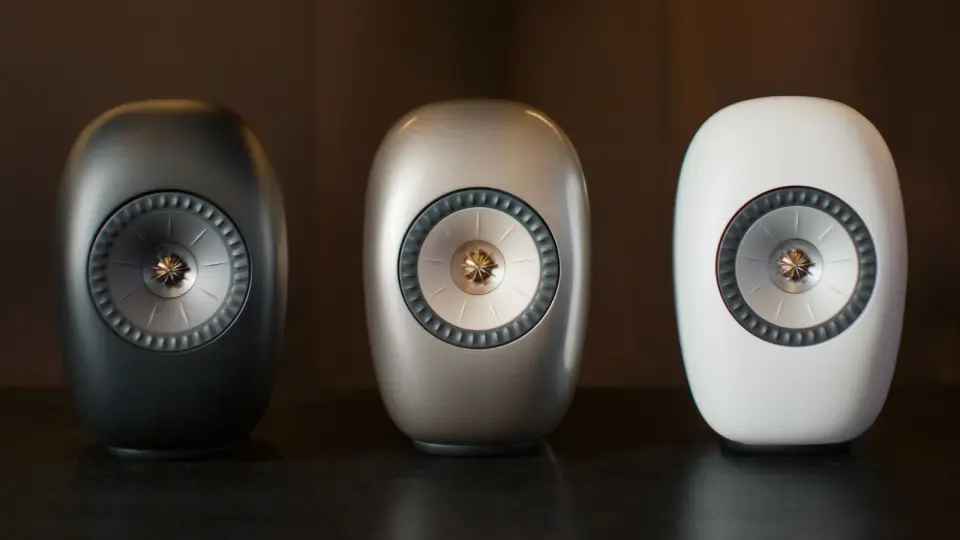
KEF has released the LS Luxe, its new flagship active wireless speaker system, priced at $4,000 per pair. Designed by Ross Lovegrove, the system features larger 6.5-inch Uni-Q drivers, Velocity Control Technology, and a comprehensive suite of streaming and wired connections. It positions itself above the LS50 Wireless II, offering enhanced bass and clarity through advanced acoustic engineering and room calibration software.
Key points
- The KEF LS Luxe is priced at $4,000 (approx. £3,500 / AU$6,375) per pair, with optional S-Luxe stands costing an additional $800.
- The system utilizes 12th-generation 6.5-inch Uni-Q drivers, larger than the 5.25-inch drivers in the previous flagship LS50 Wireless II.
- It incorporates Velocity Control Technology (VECO), a closed-loop system that monitors driver movement in real-time to reduce distortion, a technology previously found only in KEF's XIO soundbar.
- Connectivity includes the W2 wireless platform for services like Tidal and Spotify, plus HDMI eARC, optical, coaxial, and analog inputs, supporting audio up to 24-bit/384kHz PCM and DSD128.
- The design, created by Ross Lovegrove, features a rounded, low-diffraction cabinet made from bulk molding compound to minimize internal vibrations and improve acoustic performance.
Background
This release follows KEF's earlier teaser in July 2026 and builds on the success of the LS50 Wireless II, which has been a market leader in active wireless speakers for five years. The LS Luxe aims to extend KEF's premium lineup, which includes the high-end Muon speakers and the recent XIO soundbar, by integrating technologies like VECO and MAT into a standalone stereo system. It competes in the high-end audio segment against other premium wireless solutions, though it lacks a built-in phono stage, requiring users to use turntables with external preamps.
How outlets are covering it
What Hi-Fi? emphasizes the technical specifications, highlighting the 100W Class A/B and 280W Class D amplifiers and the Music Integrity Engine for tonal accuracy. Popular Science focuses on the sonic experience, describing the sound as 'incisive' and 'room-filling,' and notes the ease of setup via the KEF Connect app. Gear Patrol positions the LS Luxe as a direct successor to the LS50 Wireless II, noting the $1,000 price premium and the lack of a built-in phono stage as a potential drawback for vinyl enthusiasts. All outlets agree on the design's distinctiveness and the inclusion of VECO as a key innovation, though What Hi-Fi? and Popular Science praise the clarity, while Gear Patrol highlights the comprehensive connectivity suite.
Why it matters
The KEF LS Luxe represents a significant step in the evolution of active wireless speakers, integrating advanced technologies like VECO and larger drivers into a premium, aesthetically focused package. Its high price point and comprehensive feature set target audiophiles seeking a 'set-and-forget' high-fidelity solution without the complexity of traditional multi-component systems. The collaboration with Ross Lovegrove also signals KEF's continued focus on design as a core component of its premium brand identity.
What to watch
KEF has indicated that Roon Ready support will be added in the future, though it is not currently available. The company may also release further updates to the KEF Connect app to enhance room calibration features. Given the premium pricing, KEF may need to address market reception and potential competition from other high-end wireless systems in the coming months.
- The KEF LS Luxe speaker system wants to “set a new definition for wireless hi-fi” What Hi-Fi?
- KEF Unveils New Ross Lovegrove-Designed LS Luxe Wireless Speakers Forbes
- Could this be the best wireless speaker system KEF has ever made? What Hi-Fi?
- The KEF LS LUXE wireless hi-fi speaker system is serving looks, bumping hooks, and it has us shook Popular Science
- Can KEF’s Bookshelf Speakers Set a New Benchmark for Wireless Hi-Fi? Gear Patrol
Want the full story? Read the original reporting
Read on What Hi-Fi?