Google’s Gemini AI now generates interactive 3D models and real‑time simulations to explain concepts. Users can rotate, zoom, pause, and adjust variables via sliders (e.g., a Moon orbit), all accessible by choosing the Pro model in the prompt bar. The feature follows recent visualization enhancements in Claude and ChatGPT, expanding Gemini’s capabilities beyond static images.
Tom Warren argues that Apple’s $599 MacBook Neo is pressuring Microsoft to overhaul Windows 11, with planned memory-efficiency gains, faster Start/search, and a lighter, less distracting UX for low‑RAM devices, driven by a new Windows leadership team aiming to counter the Neo and keep Windows competitive.
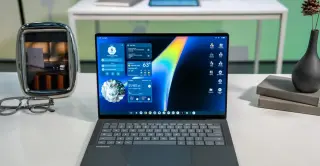
The Verge tests three budget Windows laptops (Asus Vivobook 16, Lenovo IdeaPad Slim 3x, and Acer Aspire 14 AI) against the MacBook Neo at $599. While the Windows machines offer more RAM and ports on paper, they lag in real‑world use due to dim, washed displays, middling keyboards/trackpads, and weak speakers. The Acer leads in battery life and ports, Lenovo has a decent keyboard but poorer audio, and Asus is the least compelling overall. The Neo wins on display brightness/color, trackpad precision, webcam clarity, and general usability, making it hard to beat at this price; among Windows options, Acer Aspire 14 AI is the best of the three, but still trails the Neo. Chromebooks are mentioned as alternatives, but aren’t as feature-complete. The bottom line: Neo dominates budget laptops for now, challenging PC makers to fix core corners without raising prices.
Meta unveiled Muse Spark, its first model in a new Muse series, to run in the Meta AI app and website in the US and roll out to WhatsApp, Instagram, Facebook, Messenger, and Meta’s smart glasses. The multimodal, multi‑agent system will be available to partners via API, supports text+image input, and offers Instant and Thinking modes for faster vs. deeper responses. Meta says Muse Spark can tackle complex science, math, and health questions and aims to compete with OpenAI’s ChatGPT Health and Claude, with future versions planned to be open-sourced as the company expands its AI efforts after earlier Llama initiatives.
Nvidia rolled out a DLSS 4.5 update in a Nvidia app beta that adds 6x Multi Frame Generation for RTX 50-series GPUs, generating five extra frames per native frame with minimal latency. It also introduces Dynamic Frame Generation, an auto-tuning feature that switches between Multi Frame levels to balance frame rate, image quality, and responsiveness. A new DLSS Frame Generation Model improves on UI elements, and the beta brings DLSS 4.5 updates to more than 20 games, including ARC Raiders and Marvel Rivals.
The Verge marks Apple’s 50th anniversary with a photo-driven tour of its history, from Apple II and Macintosh roots through iMacs, iPhone, and flagship stores, showing how a rebellious startup grew into a global tech titan.
GSMA’s final RCS Universal Profile 4.0 introduces Messaging-Initiated Video Calls (MIVC), enabling interoperable video calls from chats across devices and networks; however, Apple and Google have not yet announced support, and there’s no announced rollout timeline. The update also adds text formatting and higher‑quality media sharing.
German researchers from Fraunhofer institutes have developed Papure, a laser-based process that seals paper packaging without glue or plastic by irradiating paper with a CO laser to convert lignin, cellulose, and other components into fusible cleavage products that act as a natural adhesive. The system analyzes paper chemistry to identify sealable types, then tunes laser intensity and seam design; in tests, a 2 cm seal is strong enough to support 44 pounds, and a lab-scale unit is being built to reach about 10 packages per minute by September.
Vivo today unveiled the X300 Ultra in China as a flagship cameraphone designed for professional photography, featuring a 3+2 ZEISS Master Lenses Collection (14mm ultra-wide with Sony LYTIA 818, 35mm Documentary Camera, 85mm gimbal-grade telephoto with a 200MP Samsung HP0 sensor) and optical stabilization across focal lengths; it supports Multi-Focal 4K 120fps 10-bit video for ACES workflows, quad-mic audio, and is powered by a Snapdragon 8 Elite Gen 5 processor with a 6600 mAh battery and 12–16GB RAM plus 256GB–1TB storage in black, silver, and green. Pricing hasn’t been announced and Vivo says it will roll out to global markets later this year (first Ultra outside China).
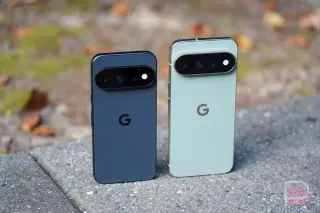
Leaked renders suggest the Pixel 11 will feature slimmer bezels and a solid black rear camera bar, with rumored specs including a Tensor G6, a 6.3-inch OLED display, and dimensions nearly identical to the Pixel 10; a launch is expected in August.
Joanna Stern traces the MacBook Air’s journey from the 2008 envelope reveal to Apple’s Silicon era, showing how its slender, port-scarce design and vertical integration sparked industry-wide imitation and reshaped what a laptop could be.
Sony Japan has temporarily stopped accepting orders for CFexpress and SD memory cards from dealers and consumers due to an ongoing memory shortage and other factors; a few low-end SD cards may still be produced and stocked until inventory runs out, with a resume date to be announced as supply improves, the same day Sony also announced a PS5 price increase.
Apple’s iOS 27 will let users link third‑party AI chatbots to Siri via a new Extensions system, enabling App Store–downloaded rivals like Google’s Gemini or Anthropic’s Claude to fetch Siri replies and work with a forthcoming standalone Siri app.
Amazon's Big Spring Sale runs March 25–31 with 100+ tech deals across Apple, drones, TVs, vacuums, and more. Highlights include AirPods Pro 3 for $199, Fire TV Stick 4K Select at $14.99, Eufy C28 robot vacuum/mop at $499.99, Hisense 75-inch U7 Mini LED QLED 4K TV at $897.96, DJI Neo Mini 4K Drone for $149, and Anker Solix C1000 Gen 2 portable power station at $489.99, among others. Deals are refreshed daily across categories like outdoor gear, kitchen gadgets, and video devices, with many popular items selling quickly.
Notebookcheck’s test of a Dell XPS 16 with an LG Display 1–120Hz panel and Intel Panther Lake suggests it’s the most power-efficient laptop yet, idling at about 1.5W and delivering nearly 27 hours of Wi‑Fi web browsing on a 70Wh pack, potentially beating MacBooks; LG Display is mass-producing a 1Hz laptop panel (Oxide 1Hz) with an OLED version planned for 2027, and Intel is collaborating with BOE on 1Hz systems.