
California Test of Ground-Based Space Mirror Simulations Sparks Debate Over Night Sky Regulation
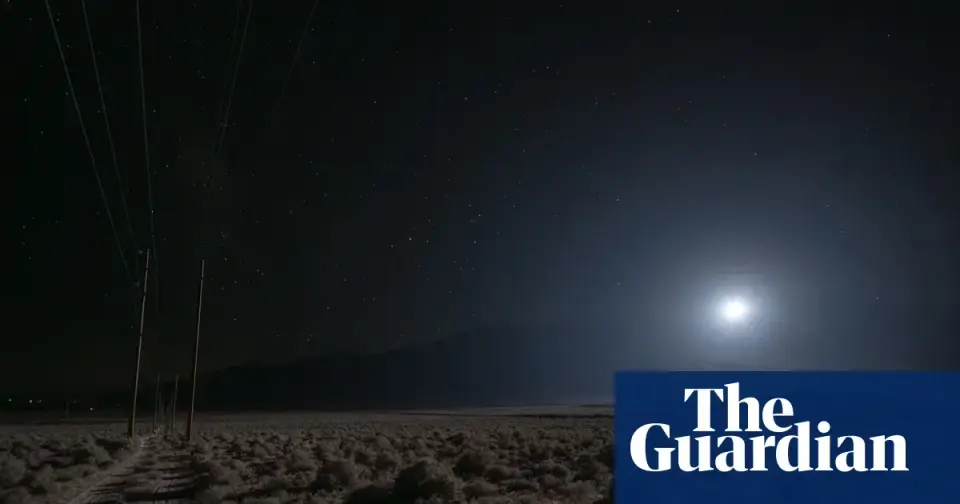
Reflect Orbital conducted a ground-based simulation near Lone Pine, California, to demonstrate its plan to launch 50,000 orbital mirrors by 2035. The test, which illuminated an area larger than Manhattan at twice the brightness of a full moon, aimed to validate the technology for search-and-rescue operations. While the company claims the service will aid emergency responders and solar farms, critics and local rescue teams argue the light offers minimal practical benefit for routine missions and poses severe risks to wildlife, astronomy, and human circadian rhythms. Regulatory gaps remain as the US FCC declined to address optical impacts, leaving questions about cross-border jurisdiction unresolved.
Key points
- Reflect Orbital tested two large spotlights near Mount Whitney on October 10, simulating the brightness of its planned orbital mirrors.
- The company seeks to launch 50,000 satellites by 2035, with the first demonstrator, Eärendil-1, approved by the FCC for a 2027 launch.
- Local search-and-rescue teams found the light marginally helpful for navigation but ineffective for locating victims, noting it could disrupt night vision.
- Critics warn that atmospheric scattering will cause light pollution far beyond the intended target area, affecting wildlife and astronomy.
- Regulatory ambiguity exists as the FCC only governs radio frequencies, not optical effects, and India’s launch authorization process does not address reflected light.
Background
This development follows earlier discussions about private space ventures, such as fusion propulsion startups targeting 2027 orbital tests. The current controversy highlights the growing tension between commercial space expansion and environmental preservation, particularly regarding the impact on the night sky, a concern recently amplified by meteor shower observations that rely on dark skies.
How outlets are covering it
The Guardian and DarkSky International emphasize the environmental and societal risks, citing concerns from astronomers and environmental groups like Earthjustice. They argue that the FCC’s approval lacks necessary safeguards for optical pollution. In contrast, Reflect Orbital maintains that the technology will save lives and reduce fossil fuel reliance, claiming that customers will require permits and local sign-off. The Conversation highlights a critical regulatory gap, noting that while the FCC governs radio frequencies, it declined to address optical effects, leaving a vacuum for international coordination. TechEBlog provides a neutral overview, confirming the ground test details and noting that locals were initially confused by the sudden illumination. Local rescue leaders, such as Phillip Cash of the China Lake Mountain Rescue Group, offer a mixed perspective, acknowledging the light’s utility in large-scale disasters but rejecting its value for routine operations due to cost and glare issues.
Why it matters
The incident exposes a significant regulatory blind spot in managing the optical impact of space-based infrastructure. As companies seek to commercialize sunlight delivery, the lack of clear jurisdictional boundaries for light pollution could lead to unintended consequences for global ecosystems, public health, and astronomical research. The debate underscores the need for comprehensive environmental impact assessments before approving large-scale orbital deployments.
What to watch
Reflect Orbital plans to launch its first demonstrator satellite, Eärendil-1, in 2027, with subsequent launches scheduled via Indian rockets. The company intends to continue discussions with scientists and regulators to refine its operational protocols. Meanwhile, environmental groups and astronomers are expected to challenge the FCC’s decision, potentially pushing for new regulations that address optical pollution. The outcome of these regulatory battles will determine whether space-based illumination becomes a viable commercial service or is restricted due to environmental concerns.
- Sunlight at night: US startup’s demonstration of lighting Earth from space draws critcism The Guardian
- An American startup wants to sell sunlight after dark. Who gets a say? The Conversation
- A rehearsal for space mirrors leaves California rescuers unconvinced DarkSky International
- Mysterious Blinding Lights Near Mount Whitney Reveal Reflect Orbital Ground Test for Space Mirrors TechEBlog -
- Startup Lit Up the Mojave With Spotlights to Preview a Space Mirror Gadget Review
Want the full story? Read the original reporting
Read on The Guardian