
Samsung Breaks 300Hz OLED Barrier for Laptops as LG Debuts FMM-Free Manufacturing
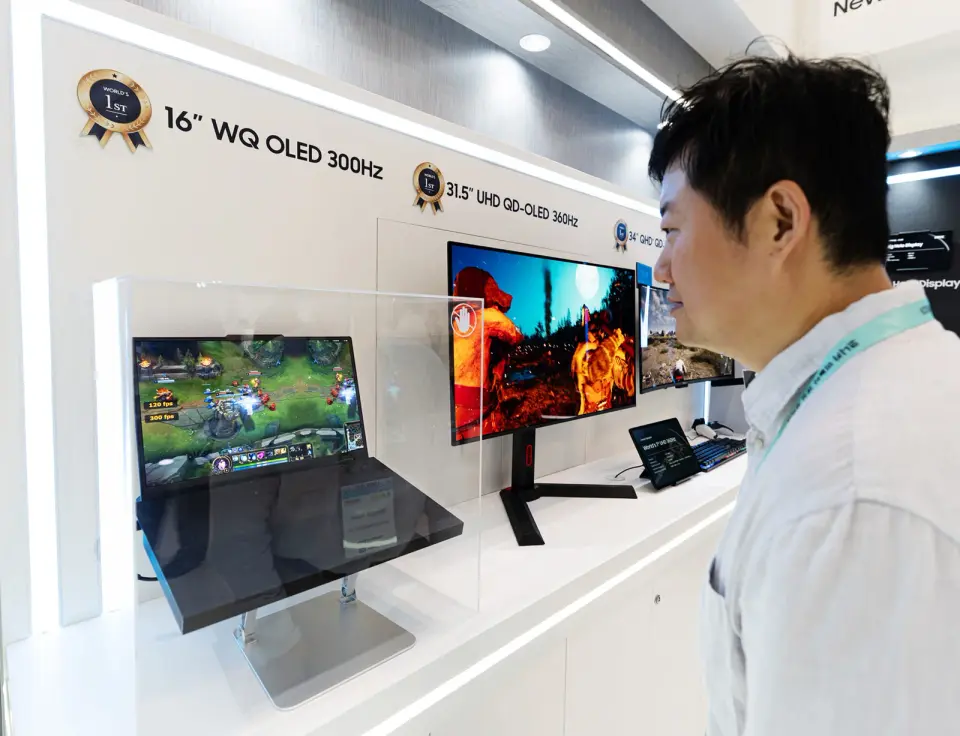
Samsung Display unveiled a 16-inch 2.5K OLED laptop panel with a 300Hz refresh rate at IMID 2026, breaking the previous 240Hz ceiling for laptop OLEDs. Simultaneously, LG Display introduced FLiPP, a fine metal mask-free manufacturing process that boosts brightness and lifespan while reducing costs. Samsung also showcased 360Hz QD-OLED monitors and a wide-view foldable panel to address crease visibility.
Key points
- Samsung Display presented a 16-inch 2.5K OLED laptop panel with a 300Hz variable refresh rate, the first of its kind for laptops.
- LG Display unveiled FLiPP, a fine metal mask-free OLED patterning technology that increases brightness by 1.6x and lifespan by 2.4x.
- Samsung also displayed 31.5-inch 4K and 34-inch ultrawide QD-OLED monitors, both running at 360Hz.
- A new wide-view OLED panel was shown to mitigate brightness degradation at foldable device creases, potentially benefiting the Galaxy Z Fold 9.
- LG Display’s FLiPP technology improves mother glass utilization by up to 64% and is planned for use in tablets, monitors, and TVs.
Background
Recent industry trends show a shift toward higher refresh rates and OLED adoption in premium laptops. For instance, Asus recently launched the ZenBook 14 Air 2026 with a 120Hz OLED display, and rumors suggest Apple’s upcoming MacBook Ultra will feature OLED screens. Additionally, Huawei’s MateBook Fold 2026 introduced a large 18-inch foldable OLED display, highlighting the growing demand for advanced display technologies in high-end computing devices.
How outlets are covering it
Notebookcheck emphasizes Samsung’s 300Hz laptop panel as a milestone for gaming laptops, noting it surpasses the previous 240Hz limit. LG Display and Engadget focus on the manufacturing breakthrough of FLiPP, highlighting its cost and efficiency benefits. PhoneArena highlights Samsung’s wide-view OLED technology as a solution to the persistent crease issue in foldable phones, suggesting it could redefine the Galaxy Z Fold 9. While Samsung focuses on refresh rates and form factors, LG Display prioritizes manufacturing efficiency and scalability across various product sizes.
Why it matters
These advancements signal a significant leap in display technology, with Samsung pushing refresh rate limits for gaming and LG Display reducing manufacturing costs through innovative processes. The potential resolution of foldable crease issues could make foldable phones more mainstream, while higher refresh rates and better manufacturing efficiency may lead to more affordable and high-performance OLED devices across the industry.
What to watch
Samsung has not announced specific launch dates for the 300Hz laptop panel, but it is expected to appear in flagship gaming laptops from brands like ASUS, Lenovo, and Razer. LG Display plans to integrate FLiPP into tablets and monitors first, before expanding to wearables and TVs. The wide-view OLED technology may debut in Samsung’s next foldable phone, likely the Galaxy Z Fold 9.
- Samsung just built the world's first 300Hz OLED laptop screen Notebookcheck
- LG Display unveils FLiPP, achieving dream next-generation OLED technology LG Display Newsroom
- The Galaxy Z Fold 9 might be the first to solve the worst visual flaw on foldable phones PhoneArena
- LG's New OLED Manufacturing Tech Can Make Panels Bigger And Brighter Engadget
- Samsung Pushes Gaming Laptop OLEDs To 300 Hz, Bringing High-Refresh Displays To The Next Level Wccftech
Want the full story? Read the original reporting
Read on Notebookcheck