
Yayoi Kusama, the Polka-Dot Pioneer Who Redefined Art and Mental Health, Dies at 97
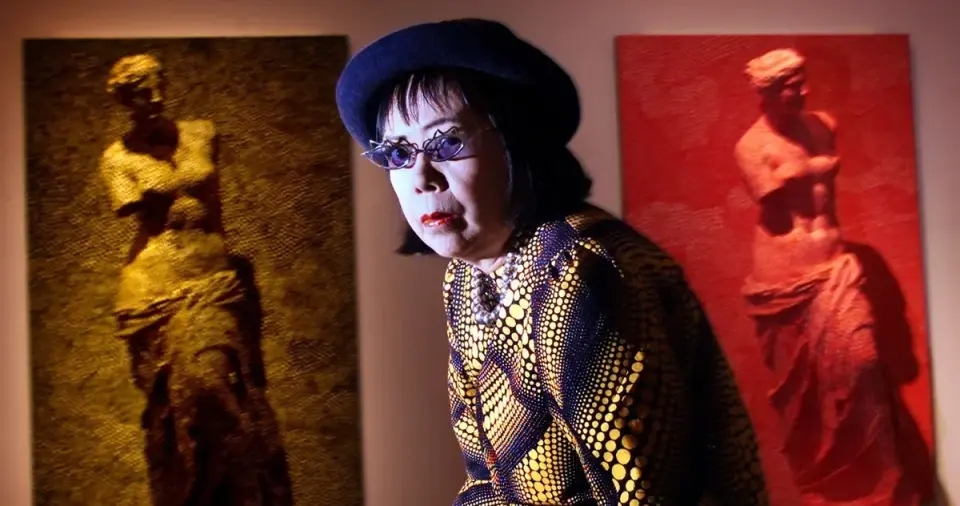
Japanese avant-garde artist Yayoi Kusama has died at age 97 from multiple organ failure in a Tokyo hospital. Confirmed by her dealer David Zwirner, her death marks the end of an era for an artist whose polka-dot motifs and immersive 'Infinity Rooms' influenced pop art, minimalism, and performance art. Despite decades of hospitalization for mental health, Kusama remained a prolific creator, with recent exhibitions drawing record-breaking global crowds.
Key points
- Yayoi Kusama died on August 14, 2026, in a Tokyo hospital from multiple organ failure; her death was confirmed by art dealer David Zwirner on August 26.
- Born in 1929 in Matsumoto, Japan, Kusama experienced hallucinations from childhood, which she channeled into her signature 'infinity nets' and dot patterns.
- She moved to New York in 1958, becoming a central figure in the post-war avant-garde and influencing artists like Andy Warhol and Claes Oldenburg.
- After returning to Japan in 1973, Kusama voluntarily admitted herself to the Seiwa Hospital for the Mentally Ill in 1977, where she lived permanently but continued to create art daily.
- Her 2024–25 retrospective at the National Gallery of Victoria in Melbourne attracted over 570,000 visitors, the highest-attended ticketed exhibition in the museum's history.
- Zwirner described her as 'the most famous living artist in the world' at the time of her passing, noting her career retrospective in Cologne became the most successful in the museum's history.
Background
Our archive from late August 2026 highlights that Kusama’s legacy extends beyond visual art into the realm of mental health advocacy. Previous coverage noted how her open discussion of her struggles and her use of art as a survival mechanism helped reshape perceptions of neurodivergence in the art world. Earlier reports also emphasized her controversial yet enduring status as a global icon who rose from near-obscurity and a long hospital stay to become a dominant force in contemporary art, influencing fashion, film, and feminist movements.
How outlets are covering it
While all sources agree on the facts of her death and her artistic impact, they emphasize different aspects of her legacy. Vulture focuses on her biographical details, including her difficult childhood, suicide attempts, and the specific timeline of her hospitalization, framing her as a 'beloved avant-garde artist.' The Guardian highlights her role as a trailblazer for neurodivergent artists, arguing that her work helped the art world embrace mental illness and sensory differences, drawing parallels to other artists like Nnena Kalu. The Conversation provides a broader academic and historical context, detailing her influence on multiple art movements and noting the commercial success of her exhibitions, such as the record-breaking attendance at the National Gallery of Victoria. David Zwirner’s statement, cited by Vulture, emphasizes her global fame and the success of her recent retrospectives, while The Guardian and The Conversation focus more on the therapeutic and societal implications of her work.
Why it matters
Kusama’s death marks the loss of one of the most influential figures in 20th and 21st-century art. Her work not only shaped major art movements but also challenged societal norms around mental health and neurodiversity. Her ability to create prolifically while living in a psychiatric hospital for decades redefined the relationship between art, survival, and mental illness. Her legacy continues to inspire new generations of artists and has made her exhibitions some of the most visited in the world, demonstrating the enduring power of her immersive and pattern-based art.
What to watch
Expect a wave of tributes, retrospectives, and critical reassessments of Kusama’s work in the coming months. Museums and galleries worldwide will likely highlight her contributions, and her influence on contemporary art, particularly in the areas of experiential art and neurodiversity, will be further explored. Her estate and the David Zwirner gallery will manage the distribution of her works and any future exhibitions, ensuring her legacy remains a central part of the art world's discourse.
- Beloved Avant-Garde Artist Yayoi Kusama Dead at 97 Vulture
- Yayoi Kusama, Japanese Pop Artist Known for Polka-Dot Paintings, Dies at 97 The New York Times
- ‘I fight pain and fear with art’: how Yayoi Kusama blazed a trail for neurodivergent artists The Guardian
- ‘The only method I have found that relieved my illness is to keep creating art’: remembering Yayoi Kusama The Conversation
- Yayoi Kusama, high priestess of polka dots, has died NPR
Want the full story? Read the original reporting
Read on Vulture