
Unprecedented Discovery: Collision of Giant Ice Planets Unveiled 1850 Light-Years Away
TL;DR
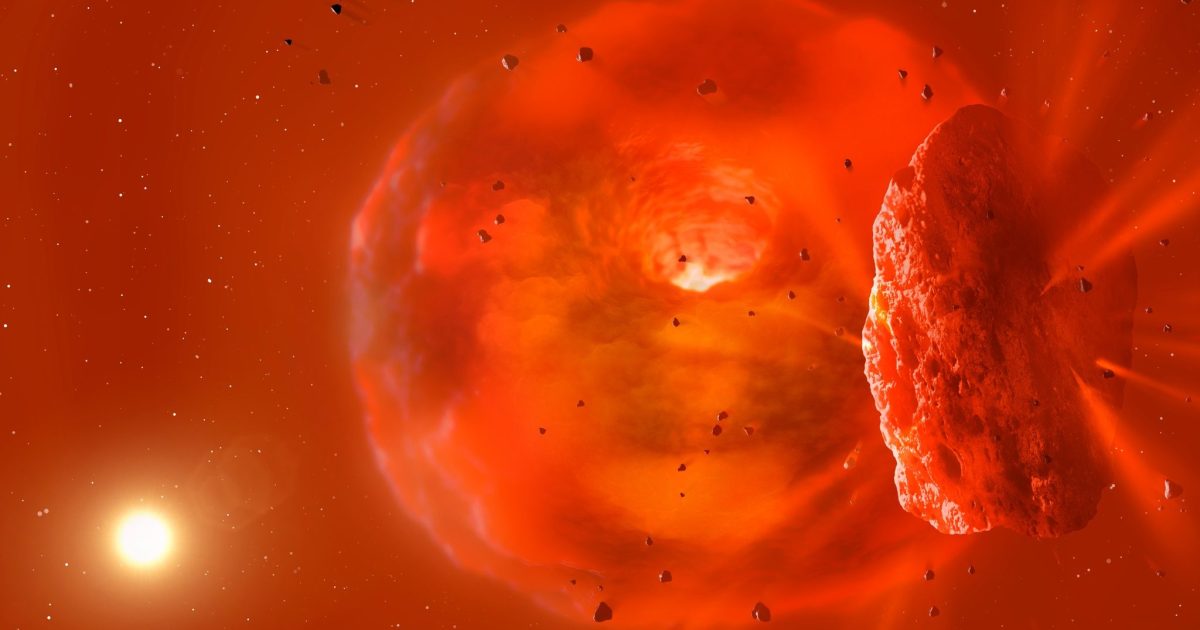
Scientists have observed a rare event: the aftermath of a massive planetary collision around a star located 1850 light-years away. The collision likely involved two Neptune/mini-Neptune exoplanets, creating a synestia, a puffy ring of debris around a joint planetary core. The resulting debris cloud periodically blocks the parent star's light, causing dimming events. The infrared afterglow from the synestia is expected to persist for centuries. Over time, a single giant world with a rich lunar system is expected to emerge from this collision.
Topics:top-newsastronomy#astronomy#infrared-afterglow#moon-formation#planetary-collision#stellar-dimming#synestia
- Extraordinary, moon-forming planet collision spotted 1850 light-years away Big Think
- Astronomers Accidentally Capture Planet Collision for the First Time ExtremeTech
- Scientists Find Aftermath Of Planets Colliding In Deep Space Giant Freakin Robot
- Exoplanet Hunters Spot Something They've Never Seen Before While Observing Distant Alien Ice Giant The Debrief
- Astronomers Say Two Giant Ice Planets Collided, Leaving Donut-Shaped Wreckage Futurism
Want the full story? Read the original reporting
Read on Big Think