
Intel's Q4 Guidance Triggers Historic 28% Plunge, Wiping $100B in Value
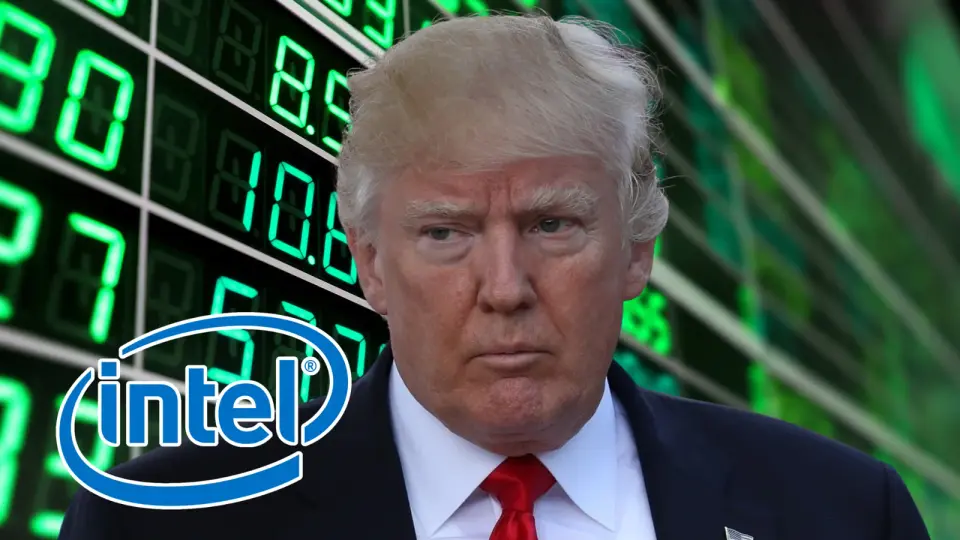
Intel shares dropped nearly 30% on October 30, 2026, erasing over $100 billion in market value after the company issued weak fourth-quarter guidance. The decline erased approximately $11.3 billion in value from the U.S. Commerce Department's 10% stake in a single session. While third-quarter results beat expectations, the outlook for 2026 and 2027 disappointed investors due to a projected PC market slump and a lack of positive cash flow.
Key points
- Intel stock fell 28.41% to $65.91 on October 30, 2026, marking its worst day since 1974.
- The U.S. Commerce Department's 433.3 million-share stake lost roughly $11.3 billion in value overnight, though it remains worth about $19.66 billion more than the $8.9 billion purchase price.
- Fourth-quarter guidance projected revenue of $15 to $16 billion and adjusted earnings of $0.25 per share, missing analyst expectations of $17.1 billion and $0.43 per share.
- CFO Dave Zinsner warned that 2027 will not see positive cash flow, citing a 12% PC market shrink in 2026 and 10% in 2027.
- An explosion at Intel's Israel factory is expected to cost $300 million in Q4 revenue and $600 million over two quarters, impacting 10-nanometer chip shipments.
Background
Intel shares had surged over 150% in 2026 prior to the earnings report, driven by a recovery in its foundry business and a $23 billion equity offering in August. The U.S. government acquired a 10% stake in August 2025 using CHIPS Act funds and Secure Enclave program money. Recent archive coverage notes broader tech sector volatility, including Nvidia's dominance in AI and concerns over Chinese spy targeting, but the current drop is primarily driven by Intel's internal guidance and PC market headwinds.
How outlets are covering it
24/7 Wall St. emphasizes the immediate financial impact on the U.S. government's stake, noting the paper loss of $11.3 billion but highlighting that the stake remains 3.2 times its cost. Yahoo Finance frames the drop as a historic event, comparing it to the worst days in 1974 and 2024, and attributes the crash to a 'terrible' outlook for the PC market. CNBC focuses on the operational details, noting that while data center revenue jumped 78%, client computing revenue fell 5%, and highlights the lack of major external foundry customers despite progress on 14A and 18A chips. All sources agree that the strong Q3 results were overshadowed by the weak forward guidance.
Why it matters
The selloff signals deep investor concern about the sustainability of the AI-driven chip boom, particularly as memory shortages drive up PC prices and suppress demand. The U.S. government's significant stake in Intel makes the stock's performance a direct indicator of the success of CHIPS Act industrial policy. A prolonged PC slump and lack of foundry customers could threaten Intel's multi-year turnaround strategy and its status as the only U.S.-based advanced logic chip manufacturer.
What to watch
Investors are watching whether Intel can name external foundry customers by its first-quarter 2027 report. The company expects to announce customers in the 'next two quarters.' Additionally, the market will monitor if Intel's stock closes above the session low of $64.11 and how other chipmakers like AMD and Nvidia perform in their upcoming earnings reports. The PC market is expected to remain soft until memory supply and prices normalize.
- Trump's Commerce Department's Intel Stake Fell By More Than $10 Billion In A Day As Stock Craters 24/7 Wall St.
- Intel stock plunges nearly 30%, on pace for its worst day since 1974 Yahoo Finance
- Intel stock plunges 21% as chipmaker blames PC slowdown for weak guidance CNBC
- Intel on course for worst day ever, triggers global chip rout Reuters
- Intel Plunges After PC Slump and Supply Snags Hurt Outlook Bloomberg.com
Want the full story? Read the original reporting
Read on 24/7 Wall St.