
Tesla to End Cybertruck Production in 2027 to Prioritize Autonomous Cybercab
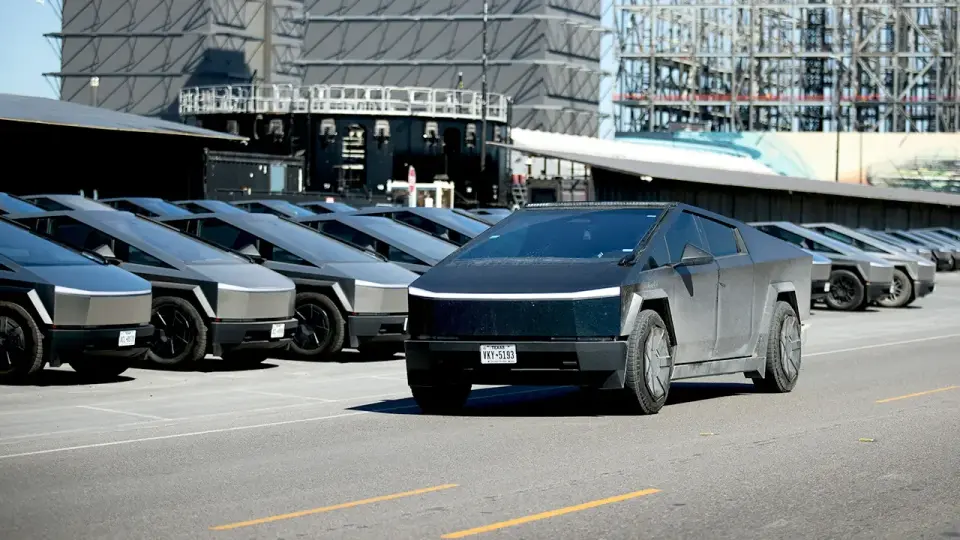
Elon Musk announced that Tesla will cease Cybertruck production at its Gigafactory Texas in Austin around mid-2027. The decision reallocates manufacturing capacity to increase output of the autonomous Cybercab robotaxi. This move follows a significant decline in Cybertruck sales, which dropped 48% in 2025 to 20,237 units in the U.S., far below Musk’s initial projection of 250,000 units annually. The Cybercab, a two-seater robotaxi, has limited production capacity but is central to Tesla’s pivot toward AI and autonomous transportation. The discontinuation of the Cybertruck marks a strategic shift away from large, heavy electric vehicles toward smaller, more affordable models, aligning with broader industry trends.
Key points
- Tesla will end Cybertruck production at Gigafactory Texas in Austin by mid-2027 to prioritize Cybercab output.
- Cybertruck U.S. sales fell 48% in 2025 to 20,237 units, down from 38,965 in 2024, far below Musk’s 250,000-unit annual target.
- The Cybercab robotaxi has limited production capacity but is central to Tesla’s AI and autonomous transportation strategy.
- The move aligns with a broader industry shift away from large, heavy electric vehicles toward smaller, more affordable models.
- The Cybertruck faced 11 recalls since its 2023 debut, including issues with side panels and software bugs.
Background
The Cybertruck was unveiled in 2019 and began deliveries in late 2023 after years of delays. It was marketed as a futuristic rival to legacy pickup trucks but faced criticism for its design, recalls, and declining sales. The vehicle’s discontinuation follows the cancellation of Ford’s F-150 Lightning, signaling a broader industry shift away from large electric vehicles. Tesla’s pivot to the Cybercab reflects its focus on AI and autonomous transportation, with the Cybercab serving as a basis for a global robotaxi network.
How outlets are covering it
Fox Business emphasizes the strategic shift to Cybercab production and Musk’s statement that the Cybertruck was the 'best vehicle Tesla has ever made.' Rolling Stone criticizes the Cybertruck as a symbol of a 'failed and stupid era,' highlighting its impractical design and Musk’s political associations. Ars Technica notes the Cybertruck’s discontinuation as a move away from a 'flop,' while WIRED frames it as positive news for EVs, citing the shift toward smaller, more affordable vehicles and benefits for the battery supply chain. All sources agree on the sales decline and the strategic pivot to Cybercab, but differ in their assessment of the Cybertruck’s legacy and the broader industry implications.
Why it matters
The discontinuation of the Cybertruck signals a strategic shift in Tesla’s product lineup and the broader EV market. It reflects declining demand for large, heavy electric vehicles and a pivot toward smaller, more affordable models. The move also highlights Tesla’s focus on autonomous transportation, with the Cybercab serving as a key component of its AI and robotaxi strategy. The decision may impact the EV supply chain, as smaller vehicles require smaller batteries, potentially reducing costs and improving affordability. Additionally, the Cybertruck’s discontinuation underscores the challenges of Musk’s ambitious projects and the risks of overpromising in the EV market.
What to watch
Tesla will begin winding down Cybertruck production at Gigafactory Texas in mid-2027. The company plans to launch Cybercab service in Dallas next month and expand its autonomous transportation network. The Cybercab’s production capacity is currently limited, but Tesla aims to increase output as it pivots toward AI and robotics. The broader EV market may see a continued shift toward smaller, more affordable vehicles, with automakers like Ford and Rivian launching compact models. The impact on the battery supply chain and EV affordability will depend on the success of these smaller vehicles and the return of federal incentives, which are unlikely under the current administration but may return if Democrats take the White House in 2028.
- Tesla to wind down Cybertruck production at Texas factory next year to make room for Cybercab Fox Business
- Tesla Is Ending Production of Its Cybertruck and Refocusing on the Cybercab The New York Times
- Good Riddance to the Cybertruck, the Chariot of the Dumbest Gods Rolling Stone
- No more Cybertrucks; Musk moves on from the angular metallic flop Ars Technica
- The Cybertruck’s Death Is Actually Great News for EVs WIRED
Want the full story? Read the original reporting
Read on Fox Business