Tesla delivered 486,532 vehicles in Q3 2026, exceeding analyst expectations but falling 2.1% year-over-year. The Cybertruck and other models saw a 48% sales drop, while energy storage deployments rose 9.6%.
Tesla reported 486,532 vehicle deliveries for the third quarter, exceeding analyst expectations of approximately 462,000. The stock rose 5% on the news, though it remains down 21% year-to-date. While total deliveries fell 2% year-over-year, they rose 1.3% sequentially. Rivian also beat estimates with 19,248 deliveries. However, the Cybertruck continues to underperform, and the broader EV market faces headwinds from Chinese competition and the expiration of U.S. tax credits.
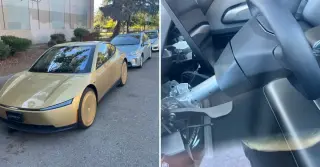
A pre-production Tesla Cybercab in Berkeley reveals a Cybertruck steering wheel bolted to an exposed steering column on a test mule, highlighting Tesla’s ongoing use of a driver-equipped rig for public-road testing even as the production Cybercab is designed to be wheel- and pedal-free for a robotaxi future.
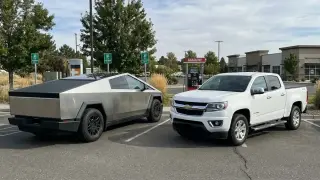
Over 15,000 miles, a home-charged Tesla Cybertruck runs about $1,100–$1,200 per year (~$7.50–$8 per 100 miles), while a gas Chevy Colorado costs around $2,500 per year (~$16–$17 per 100 miles) at ~21 MPG. So running an EV appears cheaper, but the Cybertruck’s much higher upfront price ($69,990 vs $32,400) and varying charging access mean it will take many miles to achieve payback.
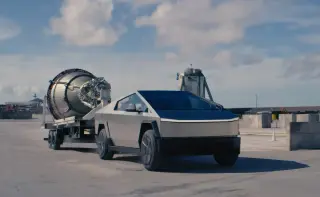
NASA will use SpaceX’s Tesla Cybertruck as the private emergency evac vehicle for Crew-13, replacing MRAPs to speed evacuations from the launchpad and avoid competing for rescue resources, despite earlier Cybertruck recalls and safety concerns.
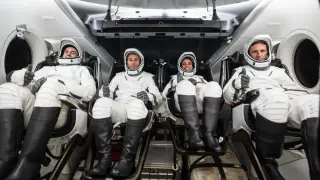
NASA and SpaceX will replace MRAPs with Tesla Cybertrucks as the emergency escape vehicles for Crew Dragon missions, starting with Crew-13 in September, to avoid resource conflicts with other launches and because Cybertrucks can exit the blast danger area faster; the Cybertrucks require no vehicle modifications beyond certification for EVA entry with spacesuits. Crew-13 will launch Sept. 12 aboard the Grace capsule, with NASA's Jessica Watkins (commander) and Luke Delaney (pilot), CSA's Joshua Kutryk, and Roscosmos's Sergey Teteryatnikov.
NASA will use a Tesla Cybertruck to evacuate the Crew-13 astronauts from the launch pad, replacing the previously used MRAPs. NASA says the EV is quicker and easier to drive with gloves, though the Cybertruck has not been modified and carries the memory of 11 NHTSA recalls. The Crew-13 crew includes NASA’s Jessica Watkins and Luke Delaney, Canada’s Joshua Kutryk, and Roscosmos’ Sergey Teteryatnikov; their launch is no earlier than 12 September 2026 and they will join Expedition 75 aboard the ISS for investigations and tech demonstrations, including in-space manufacturing, AI-assisted health checks, and bioprinting.”,
Bloomberg-sourced analysis argues the Tesla Cybertruck has become the biggest flop in US automotive history, surpassing the Ford Edsel. It notes Cybertruck sales of about 40,000 in its first year (vs a 250,000 target) and around 7,100 so far this year, with figures skewed by Elon Musk selling trucks to his own companies. The Edsel, launched in 1957 with an anticipated 200,000 first-year sales, ended far short and cost Ford roughly $350 million (about $2.5 billion today). Whether the Cybertruck’s reputation can improve remains to be seen.
Tesla’s Cybertruck, once projected to reach 250,000 units annually, delivered far less than that target (roughly one‑sixth of the projection with about 38,965 units in 2024 and 20,237 in 2025; 2026 deliveries remain weak). Q2 earnings missed estimates (EPS $0.33 vs ~$0.54–$0.54), and free cash flow swung negative to about $1.09B, contributing to a roughly 18% stock drop in a week and an 11‑month low. Despite overall vehicle deliveries reaching a record, the Cybertruck’s poor performance has reignited Edsel‑style flop comparisons as investors reassess its role in Tesla’s growth story.
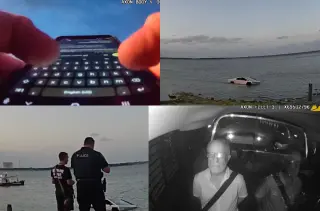
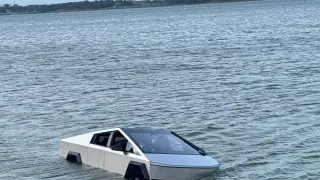
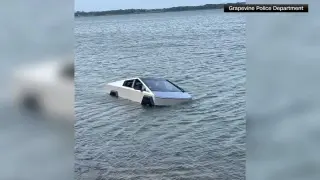
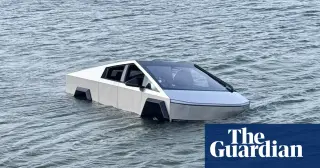
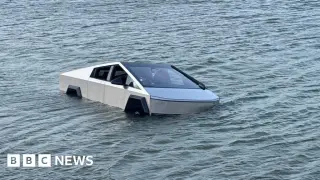
In Grapevine, Texas, a man drove a Tesla Cybertruck into Grapevine Lake to test Wade Mode, fled with passengers (German tourists), and was arrested after water-rescue teams retrieved the vehicle; authorities cited charges including operating a vehicle in a closed section of park/lake and water-safety equipment violations, noting this is part of a string of Cybertruck mishaps.
A Texas Cybertruck owner intentionally tested Wade Mode by driving into Grapevine Lake, the truck flooded and bricked, and the driver, Jimmy Jack McDaniel, was arrested for operating a vehicle in a closed section of the lake and multiple water-safety violations, including lacking a valid boat registration. Wade Mode is designed to keep the vehicle’s components out of water for depths up to about 32 inches, but the video showed the tires submerged; authorities warn against driving vehicles into waterways and remind users to read the manual before attempting such stunts.
A Tesla Cybertruck driver drove into Grapevine Lake to test the vehicle's Wade Mode; the truck became stranded, passengers fled, and law enforcement arrested the driver, prompting online commentary.
A Texas man deliberately drove his Tesla Cybertruck into Grapevine Lake to activate Wade Mode; the vehicle flooded and had to be recovered, and he was jailed on charges including operating a vehicle in a closed lake section and lacking proper boat registration, with warnings in the owner’s manual about water depth and safety.
In Grapevine, Texas, a driver intentionally drove a Tesla Cybertruck into a lake to test the vehicle’s Wade Mode; the car flooded and had to be recovered, with the driver and passengers abandoning it before being arrested on park-entry and water-safety violations. Wade Mode lets the vehicle drive through shallow water up to about 32 inches at slow speeds, with warnings about depth and speed.
A Texas man was arrested after deliberately driving his Tesla Cybertruck into Grapevine Lake to use Wade Mode; the vehicle became waterlogged and had to be recovered, with charges for operating in a closed section of the lake and water-safety violations. Wade Mode allows driving through shallow water up to about 32 inches, but raises safety and legal concerns.