
Critics split on Fincher’s ‘Cliff Booth’ sequel: A lazy 1977 caper or a stylish noir?
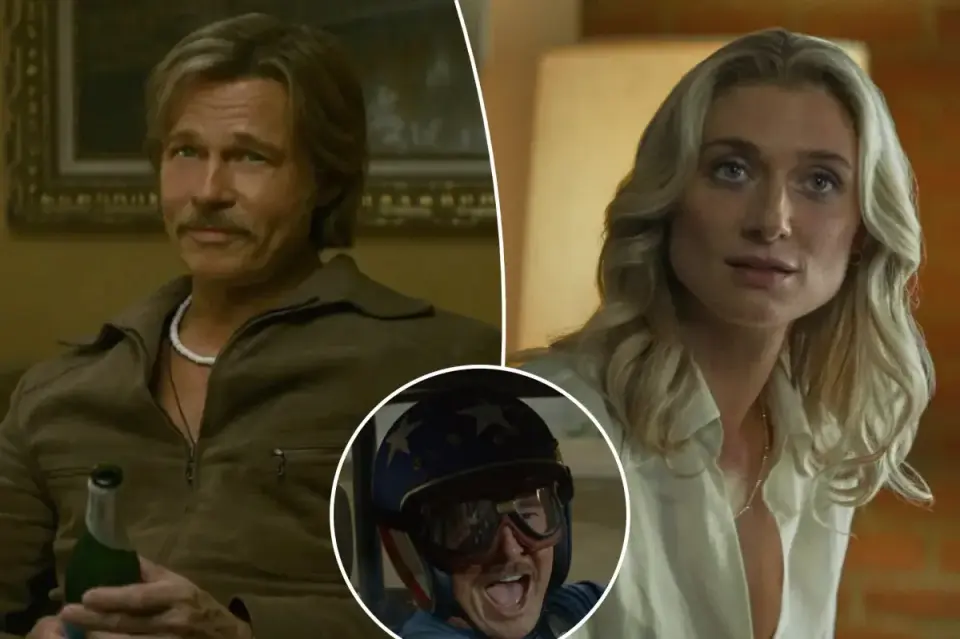
The Further Mis-Adventures of Cliff Booth is a 143-minute sequel to Once Upon a Time in Hollywood, written by Quentin Tarantino and directed by David Fincher. Released in IMAX theaters on November 25 and on Netflix on December 23, the film shifts the timeline to 1977 Los Angeles. Brad Pitt reprises his Oscar-winning role as Cliff Booth, now a laid-back Hollywood fixer and projectionist rather than a stuntman. The plot centers on Booth resolving a blackmail crisis for a TV star, involving a pair of Filipino hitmen and a romance with a talent agent. While the film features a strong ensemble cast including Elizabeth Debicki and Scott Caan, critical reception is sharply divided, with some praising its stylish nostalgia and others criticizing its lack of narrative drive.
Key points
- The film is a standalone sequel to the 2019 hit Once Upon a Time in Hollywood, set eight years later in 1977.
- Brad Pitt plays Cliff Booth, who has transitioned from a stuntman to a 'fixer' and projectionist at the New Beverly Cinema.
- The plot involves Booth helping a TV star, Charlie Peters, deal with two violent hitmen, the Verdusco brothers.
- Elizabeth Debicki stars as Karen Crosby, a talent agent and former film critic who becomes romantically involved with Booth.
- The film was written by Quentin Tarantino but directed by David Fincher, a collaboration that resulted in mixed critical reactions regarding tone and pacing.
- It has a 143-minute runtime and is rated R for violence, language, and sexual content.
Background
The project originated as a planned tenth film for director Quentin Tarantino, who eventually ceded directing duties to David Fincher due to personal and professional constraints. Tarantino retained the screenwriting credit, having developed the concept as a spin-off from his 2019 film. The shift from a 1969 to a 1977 setting marks a significant departure from the original timeline, moving the narrative from the counterculture era to the early 1980s transition period in Hollywood. The collaboration between the two auteurs was initially hyped as a major event, with early premiere reactions described as overwhelmingly positive, setting high expectations for the final release.
How outlets are covering it
Critical reception is polarized. The Guardian and IndieWire praise the film as a 'glorious return' and a 'stylish noir,' highlighting Brad Pitt’s charismatic performance and the film’s energetic, scabrous black comedy. They view the collaboration as a successful blend of Tarantino’s dialogue and Fincher’s precision. Conversely, the New York Post and BBC offer harsher critiques. The New York Post calls the film 'pointless' and 'fun-free,' arguing that Fincher’s sober direction clashes with Tarantino’s idiosyncratic script, resulting in a 'limp' narrative. The BBC describes it as a 'macho fantasy' with 'no depth,' noting that while the vintage details are well-crafted, the plot is thin and the film lacks the boundary-pushing ambition expected from either creator. All outlets agree that Elizabeth Debicki delivers a standout performance, though they differ on whether the film’s slow pacing is a stylistic choice or a structural failure.
Why it matters
The film represents a significant commercial and artistic test for the collaboration between two of Hollywood’s most prominent auteurs. Its performance will influence future projects for both Tarantino and Fincher, as well as the viability of high-profile sequels in the streaming era. The mixed reviews highlight the challenges of merging distinct directorial styles, particularly when one writer’s vision is executed by another director. Additionally, the film’s release strategy, moving from IMAX to Netflix, reflects the current industry trend of hybrid distribution models for major studio productions.
What to watch
The film is currently in a limited two-week IMAX theatrical run starting November 25, 2026. It will transition to global streaming on Netflix on December 23, 2026. Box office performance and streaming metrics will determine the financial success of the project. There are no announced sequels or spin-offs, but the film’s reception may influence whether Tarantino and Fincher collaborate again. The ongoing debate about the film’s quality may also impact the critical standing of both directors in the upcoming awards season.
- 'The Further Mis-Adventures of Cliff Booth' review: Tarantino and Fincher deliver a long and pointless Brad Pitt sequel New York Post
- The Further Mis-Adventures of Cliff Booth review – Tarantino and Fincher join forces for Brad Pitt’s glorious return The Guardian
- The Further Mis-Adventures of Cliff Booth review: Brad Pitt returns to his Oscar-winning role in a 'macho fantasy' ★★★☆☆ BBC
- ‘The Further Mis-Adventures of Cliff Booth’ Review: David Fincher’s Breezy Tarantino Spinoff Is a Disappointing Compromise Between Great Directors IndieWire
- ‘Cliff Booth’ First Reactions: Brad Pitt’s Sequel Is an ‘Absolute Triumph’ and a ‘Wildly Entertaining’ ‘Love Letter’ to Hollywood Yahoo
Want the full story? Read the original reporting
Read on New York Post