
Voyager 1 reaches one light-day from Earth amid ongoing data transmission issues
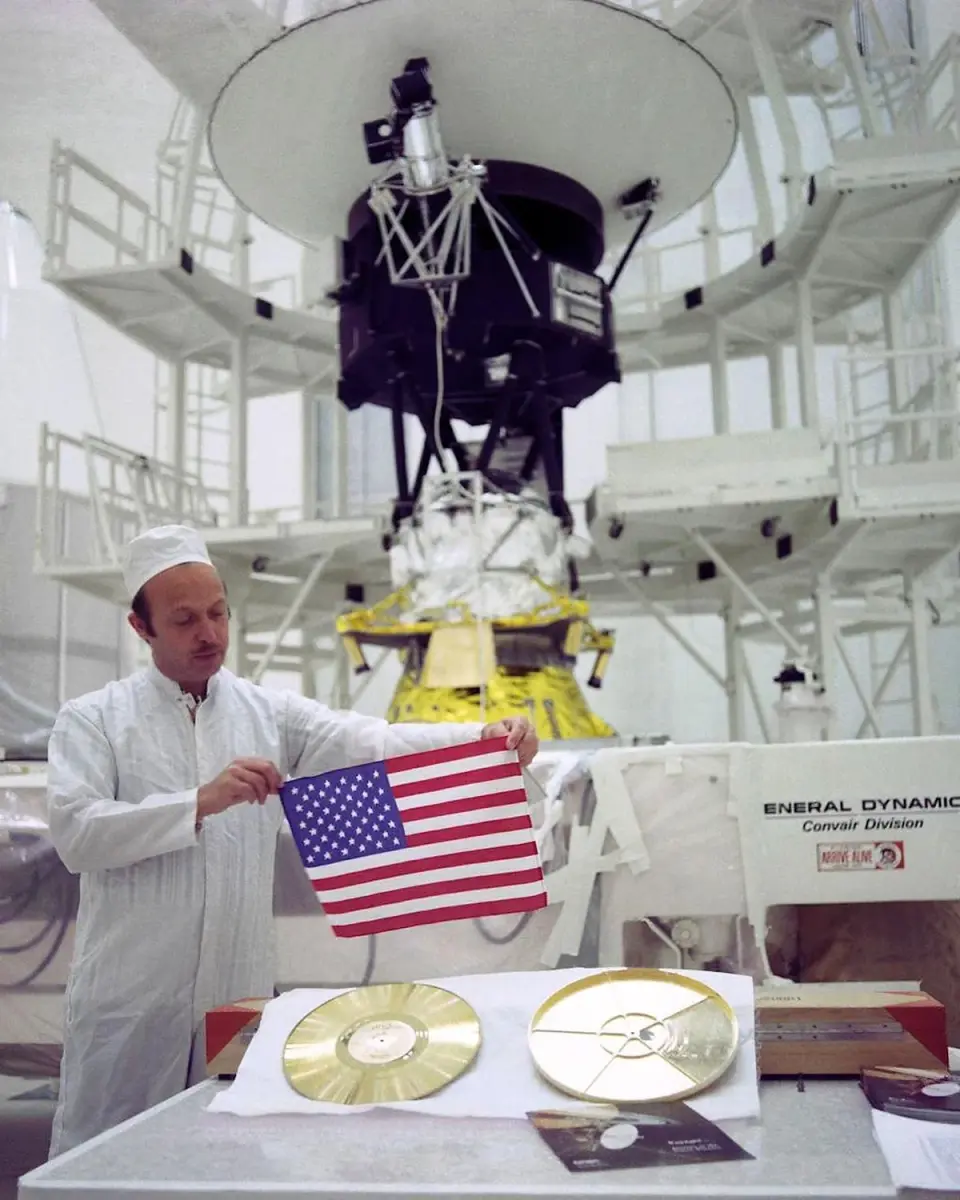
NASA’s Voyager 1 reached a distance of one light-day from Earth on November 18, 2026, marking the first time a human-made object has crossed this threshold. The milestone means radio signals now take 24 hours to reach the probe and another 24 hours to return, creating a 48-hour communication loop. Although the spacecraft has not transmitted science data since November 14, it continues to send a carrier signal, allowing engineers to confirm its trajectory and operational status.
Key points
- Voyager 1 crossed the one light-day mark on November 18, 2026, at approximately 16.1 billion miles from Earth.
- The spacecraft has not transmitted science or engineering data since November 14, but continues to send a carrier signal.
- Mission engineers are investigating the data outage, which may take weeks to resolve due to the extended communication delays.
- Voyager 1, launched in 1977, is the farthest human-made object from Earth and continues to operate on plutonium power.
- The probe’s Golden Record, a time capsule containing sounds and images from Earth, is expected to last over one billion years.
Background
Voyager 1 and its twin, Voyager 2, were launched in 1977 to explore the outer solar system. Voyager 1 crossed into interstellar space in 2012, while Voyager 2 did so in 2018. Both spacecraft have been operating for nearly 50 years, with Voyager 1 traveling at approximately 38,000 mph. The probes carry a Golden Record, a gold-plated phonograph containing sounds and images from Earth, intended as a message for any advanced civilization that might find them.
How outlets are covering it
NASA and JPL emphasize the historic significance of the one light-day milestone, highlighting the engineering challenges of maintaining communication with the spacecraft. Scientific American notes the symbolic nature of the milestone but also raises concerns about the spacecraft’s dwindling power supply, which may limit its operational life to the 2030s. Live Science focuses on the practical implications of the data outage, noting that the carrier signal allows engineers to track the probe’s trajectory but that the lack of science data hampers their ability to troubleshoot issues. All sources agree that Voyager 1 remains a vital tool for studying interstellar space, despite its aging hardware and communication challenges.
Why it matters
The one light-day milestone underscores the vast distances of space and the challenges of long-duration space missions. It also highlights the importance of maintaining communication with spacecraft that are far from Earth, as the extended delays make troubleshooting and data analysis more difficult. The ongoing data outage raises questions about the future of the Voyager mission and the need for innovative engineering solutions to extend its operational life.
What to watch
Mission engineers are investigating the data outage, which may take weeks to resolve due to the 48-hour communication loop. NASA is expected to provide updates on the status of the spacecraft and any progress in restoring science data transmission. The probe’s plutonium power source is depleting, and engineers are working to extend its operational life into the 2030s by swapping instruments and conserving energy.
- NASA's Voyager 1 phones home from an awe-inspiring one light-day away Yahoo Tech
- NASA’s Voyager 1 Makes History Reaching One Light-Day from Earth NASA Jet Propulsion Laboratory (JPL) (.gov)
- Three space milestones that sound like science fiction Scientific American
- Voyager 1's light-day milestone: 50 years of amazing solar system discoveries in photos Live Science
- A New Milestone for Life on Earth The Atlantic
Want the full story? Read the original reporting
Read on Yahoo Tech