
Kim Jong Un Inspects Nuclear Sites, Vows Expanded Tactical Deployment
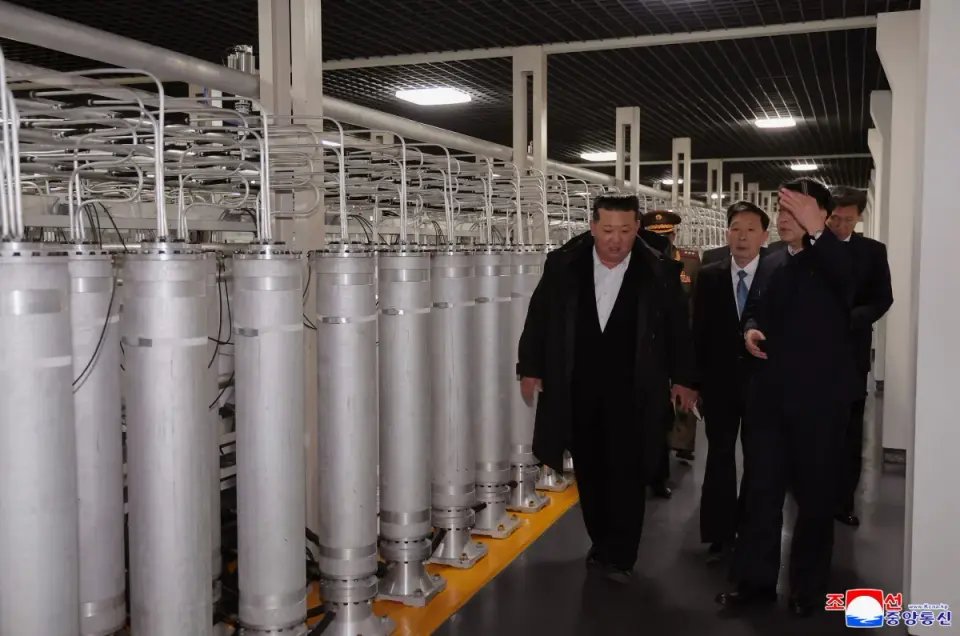
North Korean leader Kim Jong Un visited nuclear material production and weapons research facilities on Wednesday, November 25, and called for expanding tactical nuclear weapons across multiple domains. He declared North Korea's status as a nuclear-armed state 'absolutely inviolable' and warned that any attempt to deny it would be treated as an 'open declaration of war.' The visit followed a failed attempt by US President Donald Trump to meet Kim during the Asia-Pacific Economic Cooperation summit in Shenzhen. Kim accused the US of inciting regional allies to acquire nuclear-powered submarines and pursue nuclear sharing. South Korea's defense ministry stated that Pyongyang is generally believed to possess between 80 and 120 nuclear warheads, though this estimate is not officially confirmed. The IAEA reported in late October that a new extension to the Yongbyon uranium enrichment facility was externally complete.
Key points
- Kim Jong Un inspected nuclear material production and weapons research facilities on Wednesday, November 25, and called for expanding tactical nuclear weapons across multiple domains.
- Kim declared North Korea's status as a nuclear-armed state 'absolutely inviolable' and warned that any attempt to deny it would be treated as an 'open declaration of war.'
- The visit followed a failed attempt by US President Donald Trump to meet Kim during the Asia-Pacific Economic Cooperation summit in Shenzhen.
- Kim accused the US of inciting regional allies to acquire nuclear-powered submarines and pursue nuclear sharing.
- South Korea's defense ministry stated that Pyongyang is generally believed to possess between 80 and 120 nuclear warheads, though this estimate is not officially confirmed.
- The IAEA reported in late October that a new extension to the Yongbyon uranium enrichment facility was externally complete.
Background
North Korea's nuclear program has been expanding since 2019, when negotiations between Trump and Kim collapsed. The IAEA has lacked access to North Korea since 2009 and relies on satellite imagery and open-source intelligence to monitor its activities. In June 2026, Kim claimed North Korea's capacity to produce weapons-grade nuclear material had more than doubled over the past five years. South Korea's defense minister stated in August 2026 that North Korea possessed between 80 and 120 nuclear warheads, higher than the 57 figure cited by Trump the same month. North Korea's last nuclear weapon test was in 2017, but it has conducted multiple long-range missile tests since. A 2020 UN Security Council report said North Korea had 'probably developed nuclear devices to fit into the warheads of its ballistic missiles.'
How outlets are covering it
AP News emphasized Kim's rejection of denuclearization and his focus on tactical nuclear weapons, while CNN highlighted his warning that denying North Korea's nuclear status would be an 'open declaration of war.' Al Jazeera focused on the border tensions with South Korea, including the September 21 landmine explosion that injured three South Korean soldiers. CNBC noted the IAEA's assessment that a new extension to the Yongbyon uranium enrichment facility was externally complete by late October. All sources agreed that Kim's visit was part of efforts to counter perceived threats from the US and its allies, but they differed on the emphasis: AP and CNN focused on Kim's rhetoric, while Al Jazeera and CNBC highlighted the physical expansion of North Korea's nuclear infrastructure.
Why it matters
Kim's statements signal a shift toward more aggressive nuclear posturing, potentially escalating tensions in the region. The expansion of tactical nuclear weapons could increase the risk of miscalcation, especially given the ongoing border dispute with South Korea. The failure of Trump's outreach to meet Kim suggests a deepening impasse in US-North Korea relations, with Washington seeking denuclearization and Pyongyang demanding recognition as a nuclear power. The IAEA's assessment of the new Yongbyon facility extension indicates that North Korea's nuclear capabilities are growing, which could have implications for regional security and global nonproliferation efforts.
What to watch
North Korea is expected to continue expanding its nuclear arsenal, with the IAEA monitoring the new Yongbyon facility extension. South Korea's defense ministry will likely maintain a firm military readiness against Pyongyang's nuclear threats under its alliance with the US. The US may continue to pursue diplomacy with North Korea, but the fundamental disagreement over denuclearization versus recognition as a nuclear power remains unresolved. The border dispute with South Korea, including the September 21 landmine explosion, could escalate further if tensions persist.
- North Korea’s Kim vows to build more nuclear weapons after ignoring Trump’s overture AP News
- North Korea’s Kim Jong Un urges wider tactical nuclear deployment during inspection of weapons facilities CNN
- Kim Jong Un says North Korea should widen deployment of tactical nukes Al Jazeera
- North Korea's Kim urges wider tactical nuclear weapons deployment on facility tour, KCNA says Reuters
- North Korea's Kim calls for nuclear arsenal expansion, says status 'will never change' CNBC
Want the full story? Read the original reporting
Read on AP News