
Kremlin Adviser Warns of 'Unknown' Attacks on UK Drone Factories Amid Missile Tech Transfer
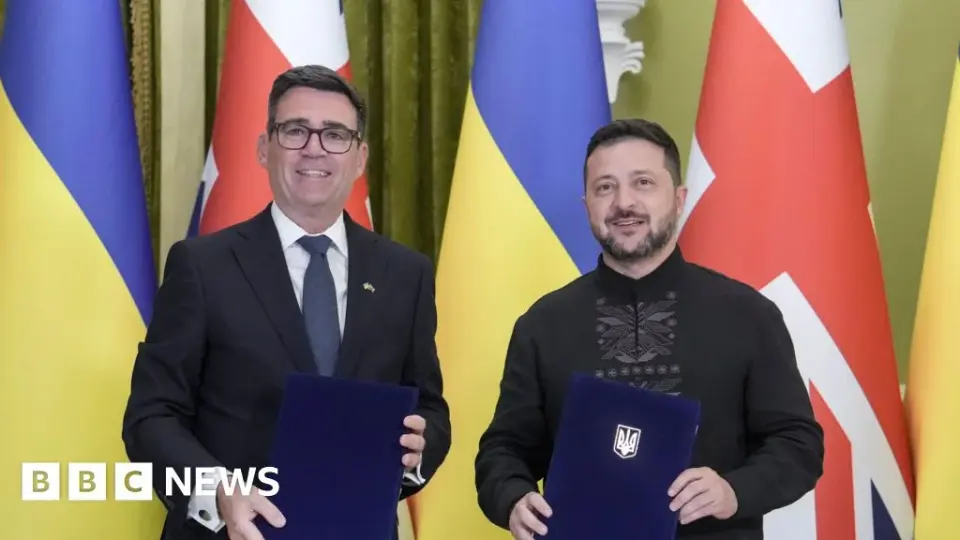
Kremlin adviser Andrei Fedorov warned that UK drone factories could face attacks from 'unknown sources' in response to London sharing missile blueprints with Kyiv. Prime Minister Andy Burnham, on his first official visit to Ukraine, reaffirmed support and pledged to lobby the US for Patriot interceptors. The UK and France are accelerating the transfer of Storm Shadow/SCALP technology to enable domestic Ukrainian production, a move Moscow condemned as escalating the conflict.
Key points
- Kremlin adviser Andrei Fedorov stated that 'semi-military' responses could target UK drone factories, attributing the pressure to public opinion and media rather than direct Russian state action.
- The UK agreed to share blueprints for British-made components of the SCALP missile, allowing Ukraine to produce the long-range weapon domestically by the end of the year.
- PM Andy Burnham visited Kyiv for Ukraine's 35th independence anniversary, meeting President Zelensky and co-chairing the Coalition of the Willing to boost air defenses.
- Burnham plans to travel to New York in September to lobby President Trump for Patriot interceptors, noting that US stockpiles are depleted due to the war in Iran.
- Kremlin spokesman Dmitry Peskov criticized the UK's actions as 'pouring fuel on the fire,' while Burnham countered by asking who started the conflict.
Background
This development follows a period of escalating Russian strikes on Ukrainian infrastructure and a surge in Ukrainian drone attacks on Russian refineries, which have caused fuel shortages in Russia. The UK's decision to share missile technology marks a significant escalation in direct military support, moving beyond supplying finished weapons to enabling local production. This follows earlier tensions where the US backtracked on allowing Ukraine to manufacture Patriot interceptors, highlighting the complex diplomatic negotiations surrounding advanced weapons technology.
How outlets are covering it
The BBC and CNN both report on the Kremlin's warnings, but emphasize different aspects. The BBC highlights Fedorov's specific comment about 'unknown sources' attacking factories, framing it as a potential indirect response to avoid direct confrontation. CNN focuses more on the technical details of the SCALP/Storm Shadow transfer and the broader strategic shift in Ukraine's ability to strike deep into Russia. Both outlets agree that the UK's move is seen by Moscow as a major escalation, but the BBC notes the Kremlin's attempt to distance itself from potential attacks by blaming 'unknown' actors, while CNN emphasizes the practical military implications of the technology transfer. The Telegraph source was inaccessible due to a security block, so its perspective cannot be included.
Why it matters
The threat of attacks on UK industrial sites signals a potential expansion of the conflict's geographic scope, moving from the battlefield to European soil. The transfer of missile technology could significantly alter the balance of power by allowing Ukraine to sustain long-range strikes without relying on finite Western stockpiles. Burnham's push for Patriot interceptors highlights the critical vulnerability in Ukraine's air defense, which could be exploited by Russia in the coming winter. This diplomatic and military escalation may force the US to reconsider its stance on weapons transfers, potentially reshaping the international support structure for Ukraine.
What to watch
Burnham is expected to travel to New York in September to meet with US President Trump and other leaders to secure Patriot interceptors. The UK and France aim to have a Ukrainian production line for SCALP missiles operational by the end of 2026. The Coalition of the Willing will conduct its first full-scale military exercises in Poland in October and November. The Kremlin may continue to issue warnings or engage in indirect actions against UK infrastructure, though the specific nature and timing of any 'unknown source' attacks remain uncertain.
- Burnham planning to visit US in September to lobby Trump on Ukraine BBC
- Russia threatens to attack British factories The Telegraph
- Britain’s giving Ukraine access to secret missile technology. Will it make a difference? CNN
- UK Prime Minister Burnham Arrives in Ukraine as Russia Amps Up Warnings The New York Times
- Kremlin says British missile help for Ukraine 'adds fuel to the fire' Reuters
Want the full story? Read the original reporting
Read on BBC