
Latvia's President Predicts a 2026 Tipping Point Against Russia Amid Hybrid Threats
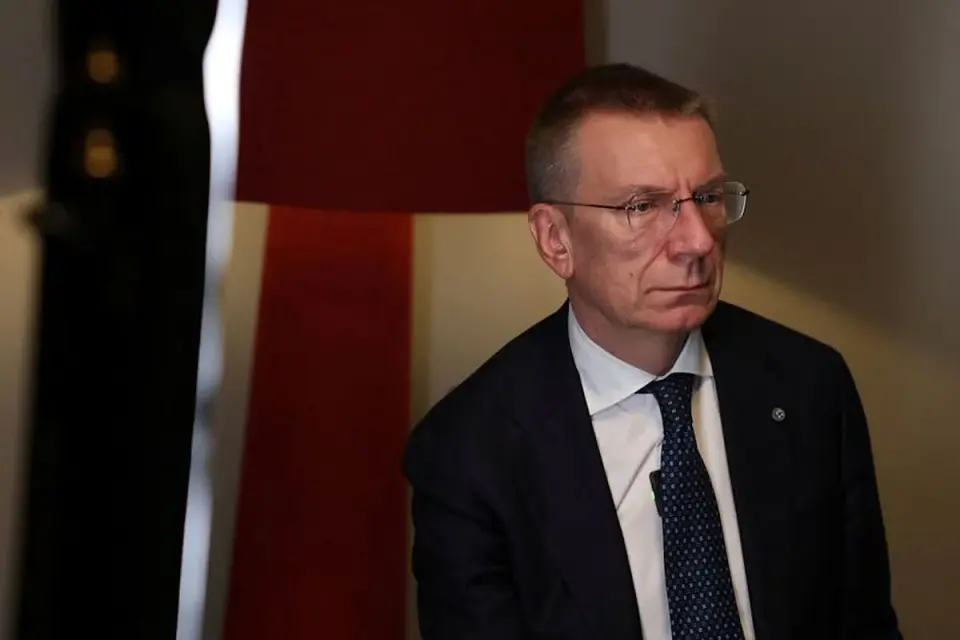
Latvian President Edgars Rinkevics stated in a Reuters interview that Russia's war against Ukraine could reach a decisive tipping point by next spring or summer, driven by Moscow's economic strain and rising international pressure. He dismissed recent ceasefire talks as a 'decoy' to prolong the invasion, arguing that Russia lacks genuine intent to end the conflict. While acknowledging Ukraine's resilience against a 'perfect storm' of winter attacks and energy strikes, Rinkevics highlighted Europe's growing support. He also warned of escalating 'hybrid activities,' including cyberattacks and sabotage in NATO countries, noting that while Russia avoids triggering Article 5, its risk appetite is increasing. Latvia has summoned Russia's ambassador over these incidents, emphasizing the need for enhanced intelligence cooperation among European nations.
Key points
- Rinkevics predicts a potential tipping point for the Ukraine war in spring or summer 2026, citing Russia's worsening economy and global political consensus against the war.
- The Latvian president characterized recent ceasefire negotiations as a 'decoy' tactic by Moscow, asserting that Russia is not genuinely interested in ending the conflict.
- Ukraine is facing a 'perfect storm' of brutal winter conditions, increased attacks on energy infrastructure, and strikes on civilian targets, but has demonstrated resilience with European military and financial support.
- Rinkevics warned of rising 'hybrid activities' against European nations, including airspace violations, cyberattacks, and sabotage, which have increased sharply since 2022.
- While Russia has avoided crossing the red line that would trigger a NATO Article 5 response, its appetite for risk is growing, prompting Latvia to summon Russia's ambassador in Riga.
- European intelligence agencies are improving cooperation and coordination to preempt attacks, though determining proportionate responses to incidents in Germany, Spain, and the Baltics remains a challenge.
Background
This development follows earlier reports on global tipping points, such as the irreversible collapse of Thwaites Glacier and China's demographic shifts, but focuses specifically on geopolitical and military thresholds. The current situation contrasts with previous climate-focused tipping point discussions, highlighting instead a strategic military and economic threshold in the ongoing conflict between Russia and Ukraine. Latvia's rotating presidency of the UN Security Council provides a platform for these assessments, building on prior concerns about hybrid warfare and NATO cohesion.
Why it matters
Rinkevics's assessment signals a potential shift in the balance of power, suggesting that sustained pressure could lead to a decisive outcome for Ukraine. The emphasis on hybrid threats underscores the evolving nature of conflict, where traditional military boundaries are blurred by cyber and sabotage operations. This highlights the critical importance of intelligence sharing and diplomatic coordination within NATO to manage escalating risks without triggering broader confrontation.
What to watch
Europe is expected to continue strengthening military, financial, and infrastructure support for Ukraine while enhancing intelligence cooperation to counter hybrid attacks. Latvia and other Baltic states may further escalate diplomatic pressure on Russia, including summoning ambassadors and coordinating responses to sabotage incidents. The coming months will test whether economic and political pressure can indeed create a tipping point, or if Russia's risk appetite leads to more aggressive hybrid activities.
Want the full story? Read the original reporting
Read on Yahoo