
Trump Halves U.S.-South Korea Drills to Court Kim, Straining 70-Year Alliance
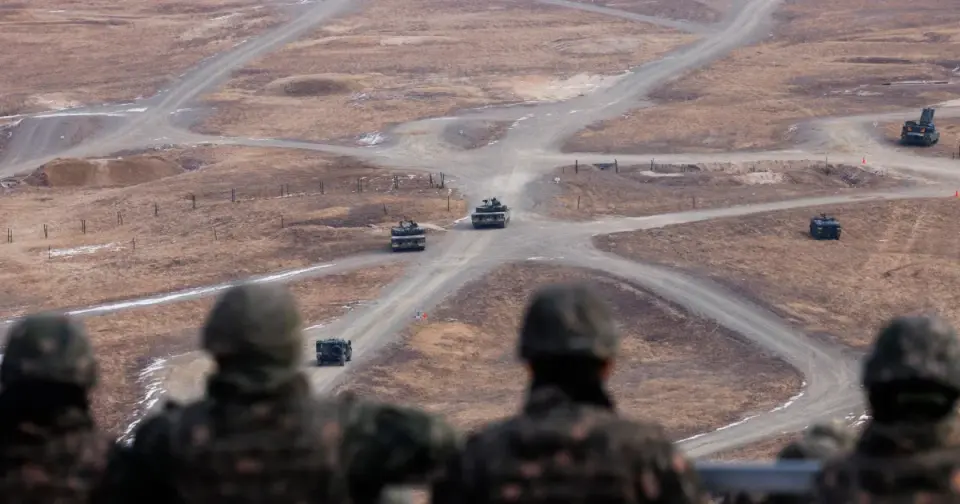
President Donald Trump has ordered a significant reduction in the annual Ulchi Freedom Shield joint military exercises with South Korea, cutting the duration from 10 days to 5 days. The move, driven by Trump’s desire to improve relations with North Korean leader Kim Jong Un, has unsettled Seoul and raised concerns about U.S. reliability among regional allies.
Key points
- The Ulchi Freedom Shield exercise, originally scheduled to run from August 17 to August 27, will now end on August 21, effectively halving its duration.
- Trump ordered Defense Secretary Pete Hegseth to 'substantially reduce' the drills, citing his 'very good relationship' with Kim Jong Un and claiming the exercises send a 'hostile' signal to North Korea.
- South Korea’s National Defense Ministry confirmed the adjustments were made 'at the request of the U.S. side,' with some live-training events canceled or converted to simulations.
- Trump also cited South Korea’s limited involvement in the U.S.-Israeli war with Iran as a reason for the reduction, though he later claimed Kim had responded to his outreach.
- The U.S. maintains that 'there will be no degradation to U.S. training objectives,' while South Korea’s President Lee Jae Myung stated Seoul sympathizes with Trump’s efforts to create conditions for dialogue.
Background
This development follows a series of earlier reports in August 2026 where Trump first signaled his intent to cut back on joint exercises, citing cost and his rapport with Kim. South Korea had initially pledged to maintain the alliance and proceed with drills as planned, but the latest order has forced a concrete reduction in scale and duration. The alliance has also been strained by Seoul’s refusal to support U.S. efforts regarding Iran and the transfer of wartime operational control.
How outlets are covering it
NBC News and CNN emphasize the surprise nature of the order, noting that neither the South Korean nor U.S. governments had prior knowledge of the decision, which has unsettled allies. CNN highlights that the drills were designed to counter North Korea’s evolving capabilities, including drones and cyberattacks. Politico argues that while the move is a 'political bombshell,' security officials believe it will do little to undermine the deterrence between Seoul and Pyongyang, suggesting Trump’s motivation is more transactional, linked to South Korea’s slow-walking of a $350 billion investment pledge. CNBC notes that the reduction may push South Korea toward greater defense autonomy and self-sufficiency, potentially reducing its reliance on the U.S. over time. All sources agree that the move has strained the 70-year alliance, with lawmakers like Sen. Jack Reed criticizing Trump for 'punishing' a strong ally for 'no reason beyond ego.'
Why it matters
The abrupt scaling back of a cornerstone military exercise signals a shift in U.S. foreign policy priorities, potentially weakening deterrence against North Korea’s nuclear and missile capabilities. It raises questions about the reliability of the U.S. as a security partner for its allies in Asia, particularly as North Korea has advanced its military capabilities and deepened ties with Russia. The move may also accelerate South Korea’s push for defense autonomy and could influence regional security dynamics, including relations with Japan, the Philippines, and Australia.
What to watch
The U.S. and South Korea are currently consulting on the specific details of the reduced exercises, with both nations stating they will implement measures to achieve the objectives of the Ulchi Freedom Shield exercise and maintain a robust combined defense posture. Trump is reportedly pressing aides to arrange a meeting with Kim Jong Un as soon as this fall, potentially during the Asia-Pacific Economic Cooperation summit in Shenzhen, China in November. Congress is expected to extend restrictions on reducing U.S. troop levels in South Korea in the 2027 National Defense Authorization Act, and South Korea may increase its own defense spending and form new partnerships with regional neighbors to bolster its security.
- U.S.-South Korea joint military drills are being cut short after Trump order, Seoul says NBC News
- Military drills between US and South Korea cut short at Washington’s request CNN
- Trump’s threats to Seoul may be worse than their bite Politico
- Seoul, Washington to halve joint drills as Trump reportedly seeks summit with North Korea's Kim CNBC
- US-led drills to end six days early, South Korea says, amid Trump push for Kim Jong-un talks The Guardian
Want the full story? Read the original reporting
Read on NBC News