Indonesia urges broader, deeper China joint drills
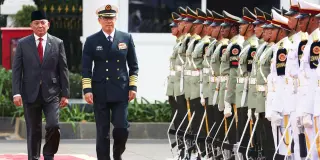
During talks in Jakarta, Indonesia's defense minister urged broader, more intensive joint military exercises with China, signaling a push to deepen defense cooperation.
All articles tagged with #military exercises

During talks in Jakarta, Indonesia's defense minister urged broader, more intensive joint military exercises with China, signaling a push to deepen defense cooperation.

President Trump ordered a substantial reduction of the US-South Korea Ulchi Freedom Shield drills, halting about half the planned program and prompting Seoul to reassess the alliance as North Korea tests missiles and sticks to its nuclear deterrent; Trump says he may meet Kim Jong Un later this year, while Kim Yo Jong downplays contact and North Korea maintains its nuclear policy, raising questions about security guarantees and the potential shift in regional dynamics.

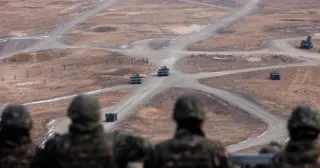
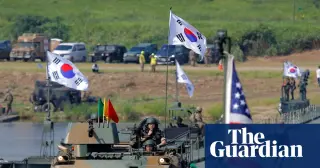
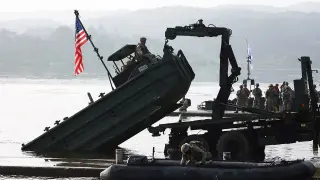
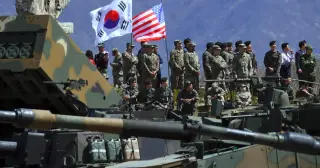
South Korea and the United States shortened the Ulchi Freedom Shield drill from 11 days to five, scaling back field maneuvers after President Trump ordered a substantial reduction in the annual war games. Some second-phase counterattack training was canceled or moved to simulations, while officials said essential readiness would be preserved. Seoul said it was not informed in advance, and North Korea condemned the drills as a threat, amid broader regional security concerns tied to Trump’s diplomacy with Kim Jong Un.

President Trump ordered reductions to the Ulchi Freedom Shield drills with South Korea, shortening the schedule to Aug. 21 from Aug. 27 and converting some live events to simulations, while officials said essential readiness will be preserved and training objectives will not be degraded; Seoul confirmed adjustments and is coordinating specifics.

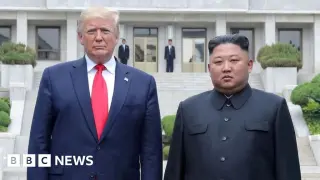
South Korea and the United States will cut short the Ulchi Freedom Shield drills by six days at Washington's request, with some live training components reduced. The Pentagon confirmed substantial cutbacks as President Trump indicated he wants talks with Kim Jong-un and cited the costly nature of the exercises. Seoul said it was not informed in advance and will continue coordinating with Washington, amid ongoing speculation about a possible summit and future changes to US troop activities in Korea.

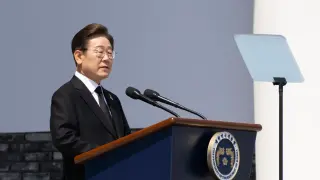
South Korean President Lee Jae Myung urged boosting Seoul's independent military capabilities after Trump ordered a substantial cut to U.S.-South Korea joint drills, stressing that Ulchi Freedom Shield is defensive and backing expansion of Seoul's nuclear-powered submarine program while hoping for improved U.S.–North Korea dialogue.

President Lee Jae-myung says maintaining peace is paramount but Korea must prepare for a worst-case scenario as Ulchi Freedom Shield, a defensive yearly drill, runs through Aug. 27 with about 18,000 South Korean troops; the exercises come amid U.S.-Korea coordination after Trump urged reducing drills and Pyongyang denounces them as invasion rehearsals, with U.S. Forces Korea numbering about 28,500.

Trump ordered the Pentagon to scale back Ulchi Freedom Shield, an 11-day drill with about 18,000 South Korean troops set for Aug 17–27, arguing it was a courtesy to North Korea; lawmakers from both parties decried the move as inane and shortsighted, warning it undermines a 73-year alliance, could weaken crisis readiness, and may bolster Russia’s hand in Ukraine.

President Trump directed the Defense Department to substantially reduce the Ulchi Freedom Shield joint exercises with South Korea, saying the drills are a hostile signal to North Korea and citing Seoul's refusal to join the Iran conflict; Seoul says the drills are proceeding as planned and coordination with the U.S. remains strong, while analysts warn scaled-back exercises could weaken deterrence and alliance readiness.

President Trump orders a substantial reduction of the Ulchi Freedom Shield drills with South Korea, citing cost and his relationship with Kim Jong-un, even as officials warn North Korea has learned battlefield tactics from Ukraine; the exercises will proceed with updated scenarios including drones, GPS disruption and cyber attacks, though analysts caution downsizing could weaken deterrence.

President Donald Trump has directed the Pentagon to scale back joint military exercises with South Korea, signaling a shift in alliance posture and potentially affecting deterrence on the Korean Peninsula.

President Trump says the US will substantially reduce joint military exercises with South Korea, citing cost and his very good relationship with Kim Jong Un. The Ulchi Freedom Shield exercise—an 11-day event with about 18,000 South Korean troops—is set to proceed despite North Korea’s missile tests and South Korea’s previous stance on Iran's denuclearization.

Russia ran unannounced strategic-nuclear exercises May 19–21 involving tens of thousands of personnel and strategic assets, with Belarusian participation, to posture against Ukraine’s allies and distract from perceived battlefield weaknesses. The move accompanies intensified messaging about NATO and Baltic security while Moscow seeks to shape Western calculations amid manpower and recruitment challenges. Putin’s China visit coincides with reports that the PLA trained Russian personnel in drone operations in 2025. Ukrainian long-range strikes against Russian oil infrastructure continue, and Russia’s drone campaign persists with high volumes and evolving FPV capabilities. Overall, ISW views these activities as part strategic signaling and information operations intended to bolster Russian aims while masking setbacks on the ground.

North Korea’s Kim Yo Jong condemned the U.S.-South Korea ’Freedom Shield’ drills as destabilizing, warning of unimaginably terrible consequences as about 18,000 personnel take part in 22 drills over 10 days; Washington and Seoul say the maneuvers are defensive and aim to boost readiness, while Pyongyang argues there is no justification and notes the peninsula remains technically at war since the 1953 armistice.

US CENTCOM will hold multi-day readiness airpower exercises in the Middle East to demonstrate the ability to deploy, disperse and sustain combat airpower as tensions with Iran rise, with a carrier strike group led by USS Abraham Lincoln in the region; the drills aim to deter aggression, bolster regional partnerships, and rehearse a flexible response.