
US Troops Conclude Iraq Withdrawal, Handing Regional Leverage to Iran
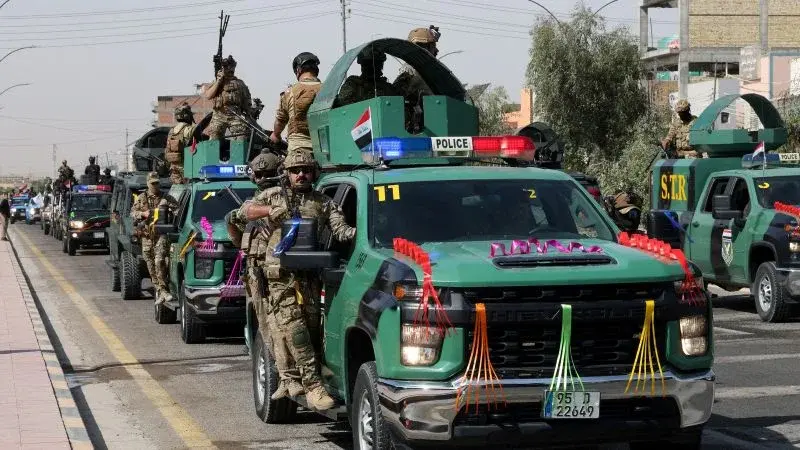
US forces have fully exited Iraq, ending a two-decade military presence that began with the 2003 invasion. The withdrawal, which concluded with the departure from bases in Erbil, marks a significant shift in regional power dynamics. While Washington frames the move as a successful transition to an Iraqi-led security effort, Iran and its allied militias have celebrated the exit as a victory. This development leaves Baghdad facing challenges in asserting sovereignty and disarming foreign-aligned factions, while Kurdish officials express anxiety over the removal of US air defense systems.
Key points
- US troops have completed their withdrawal from Iraq, ending a 23-year military presence that started with the 2003 invasion.
- The final departure involved forces leaving bases in Erbil, marking the end of the US military footprint in the country.
- Iran and its allied militias have celebrated the withdrawal as a victory, complicating Baghdad's efforts to assert sovereignty.
- Kurdish officials have expressed deep anxiety over the removal of US air defense systems, leaving the region vulnerable.
- The Iraqi government has pushed the deadline for militia disarmament to June 2027, leaving powerful armed groups outside state control.
- US Secretary of State Marco Rubio previously warned that Iraq risks 'Balkanisation' unless armed factions are brought under state control.
Background
The US military presence in Iraq began with the 2003 invasion and lasted for two decades. In late September 2026, US Secretary of State Marco Rubio warned that Iraq risks 'Balkanisation' unless armed factions are brought under state control. He noted that some groups have disarmed, but others remain defiant. The deadline for disarmament was pushed to June 2027, coinciding with the withdrawal of remaining US troops. Prime Minister Ali al-Zaidi framed the exit as a victory for sovereignty, while critics warned it creates a security vacuum. Kurdish and Sunni leaders feared a resurgence of Islamic State and increased Iranian dominance.
Why it matters
The complete US withdrawal from Iraq marks a significant shift in regional power dynamics, ceding influence to Iran and its allied militias. This development complicates Baghdad's efforts to assert sovereignty and disarm foreign-aligned factions, while leaving Kurdish regions vulnerable and raising fears of a security vacuum. The move also highlights the challenges of transitioning to an Iraqi-led security effort and the potential for increased instability in the region.
What to watch
The Iraqi government has set a deadline for militia disarmament in June 2027. Kurdish officials are likely to seek alternative security arrangements to replace the removed US air defense systems. The US may continue to monitor the situation from a distance, while Iran and its allies may consolidate their influence in the region. The risk of a resurgence of Islamic State and increased Iranian dominance remains a concern for regional stability.
Want the full story? Read the original reporting
Read on CNN