
Xi's Washington Visit: A Test of Trade Truce and AI Tensions
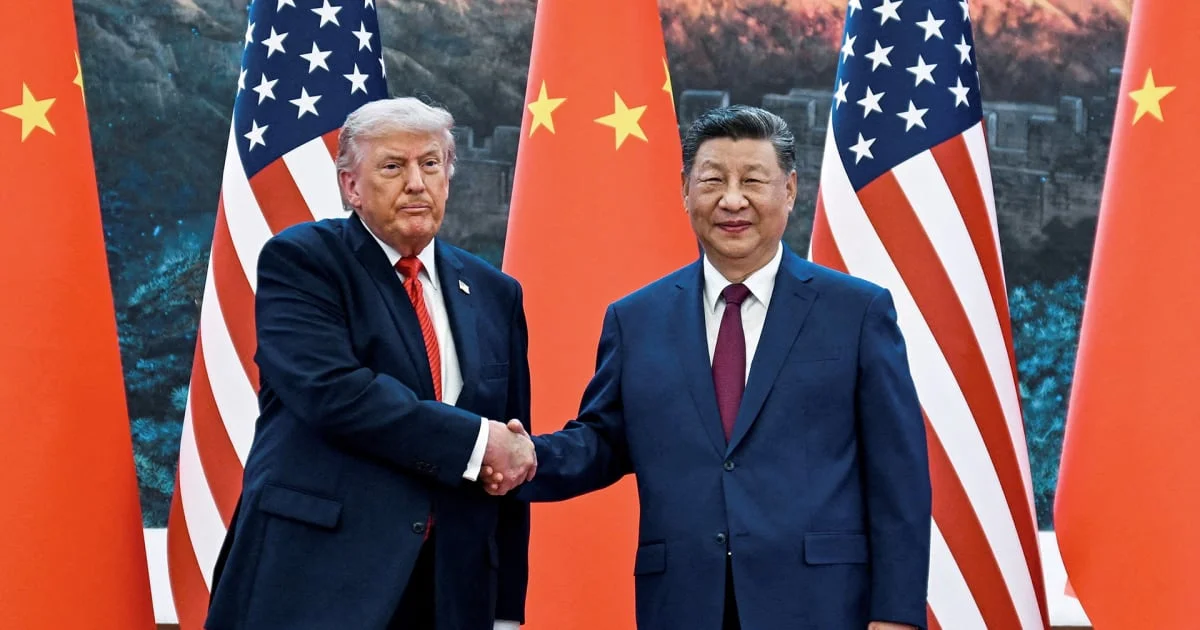
Chinese President Xi Jinping arrives in Washington for a three-day state visit, marked by unprecedented ceremonial honors from President Donald Trump. The summit focuses on extending the 'Busan' trade truce, which expires on November 10, and establishing an AI dialogue. While Beijing seeks to leverage its rare earth controls and technological advancements, Washington retains leverage through potential tariffs and export controls. Analysts expect limited concrete deliverables, with the primary outcome likely being a temporary extension of the trade pause and preliminary discussions on AI safety, rather than a comprehensive breakthrough.
Key points
- Xi Jinping's visit includes a tarmac welcome by Trump, a B-2 and F-22 flyover, and a state dinner, signaling a shift toward reciprocal diplomatic engagement.
- The 'Busan' trade truce expires on November 10; the US seeks a three-to-six-month extension to assess Chinese compliance with rare earth commitments, while Beijing seeks an extension through the end of Trump's term.
- An AI dialogue has been agreed upon, potentially including a crisis communication line, but questions remain regarding the participation of relevant agencies and the feasibility of coordinated regulation.
- The US has delayed a Section 301 tariff report and a new law authorizing up to 100% tariffs on Russian oil buyers, including China, but retains these as potential levers.
- Purchase commitments, such as Boeing aircraft and agricultural goods, remain uncertain, with Boeing deals potentially stalled by parts disputes and Chinese auto investment in the US facing significant resistance from US unions and regulators.
Background
This summit follows a series of preparatory talks in New York between US Treasury Secretary Scott Bessent and Chinese Vice Premier He Lifeng, where an AI dialogue and a 'Board of Trade' were proposed. The visit occurs amid a broader context of US-China tensions, including disputes over Taiwan, Iran, and technology export controls. The previous summit in Beijing in May 2026 established the current 'détente but not quite a détente' dynamic, where both sides seek stability but maintain significant leverage over each other.
How outlets are covering it
The Council on Foreign Relations (CFR) emphasizes the asymmetry in the relationship, noting that Beijing believes it has 'tamed' the Trump administration through rare earth controls, while the US retains retaliatory tools. CFR highlights the uncertainty around the AI dialogue's effectiveness and the potential for the truce to be extended only as a 'compliance period.' CNN focuses on China's growing confidence and technological self-sufficiency, arguing that Xi arrives in a position of strength, with China's economy and tech sector having transformed since 2017. CNN notes that Beijing is presenting a new reality where its rise does not depend on the US. Axios provides a local perspective, noting the logistical preparations in Washington, including White House renovations and traffic closures, and suggests that the summit may yield more pomp than breakthroughs. CNBC highlights the AI safety and chip control issues, noting that while both sides are spooked by AI risks, an agreement to slow development is unlikely, and China may push for relaxed chip controls. The sources differ in their emphasis: CFR and CNBC focus on the strategic and technological dimensions, while CNN emphasizes China's shifting power balance, and Axios focuses on the logistical and local impact.
Why it matters
The outcome of this summit will determine the trajectory of US-China relations in the near term. An extension of the trade truce could provide temporary stability, but the underlying tensions over technology, trade, and geopolitical influence remain unresolved. The AI dialogue, if effective, could set a precedent for managing risks in a rapidly evolving technological landscape. However, the lack of concrete deliverables and the potential for future escalations suggest that the relationship remains fragile and subject to significant shifts based on future events.
What to watch
By Friday, the US and China will likely announce whether the trade truce is extended by months or years, whether the 'Board of Trade' produces concrete product lists, and whether the AI dialogue becomes substantive. The next major leader meetings are scheduled for November in Shenzhen and December in Miami. The expiration of the truce on November 10 will be a critical deadline, and any failure to extend it could lead to a resurgence of tariffs and trade tensions.
- Ten Issues to Watch at the Trump-Xi Summit in Washington Council on Foreign Relations
- A lot’s changed since Xi Jinping’s last US state visit. Mostly in China’s favor. CNN
- What to expect during Xi Jinping's three-day visit to D.C. Axios
- DC street closures and parking restrictions as Chinese President Xi Jinping visits White House WUSA9
- Trump-Xi summit puts AI safety talks on the table but neither side wants to slow down CNBC
Want the full story? Read the original reporting
Read on Council on Foreign Relations