
Zelensky Defends Bridge Strikes as Ukraine Cripples Russian Supply Lines
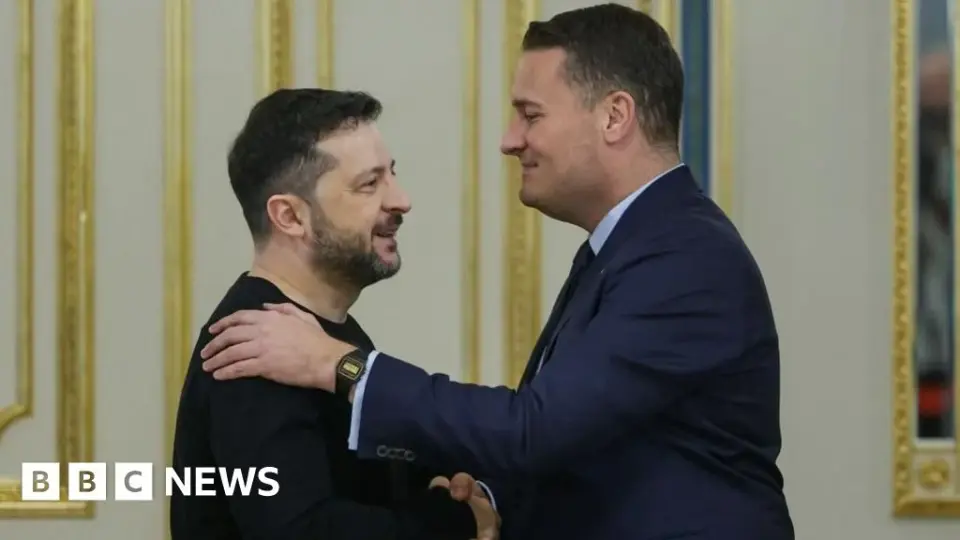
Ukrainian President Volodymyr Zelensky justified repeated strikes on the Kerch Bridge as a proportional response to Russian attacks on Ukrainian infrastructure. The operations, which used indigenous weapons, collapsed the bridge's road span and damaged its rail section, severing a key supply route to occupied Crimea. While UK Defence Secretary Wes Streeting visited Kyiv to reaffirm European support, Russia launched massive retaliatory missile strikes on Kyiv. Meanwhile, a trilateral summit in China between Putin, Trump, and Xi proceeded without European participation, highlighting a growing diplomatic divide.
Key points
- Zelensky called the bridge strikes a 'fair response' to 109 Russian attacks on Ukrainian bridges, rejecting Putin's claim that the structure was exclusively civilian.
- Ukraine’s General Staff confirmed the destruction of the road span and damage to the rail section, noting that the operation relied entirely on Ukrainian technology to avoid US-controlled satellite systems.
- UK Defence Secretary Wes Streeting visited Kyiv to demonstrate European unity, calling Russian missile strikes on Poland during military exercises an 'outrageous provocation.'
- Russia has not set a timeline for repairs, with engineers suggesting the collapsed steel arch could take two years to replace under wartime conditions.
- Putin, Trump, and Xi met in Shenzhen, but Europe excluded its top diplomat from talks, signaling a rift in the approach to ending the war.
Background
This escalation follows a series of Russian strikes on Kyiv infrastructure in late November 2026, which killed at least nine people and damaged energy systems. These attacks were described as retaliation for the initial Ukrainian strike on the Kerch Bridge on November 17. Previous coverage noted that Russian drones also damaged Dutch and Austrian embassies in Kyiv, prompting the EU to summon the Russian ambassador. The current diplomatic landscape is marked by a trilateral summit in China, where Putin rejected a partial ceasefire and blamed Kyiv for the stalemate, while European leaders in Berlin pledged continued financial and military support for Ukraine.
How outlets are covering it
BBC and Al Jazeera emphasize the strategic success of the Ukrainian operation, highlighting the use of indigenous drones and missiles to bypass US satellite restrictions. Fox News presents a more cautious view, citing a European intelligence assessment that warns Russia may intensify its winter offensive despite logistical setbacks. The Moscow Times focuses on the logistical reality, noting that Russia has no timeline for repairs and is diverting traffic through occupied southern Ukraine. While Zelensky frames the strikes as defensive, Putin’s allies in China and Russia characterize the bridge as civilian infrastructure, a claim Zelensky rejects by citing evidence of military logistics. European leaders, including Streeting, frame the situation as a test of unity against Russian aggression, while US negotiators have reportedly threatened to cut intelligence sharing if Ukraine continues striking Russian refineries.
Why it matters
The destruction of the Kerch Bridge disrupts a primary supply line for Russian forces in southern Ukraine, potentially affecting their ability to sustain operations through winter. The incident has intensified diplomatic tensions, with Europe moving to fund a 45 billion euro package for Ukraine while the US and Russia pursue separate negotiations in China. The use of indigenous technology by Ukraine signals a shift toward self-reliance in critical military operations, reducing dependence on Western satellite systems that have faced intermittent disruptions.
What to watch
Russia is expected to continue retaliatory strikes on Ukrainian infrastructure, including bridges and railway stations in Kyiv. Ukraine plans further attacks on the bridge during any repair attempts to prolong disruptions. European leaders are likely to continue providing financial and military aid, while the US and Russia may advance peace proposals that exclude European security guarantees. The outcome of the winter offensive will depend on whether Ukraine can maintain pressure on Russian logistics while managing the political pressure from Washington.
- Zelensky says Crimean Bridge strikes 'fair response' as he meets UK's Streeting BBC
- Ukraine strikes Kerch Bridge as Putin ally declares ‘no one needs Europe’ Al Jazeera
- Ukraine deals major blow to Putin’s Crimea lifeline, European intel assessment claims Fox News
- Ukraine strains Russian logistics with Crimean bridge strikes Reuters
- Russia Has No Timeline for Crimean Bridge Repairs, Deputy PM Says The Moscow Times
Want the full story? Read the original reporting
Read on BBC