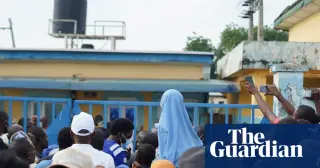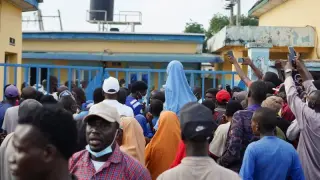
Nigeria has launched a coordinated, multi-agency rescue operation, ordered by President Tinubu, to locate about 600 worshippers abducted from mosques in Niger State as mass kidnappings rise and security becomes a central issue ahead of January elections.
Nigeria’s President Bola Tinubu has ordered a manhunt for armed kidnappers who attacked four villages in the Borgu area of Niger state after the attackers released a video claiming to show abducted residents; authorities say more than 40 people were killed with the final count of abductees unconfirmed and possibly in the hundreds, as residents fled and some sought refuge across borders. The attackers wore military-style clothing and may have planted improvised explosive devices; no ransom demands have been reported, and the incident underscores rising insecurity in the region.
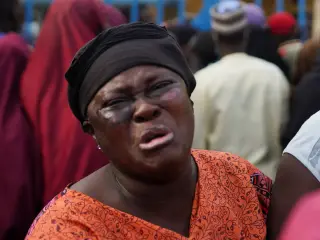
Armed gunmen abducted up to about 600 worshippers during Friday prayers in Dekera village, Niger state, with a video circulating online showing captives in a forest and a gunman addressing families. Verification of the video's date and location is unclear, authorities have not commented, and Amnesty International urged action. The incident underscores a growing pattern of mass abductions in northern Nigeria as security deteriorates ahead of the January presidential elections.
Police in Nigeria’s Niger State are investigating a mass abduction reported at a mosque; authorities have not released numbers or suspects, and details remain unclear as security forces search for those abducted.
Police say dozens have been abducted in attacks on Nigerian villages, part of a broader wave of kidnappings and violence by armed groups across the country.
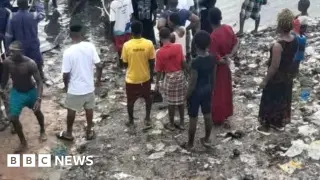
Armed men stormed villages and a mosque in Niger State, Nigeria, abducting dozens of worshippers and residents; police say numbers are unconfirmed but locals report more than 60, with some casualties unverified, and security forces have been deployed to assess and rescue as clashes between Lakurawa and Mahmuda groups highlight a broader pattern of mass abductions in the region.
Nigerian President Bola Tinubu has ordered an investigation into a fake government agency, signaling a crackdown on impersonation and fraud within public institutions.
In Kano, Nigeria, about 1,500 couples wed in a government-sponsored mass wedding funded with roughly 1.5 billion naira to cover dowries, furniture and initial home needs; each couple receives 100,000 naira as dowry and 100,000 naira as startup capital, plus household goods, and must pass comprehensive medical checks overseen by the Hisbah Islamic police. The program, started in 2012 and drawing thousands of applicants (around 5,000 this year), aims to assist low-income couples, but some applicants attempt to game the system with fake partners or altered tests, leading to ongoing vetting; the ceremony culminates at the Emir's palace with a governor-hosted breakfast.
President Tinubu announced a record single-day rescue of 308 abductees—163 from the Woro community in Kwara state and 145 from Niger state—rescued from a forest and now receiving medical care. Described as the largest operation by security forces, it showcases intelligence-led coordination amid Nigeria’s ongoing banditry in the northwest/north-central and a prolonged northeast insurgency.
Nigeria says 308 citizens kidnapped in attacks in Niger and Kwara states were freed in a coordinated, intelligence-led operation by the National Counter Terrorism Centre with the military, police and DSS—the largest single-day rescue by Nigeria's joint security team.
The government says students abducted in May in Nigeria’s Oyo state by Islamic militants have been rescued, with security forces continuing operations to prevent further abductions and ensure broader stability.
Nigeria says two of its nationals were killed in South Africa amid a rise in anti-migrant attacks: Emeka Charles Iroegbu was reportedly killed in Pretoria by police officers using gruesome interrogation techniques, and Musa Yunana Joe was killed in eMalahleni on 28 June. Abuja says the incidents come as foreigners face increasing hostility, with about 25,000 Africans repatriated (including around 700 Nigerians). Nigeria plans to seek compensation and is documenting businesses left behind, while South Africa has signaled it will not pay compensation. Anti-migrant protests and a 30 June deadline for foreigners to leave have heightened tension in a country with high unemployment.
Nigerian migrants repatriated from South Africa are returning to the same economic pressures they fled, as inflation soars after fuel subsidy removal and naira reforms, leaving many with scarce job prospects and a sense that 'home' no longer feels familiar.
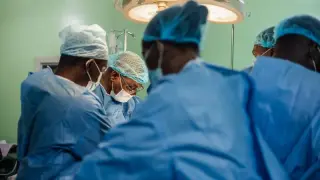
Mercy and Goodness, Nigerian twins fused at the skull, were separated through four AI-guided surgeries totaling about 40 hours, with the final 12-hour operation performed in Abu Dhabi. A multidisciplinary team from around 20 countries, led by Professor Jeelani, carried out the procedures over four months, funded entirely by the UK charity Gemini Untwined. Now three-year-olds, the sisters are healthy and thriving in Nigeria, marking a landmark achievement in craniopagus separation.
Former Nigerian oil minister Diezani Alison-Madueke was cleared of five counts of accepting bribes and a conspiracy to commit bribery in a London court after a 13-year National Crime Agency probe. The jury acquitted her and two co-defendants, with prosecutors arguing bribes funded a lavish lifestyle. The defense contended evidence and delays were flawed. Alison-Madueke called the ruling a long-overdue end to a decade-long nightmare, while the verdict marked a setback for the NCA.