
Coordinated hoax bomb threats disrupt 33 European flights, raising hybrid warfare fears
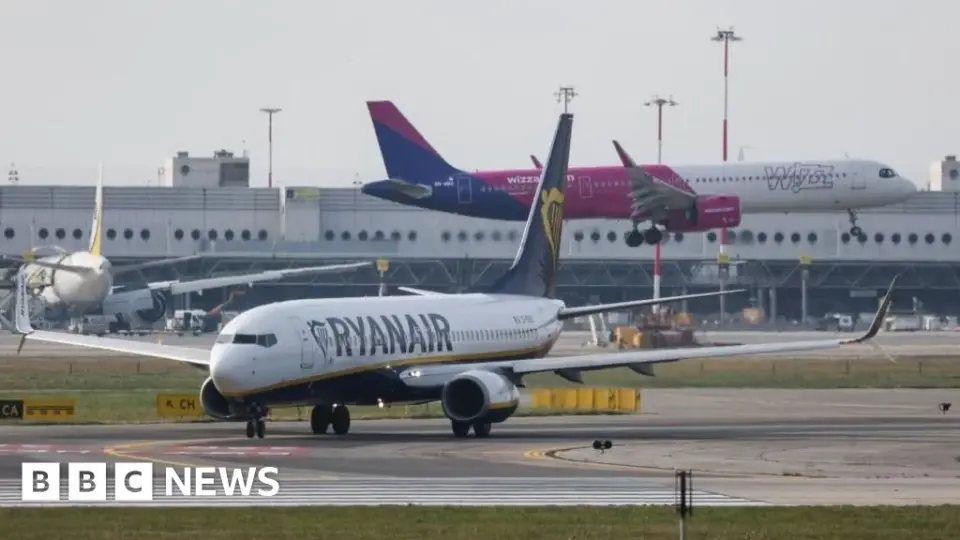
A wave of coordinated hoax bomb threats disrupted at least 33 flights across Europe this week, forcing emergency landings and fighter jet escorts. While no explosives were found, officials and analysts suspect state-sponsored 'sub-threshold' warfare, though no definitive attribution has been made.
Key points
- At least 33 flights were affected by bomb threats this week, with 25 disrupted on Thursday alone, affecting airlines including Ryanair, Aer Lingus, and Finnair.
- All threats were confirmed as hoaxes; no explosives were found, but diversions caused significant delays and required military escorts in Italy and France.
- Threats were sent to airports in Rome and Sofia signed by 'fighters of the Male State,' a Russian far-right group, though its founder denied responsibility.
- Investigations found no evidence of a hostile terror group or state actor, but officials and experts suspect coordinated 'hybrid' or 'sub-threshold' warfare.
- The incidents followed cyber-attacks on supermarket freezers and a blood bank, as well as drone sightings, raising concerns about broader infrastructure targeting.
Background
This week's incidents follow a pattern of disruptions earlier in November, including seven flights grounded on Tuesday and a cruise ship threat in Greece. The current wave is part of a broader series of 'grey zone' actions, including cyber-attacks and drone sightings, that have raised concerns about hybrid warfare tactics targeting European infrastructure.
How outlets are covering it
BBC and The Guardian emphasize the coordinated nature of the threats and the suspicion of Russian 'hybrid' warfare, citing circumstantial evidence like cyber-attacks and drone sightings. NBC News focuses on the immediate operational chaos, detailing specific diversions and security responses, while noting that investigators found no evidence of a state actor. The Guardian highlights the 'Male State' signature, while BBC and NBC stress the lack of definitive attribution. Italian Defence Minister Guido Crosetto explicitly called the incidents 'under-threshold warfare' designed to avoid blame.
Why it matters
The incidents highlight vulnerabilities in European air travel and infrastructure to coordinated, deniable attacks. While no physical harm occurred, the disruptions demonstrate how 'sub-threshold' actions can cause significant economic and social disruption without triggering a formal military response, raising concerns about future security protocols and geopolitical tensions.
What to watch
Investigations across Europe continue to identify the origin of the threats. Authorities are expected to implement enhanced security measures, and airlines may face increased scrutiny and public concern. The lack of definitive attribution may lead to ongoing speculation about state-sponsored hybrid warfare, potentially influencing future diplomatic and security policies in Europe.
- Who could be behind hoax bomb threats to European air travel? BBC
- Bomb threats disrupt at least 25 flights across Europe, raising hybrid war fears The Guardian
- Several flights in Europe diverted due to bomb threats WKRN News 2
- Wave of bomb threats against European airliners triggers diversions and tarmac searches NBC News
- New wave of bomb hoaxes hits at least 27 passenger flights across Europe Reuters
Want the full story? Read the original reporting
Read on BBC