
8th Circuit Revives Missouri GOP Map Despite Supreme Court Blocks
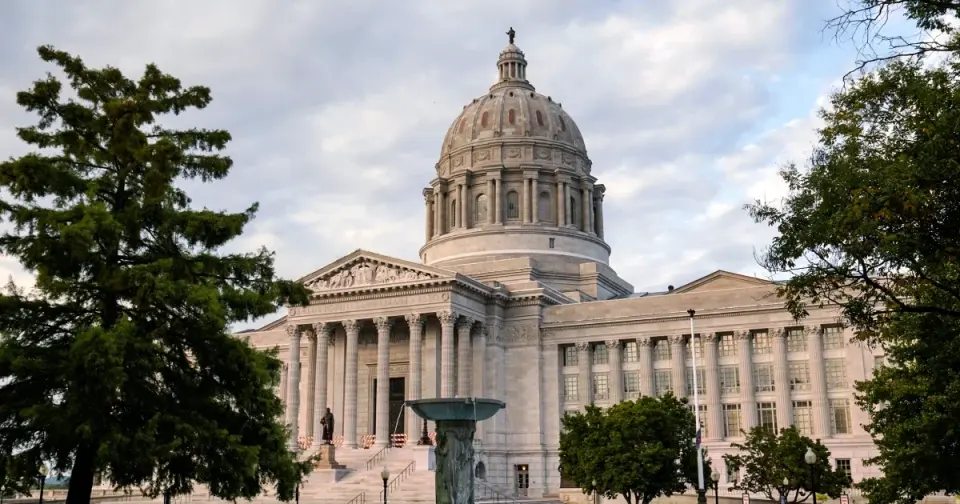
A federal appeals court has ordered Missouri to use a Republican-drawn congressional map for the November 2026 midterms, reversing a state supreme court ruling. The 8th Circuit panel, including two Trump appointees, ruled that using the 2025 map is constitutionally required, despite the U.S. Supreme Court twice blocking its use earlier in September. The decision is stayed for one week to allow challengers to seek further Supreme Court review. If implemented, the new map would eliminate a Democratic-held district in Kansas City, potentially giving Republicans a 7-1 advantage in the state’s House delegation. Opponents argue the move is logistically impossible as ballots are already printed and mailed, while supporters claim the switch creates voter confusion. The dispute highlights a deep conflict between federal and state judicial interpretations of redistricting law.
Key points
- The 8th U.S. Circuit Court of Appeals ruled that Missouri must use the 2025 congressional map for the November 2026 general election, stating that using the 2022 map violates the Constitution.
- The ruling was issued by a panel of three judges, including two appointed by President Donald Trump (Justin Smith and David Stras) and one by George H.W. Bush (James Loken), though Stras dissented on standing grounds.
- The decision directly contradicts the Missouri Supreme Court, which ruled 7-0 that the 2025 map never legally took effect due to a pending ballot referendum, and the U.S. Supreme Court, which twice blocked the new map in September.
- The new map is designed to eliminate the district of Democratic Rep. Emanuel Cleaver in Kansas City, aiming to shift the state’s House delegation from 6-2 to 7-1 in favor of Republicans.
- The appeals court stayed its order for one week to allow opponents to seek Supreme Court intervention, noting that ballots have already been printed and mailed to overseas and military voters.
- Opponents, including the group People Not Politicians, called the legal action a waste of taxpayer money and argued that changing districts at this stage is practically impossible and costly.
Background
This dispute follows a series of rapid legal reversals in September 2026. On September 8, the U.S. Supreme Court denied an emergency request by Missouri Republicans to use the new map, upholding the state supreme court’s decision to use the 2022 map. Two days later, the Supreme Court paused a federal district court order that had favored the new map. The current 8th Circuit ruling attempts to resolve these conflicting decisions by prioritizing the map used in the August primary, arguing that consistency between primary and general elections is constitutionally required. The conflict stems from a referendum petition that opponents of the new map gathered signatures for, which the Republican Secretary of State initially rejected, leading to the state supreme court’s intervention.
How outlets are covering it
NBC News and The New York Times emphasize the logistical impossibility of the ruling, noting that ballots are already printed and mailed, and that the Supreme Court has twice blocked the new map. They highlight the confusion for voters and the potential for wasted taxpayer resources. Politico focuses on the legal interpretation, noting that the 8th Circuit viewed the Supreme Court’s lack of explanation in its previous rulings as an opportunity to act, and details the dissenting opinion of Judge David Stras regarding the plaintiffs' standing. WBAL-TV highlights the constitutional conflict between the federal and state courts and the practical challenges for local election officials, such as the inability to change votes for those who have already cast absentee ballots. All sources agree that the ruling is unlikely to take effect immediately due to the one-week stay and the likelihood of further Supreme Court review.
Why it matters
The outcome of this case could determine the balance of power in the U.S. House of Representatives. If the 2025 map is used, Republicans could gain an additional seat in Missouri, contributing to a projected net gain of nine House seats for the GOP nationwide due to mid-decade redistricting. The case also sets a precedent for how federal courts will handle conflicts between state supreme courts and federal redistricting orders, particularly when ballot referendums are involved. The ruling underscores the increasing role of the judiciary in shaping electoral outcomes and the potential for voter confusion when district boundaries change between primary and general elections.
What to watch
Opponents of the new map, including the group People Not Politicians, have indicated they will file an emergency appeal to the U.S. Supreme Court within the one-week stay period. If the Supreme Court denies the appeal or does not intervene, state and local officials will be required to implement the 2025 map for the November election, despite the logistical challenges of reprinting ballots and reassigning voters. The Supreme Court’s previous lack of explanation in its September rulings may influence its decision on this final appeal, potentially leaving the 8th Circuit’s ruling as the final word on the matter.
- Appeals court seeks to revive GOP congressional map in Missouri NBC News
- Appeals court revives GOP gerrymander in Missouri that Supreme Court killed off twice Politico
- Appeals court favors Trump-backed Missouri congressional map, but Supreme Court will have final say WBAL-TV
- Appeals Court Sides With Missouri Republicans on Redrawn House Map The New York Times
- Appeals court rules in favor of Trump-backed Missouri congressional maps The Guardian
Want the full story? Read the original reporting
Read on NBC News