
Israel Election Stalemate Leaves Netanyahu as Caretaker Amid Coalition Deadlock
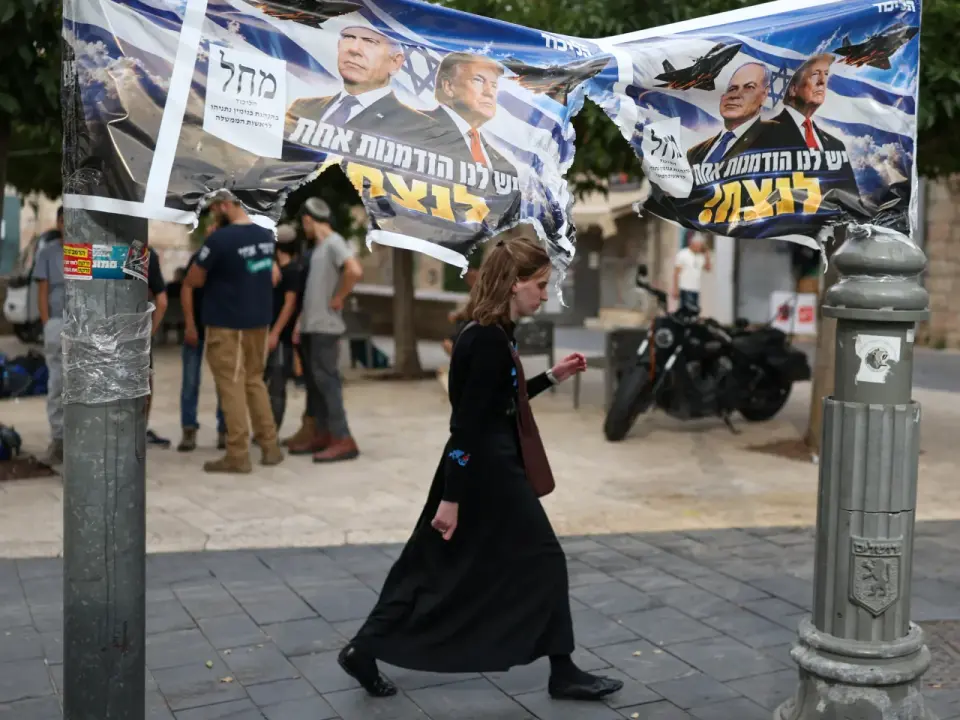
With nearly 90% of votes counted, Israel’s 2026 election has produced no clear winner. Benjamin Netanyahu’s bloc is projected to win 53 seats, while opposition leader Gadi Eisenkot’s bloc is expected to secure 48 seats in the 120-member Knesset. Both fall short of the 61 seats required to form a government. Arab-led parties are projected to hold a record 19 seats, potentially influencing coalition dynamics. President Isaac Herzog will begin consultations next week, but coalition building remains complex due to mutual rejections of minority governments involving Arab parties.
Key points
- Netanyahu’s bloc is on track for 53 seats, while Eisenkot’s opposition bloc is projected to win 48 seats, leaving both short of the 61-seat majority needed to govern.
- Arab-led parties, including the Joint List and Ra’am, are projected to secure a record combined 19 seats, with the Joint List claiming their turnout helped prevent a Netanyahu majority.
- More than 500,000 special double-envelope ballots, including those from soldiers and diplomats, remain to be counted, which could alter the final seat distribution.
- President Isaac Herzog will begin consulting party leaders next week to form a new government, urging parties to avoid a second vote, though coalition building is historically complex in Israel.
- Netanyahu’s Likud party accused Arab parties of stealing the election through bribery and violence, while the Joint List rejected joining an anti-Netanyahu government but pledged to support one from outside.
Background
This election follows the October 7, 2023, attacks and the subsequent Gaza conflict, with many voters viewing the vote as a referendum on Netanyahu’s leadership. Previous exit polls and early reports indicated a fragmented result, with both major blocs tied at 51 seats and Arab-led parties surging to 16-18 seats. Turnout reached a 20-year high at 77%, but the counting of absentee ballots delayed final results until Thursday.
Why it matters
The lack of a clear winner prolongs political uncertainty in Israel, potentially delaying critical policy decisions and coalition formation. The record number of seats for Arab-led parties may shift the balance of power, though both major blocs have rejected minority governments involving Arab parties. The outcome could influence regional stability and domestic policies, including those related to the Gaza conflict and Arab citizens' rights.
What to watch
President Isaac Herzog will begin consulting party leaders next week to form a new government. Final election results are expected by Thursday evening, after the counting of over 500,000 special double-envelope ballots. Coalition negotiations will likely be complex, with analysts predicting a potential unity government between Netanyahu and Eisenkot, though this outcome is uncertain.
- No clear winner in Israel election with nearly 90 percent of votes counted Al Jazeera
- Israel’s Parties Gird for Wrangling to Form a Government, With No Clear Path The New York Times
- Netanyahu set to remain caretaker after inconclusive Israeli election Reuters
- What's next for Israel after election produces political gridlock PBS
- Progressive US Jews call for Eisenkot-led opposition bloc to welcome Arab parties The Times of Israel
Want the full story? Read the original reporting
Read on Al Jazeera