
Israel Votes in High-Stakes Election as Netanyahu and Eisenkot Face Deadlock
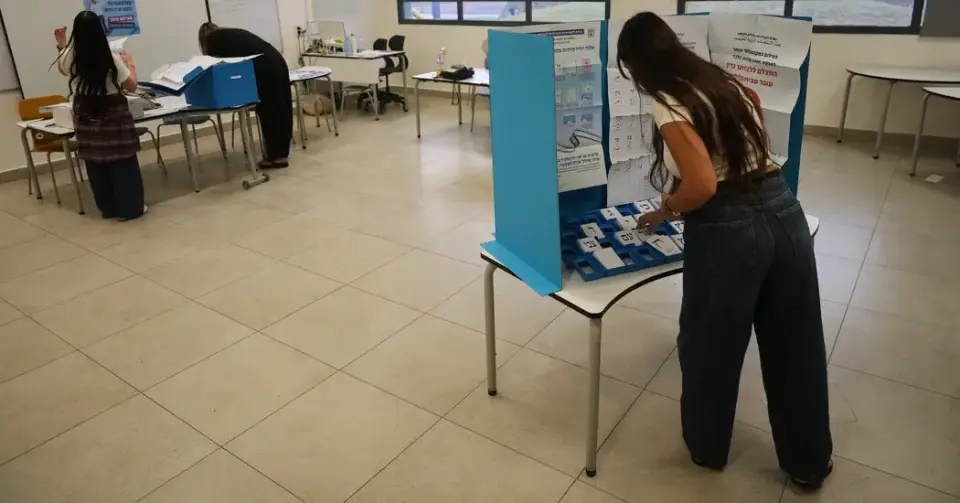
Israelis voted on October 27 in a pivotal election seen as a referendum on Prime Minister Benjamin Netanyahu’s leadership since the 2023 Hamas attacks. The race is extremely tight between Netanyahu’s far-right coalition and an opposition bloc led by former military chief Gadi Eisenkot. Neither side is expected to secure the 61 seats needed for a majority, likely triggering weeks of complex coalition negotiations or a potential deadlock. Key issues include the aftermath of the Gaza war, judicial reforms, and ultra-Orthodox conscription exemptions.
Key points
- Polls opened at 7 a.m. local time and close at 10 p.m., with over 7.3 million eligible voters, including approximately 630,000 abroad who returned to vote.
- Netanyahu, 77, seeks re-election with a coalition of nationalists and ultra-Orthodox parties, framing the vote as a choice between security and a Palestinian state.
- Gadi Eisenkot, 66, leads a fractious opposition bloc, campaigning on accountability for the October 7, 2023 failures and restoring Israel’s international standing.
- No party is expected to win a clear majority; forming a government requires at least 61 seats in the 120-seat Knesset, a process that can take weeks or months.
- The election follows three years of war in Gaza, Lebanon, and Iran, with over 74,000 Palestinians killed in Gaza according to local health authorities.
Background
This is Israel’s first national election since the October 7, 2023, Hamas-led attacks, which ignited a three-year war. Previous coverage highlighted the deep political divisions, the rise of far-right parties, and the critical role of Arab and ultra-Orthodox parties as potential kingmakers. The 2022 election was the fifth in three years, reflecting chronic instability. The current race is defined by the aftermath of the Gaza war, judicial reform controversies, and the ultra-Orthodox conscription debate.
How outlets are covering it
The New York Times emphasizes the election as a 'make-or-break' moment for Israel’s democracy, highlighting Netanyahu’s push for judicial reforms and tighter control over the West Bank. AP News focuses on Netanyahu’s legacy as a 'political survivor' and the 'failure government' narrative of his opponents, noting the international arrest warrant and genocide accusations. CNBC highlights the logistical efforts of diaspora voters, with up to 80,000 returning to vote, and the potential for a minority government. BBC stresses the 'deadlock' risk and the complex coalition math, noting that both major blocs have ruled out governing with Arab partners, though some speculate an informal support arrangement could emerge. All sources agree on the tight race and the high stakes, but differ in emphasis: NYT and AP focus on democratic and security implications, while CNBC and BBC highlight the structural and logistical challenges of forming a government.
Why it matters
The outcome will determine Israel’s direction on security, democracy, and its relationship with the international community. A Netanyahu victory could deepen judicial reforms and far-right policies, while an Eisenkot-led government might prioritize accountability for October 7 and repair Israel’s global image. A deadlock could lead to new elections or a minority government, prolonging instability. The election also affects Palestinians in the West Bank and Gaza, who face continued military rule and settler violence regardless of the outcome.
What to watch
Official results are expected by November 4. Within seven days, President Isaac Herzog will assign a candidate to form a government, typically the leader of the largest party. The candidate has 28 days to negotiate a coalition, with a possible 14-day extension. If no government is formed, a second candidate may be tried, followed by a third. If all fail, new elections will be called. Exit polls will be published at 10 p.m. local time, but many votes from soldiers and reservists may not be counted until Wednesday.
- Israel Election Live Updates: Polls Open as Netanyahu Faces Challenge Led by Eisenkot The New York Times
- Israel election: What happens after polls close? Reuters
- Netanyahu’s legacy is on the line as Israelis vote in the first elections since the Oct. 7 attack AP News
- Israeli election draws tens of thousands of citizens flying back to vote CNBC
- Israel heads to polls for pivotal election defined by security and democracy BBC
Want the full story? Read the original reporting
Read on The New York Times