
Keiko Fujimori Sworn In as Peru’s Ninth President in a Decade Amid Deep Polarization
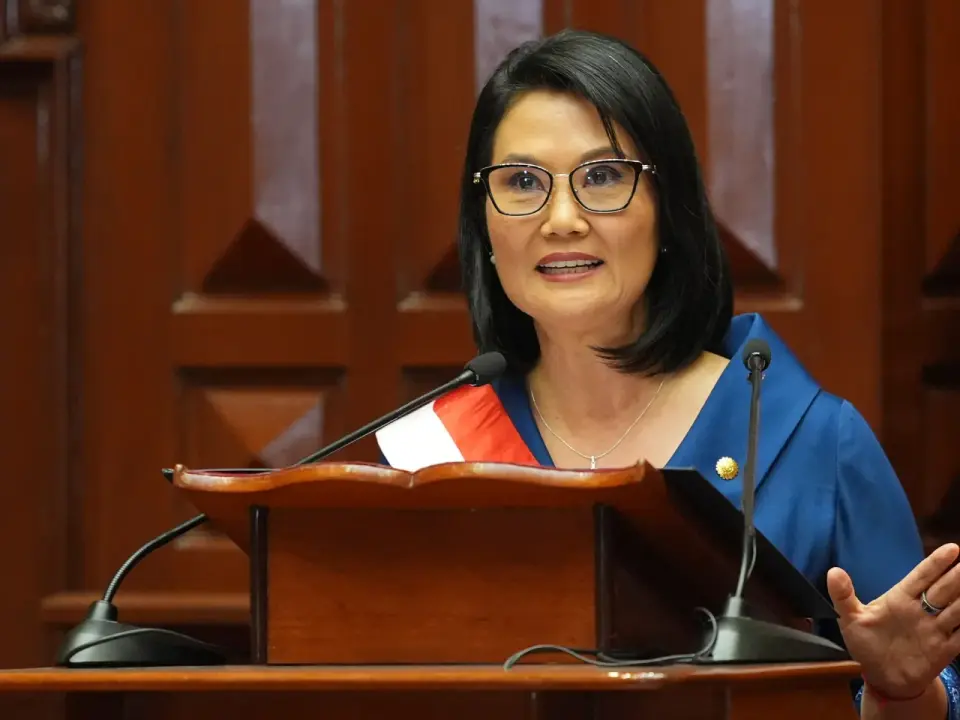
Keiko Fujimori has been sworn in as Peru’s president, becoming the country’s ninth leader in a decade after winning a razor-thin runoff against Roberto Sanchez by fewer than 50,000 votes. Her inauguration marks the return of the Fujimori political dynasty, with critics fearing a return to her father’s authoritarian tactics. She pledges to combat Peru’s severe security crisis with an 'iron fist,' proposing measures such as a mega-prison modeled on El Salvador’s Cecot facility and anonymous judges. While her party holds half the Senate seats, making removal difficult, opposition groups demand justice for past abuses and the reversal of laws that weaken anti-crime efforts.
Key points
- Fujimori was sworn in on July 28, 2026, defeating left-wing rival Roberto Sanchez by a margin of fewer than 50,000 votes in the June runoff.
- She becomes Peru’s ninth president in a decade, a period marked by frequent removals, resignations, and political instability.
- Her campaign focused on law and order, promising to tackle extortion and gang violence with an 'iron fist,' including a mega-prison model and anonymous judges.
- Her Fuerza Popular party and its ally hold half the Senate seats, making impeachment difficult, though they lack a majority to pass her full agenda.
- Critics and relatives of victims of state violence protested her inauguration, demanding justice for abuses under her father’s administration and the reversal of recent laws that weaken anti-crime measures.
Background
Peru has experienced significant political turbulence over the last decade, with only three presidents elected by popular vote; the rest assumed office after predecessors were removed or resigned. The Fujimori name carries deep historical weight: Alberto Fujimori, Keiko’s father, ruled in the 1990s, credited with defeating the Shining Path and controlling hyperinflation, but was later convicted of corruption and crimes against humanity, serving 16 years in prison before being pardoned in 2023 and dying in 2024. Keiko entered politics at 19 as first lady and has been a central figure for decades. Her narrow victory follows a broader conservative shift in Latin America, where conservatives have won seven major presidential elections in recent years, driven by concerns over crime and economic stagnation.
How outlets are covering it
Al Jazeera emphasizes the fear among critics that Fujimori will replicate her father’s authoritarian tactics, highlighting protests by relatives of victims of state violence and the potential erosion of civil liberties. NPR frames her victory as part of a broader regional shift toward conservatism in South America, noting that her win, along with those in Colombia and Chile, contrasts with the left-wing dominance of previous decades. Both sources agree on the narrow margin of victory and the political instability of the past decade, but NPR places more emphasis on the economic stability of Peru and the social deficit Fujimori aims to address, while Al Jazeera focuses more on the civil rights concerns and the divisive legacy of the Fujimori dynasty.
Why it matters
Fujimori’s inauguration signals a potential return to authoritarian-leaning governance in Peru, raising concerns about civil liberties and the rule of law. Her proposed security measures, including a mega-prison and anonymous judges, could have significant implications for human rights and the judicial system. The narrow victory and the polarized political landscape suggest that Peru will face continued instability, with opposition groups demanding accountability for past abuses and the reversal of laws that critics say weaken anti-crime efforts. The outcome also reflects a broader trend in Latin America toward conservative leadership, driven by voter anxiety over crime and economic challenges.
What to watch
Fujimori will begin implementing her security agenda, including the construction of a mega-prison and the deployment of the military in crime-afflicted areas. She will also focus on economic issues, including a 15% increase in the minimum wage and infrastructure development through public-private partnerships. Opposition leaders will push for the reversal of recent laws that weaken anti-crime measures and the creation of a commission to investigate the deaths of 50 civilians during protests in 2022 and 2023. The political dynamics in the Senate will be crucial, as Fujimori’s party holds half the seats but lacks a majority to pass her full agenda.
- Keiko Fujimori sworn in as Peru president after narrow election win Al Jazeera
- Keiko Fujimori is inaugurated as Peru's president following a narrow election victory NPR
- Opinion | Keiko Fujimori and Peru’s China Challenge WSJ
- Peru's Fujimori takes power, extending Latin America's rightward tilt Reuters
- Fujimori Sworn In, Giving Peru Shot to Break Cycle of Chaos Bloomberg.com
Want the full story? Read the original reporting
Read on Al Jazeera