
Supreme Court Blocks Missouri's 7-1 Congressional Map, Preserving 2022 Boundaries for Midterms
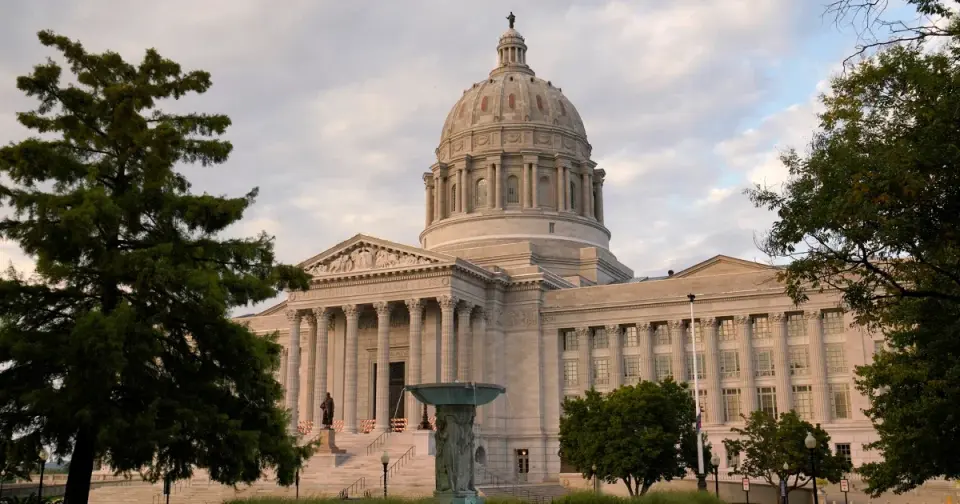
The U.S. Supreme Court has denied Missouri’s request to use a new congressional map for the 2026 midterm elections. The decision upholds a state court ruling that blocks the 2025 Republican-drawn map, which was designed to eliminate a Democratic seat, in favor of the 2022 map. This move preserves the status quo of six Republican and two Democratic seats in Missouri, with the latter held by Rep. Emanuel Cleaver. The ruling follows a legal battle over a voter referendum challenging the new map's validity.
Key points
- Justice Brett Kavanaugh issued a brief order rejecting Missouri's emergency bid to use the 2025 redistricting plan for the November 2026 elections.
- The 2025 map, enacted under pressure from President Donald Trump, was designed to flip the 5th Congressional District from Democratic to Republican by redrawing its boundaries.
- The Missouri Supreme Court previously ruled that a referendum petition, signed by over 300,000 people, was valid and required the new map to be put on hold until voters decided its fate.
- Missouri Secretary of State Denny Hoskins had refused to place the referendum on the ballot, arguing that redistricting plans are exempt from voter veto under state law.
- The U.S. Supreme Court rejected Hoskins' argument that the state court ruling violated the U.S. Constitution's elections clause, noting similar arguments were rejected in a 2023 North Carolina case.
- The 2022 map, which includes six Republican-held seats and two Democratic-held seats, will remain in effect for the 2026 general election.
Background
This decision is part of a broader national trend of mid-decade redistricting efforts prompted by President Donald Trump. The Supreme Court has been actively involved in similar disputes, including a 2023 case in North Carolina and a 2026 case in Virginia, where it rejected attempts to revive or block maps based on similar constitutional arguments. The Missouri case is notable as a rare setback for Republicans in their efforts to gain an advantage through redistricting, as the state's new map was part of a wave of changes aimed at maximizing political power. The 2022 map, which was based on the 2020 census, has been in place since the last redistricting cycle, and its preservation for the 2026 election ensures that the current balance of power in Missouri's congressional delegation remains unchanged.
How outlets are covering it
NBC News and CNN both report on the Supreme Court's decision to reject Missouri's request to use the new congressional map, but they emphasize different aspects of the case. NBC News focuses on the legal battle between the Missouri Supreme Court and the U.S. Supreme Court, highlighting the role of Justice Brett Kavanaugh and the arguments made by Missouri Secretary of State Denny Hoskins. CNN, on the other hand, emphasizes the political implications of the decision, noting that it is a rare setback for Republicans in their efforts to gain an advantage through redistricting. CNN also highlights the broader context of the Supreme Court's involvement in similar cases, including the 2023 North Carolina case and the 2026 Virginia case. Both outlets agree that the 2022 map will remain in effect for the 2026 election, but they differ in their emphasis on the legal versus political dimensions of the case.
Why it matters
The Supreme Court's decision to block Missouri's new congressional map has significant implications for the 2026 midterm elections. By preserving the 2022 map, the court has prevented Republicans from gaining an additional seat in the U.S. House of Representatives, which could have shifted the balance of power in the chamber. The decision also highlights the ongoing legal and political battles over redistricting, as states continue to attempt to redraw their congressional maps to gain a political advantage. The case underscores the importance of the Supreme Court in resolving disputes over the validity of redistricting plans and the role of voter referendums in the process. Additionally, the decision may have implications for other states that have attempted to enact new redistricting plans, as it sets a precedent for the use of voter referendums to challenge such plans.
What to watch
The next steps in this case will likely involve the implementation of the 2022 map for the 2026 midterm elections. Missouri officials will need to ensure that the 2022 map is used in the general election, and that the referendum on the 2025 map is placed on the ballot as required by the Missouri Supreme Court. The outcome of the referendum will determine whether the 2025 map will be used in future elections, or whether the 2022 map will remain in effect. Additionally, the decision may have implications for other states that have attempted to enact new redistricting plans, as it sets a precedent for the use of voter referendums to challenge such plans. The Supreme Court may also be asked to rule on similar cases in the future, as states continue to attempt to redraw their congressional maps to gain a political advantage.
- Supreme Court rejects Missouri Republicans’ request to use new congressional map NBC News
- Justice Kavanaugh Blocks Missouri Voting Map Benefiting Republicans The New York Times
- Supreme Court rejects Missouri’s request to use congressional map with extra GOP seat CNN
- Kavanaugh declines to lift block on Missouri’s GOP-friendly congressional map The Hill
- Republicans created Missouri’s redistricting mess. Now they’re furious about it. Missouri Independent
Want the full story? Read the original reporting
Read on NBC News