
Supreme Court blocks Trump mail-ballot rule weeks before midterms
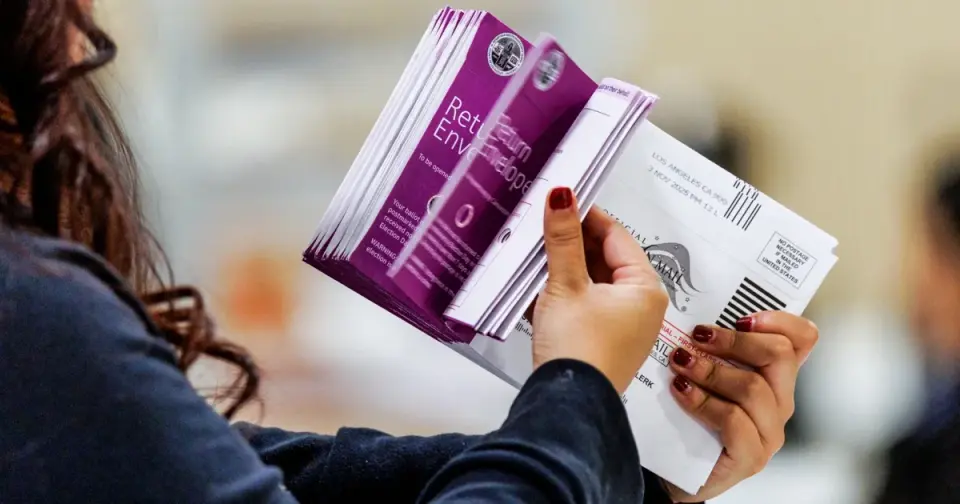
The Supreme Court blocked a U.S. Postal Service regulation that would have imposed new requirements on state mail-in ballot processes ahead of the 2026 midterm elections. The court rejected an emergency request from the Trump administration to enforce the rule, which required states to submit voter lists and pre-approve envelope designs. The decision, which appeared 7-2, allows states to continue their current voting processes as ballots are already being sent. Dissenting justices argued the Postal Service had the authority to issue the rule, but the majority and lower courts found the timing too late to avoid disenfranchisement and noted a lack of evidence for widespread fraud.
Key points
- The Supreme Court rejected the Trump administration's emergency application to enforce a USPS regulation on mail-in ballots, preventing it from taking effect before the November 2026 midterms.
- The regulation required states to submit eligible voter lists to the Postal Service and comply with specific envelope design standards, a role the Postal Service typically does not hold.
- The court appeared divided 7-2, with Justices Clarence Thomas and Samuel Alito dissenting; Justice Brett Kavanaugh concurred that the rule must be blocked due to timing but noted a 'fair prospect' the Postal Service has authority.
- Lower court rulings, including those by Judges Indira Talwani and Carl Nichols, found the rule likely unlawful and noted the administration provided no evidence of significant election fraud to justify the sudden changes.
- North Carolina began sending mail-in ballots on September 4, and the Supreme Court's decision allows the state and others to maintain their existing processes, with officials noting the new system was not technically ready for implementation.
Background
This dispute follows a March 2026 executive order by President Trump, issued after Congress failed to pass the SAVE America Act. In August 2026, the Supreme Court initially allowed parts of the plan to proceed, but lower courts subsequently issued injunctions. The current ruling concludes a rapid legal battle that began in September, where the DOJ sought to stay injunctions to enforce the rule before the midterms.
How outlets are covering it
NBC News and WRAL emphasize the decisive nature of the Supreme Court's block and the practical impossibility of implementing the rule so close to the election. The New York Times highlights that a second lower court judge, a Trump appointee, also blocked the plan, reinforcing the legal consensus against it. Democracy Docket focuses on the administration's failure to provide any record evidence of voter fraud, noting that the DOJ's arguments in court were constrained by the lack of factual support for claims of widespread noncitizen voting. While the White House described the rule as a 'modest' design requirement, critics and lower courts argued it would cause significant disenfranchisement and disrupt state election administration.
Why it matters
The ruling preserves the status quo for mail-in voting in the 2026 midterms, preventing potential disruptions to millions of voters. It reinforces the principle that states, rather than the federal government, primarily control election administration and limits the Postal Service's role in verifying voter eligibility. The decision also highlights the legal limits on emergency federal regulations that lack evidentiary support for the problems they claim to solve.
What to watch
The litigation is expected to continue regarding the broader executive order, though the immediate threat to the 2026 midterms has been resolved. States will proceed with their current mail-in ballot processes, and the Postal Service will not enforce the new verification requirements for this election cycle. Future legal challenges may address the underlying authority of the Postal Service to regulate ballot delivery, but the specific rule for 2026 is now blocked.
- Supreme Court says Trump cannot enforce new mail-in ballot regulation NBC News
- Trump’s radical plan is to make the postal service an election gatekeeper thehill.com
- As Supreme Court Weighs Trump Mail Ballot Plan, Another Judge Blocks It The New York Times
- Trump admin offers no evidence of election fraud in court battle over mail voting restrictions Democracy Docket
- Another federal judge blocks Trump mail-in ballot plan as NC voting-access advocates rally WRAL
Want the full story? Read the original reporting
Read on NBC News