
Trump threatens tax penalties for US tech firms building data centers abroad
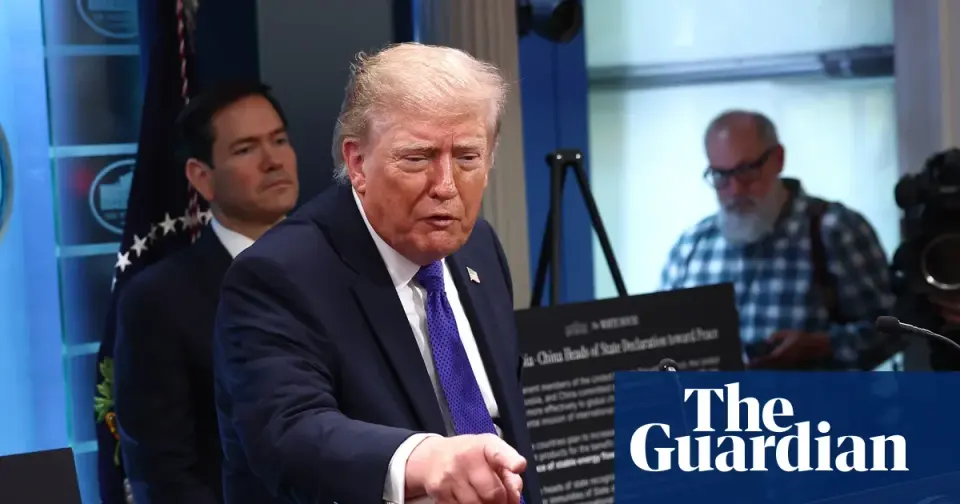
President Donald Trump announced a plan to impose 'tremendous penalties' on American technology companies that build data centers outside the United States, citing fears that China would seize such infrastructure. The announcement, made at a White House press conference, lacks specific enforcement details, and Trump admitted he had not yet briefed his own officials. The move follows a recent administration rule restricting remote access to advanced US computing chips and occurs amid significant public opposition to local data center construction.
Key points
- Trump threatened to impose 'tremendous penalties' or taxes on US tech firms building data centers abroad to prevent China from accessing them.
- The president admitted he had not yet informed his own officials about the plan, describing it as a new directive.
- Trump defended his relationship with Russian President Vladimir Putin, calling it 'fantastic' despite Russia's alliance with Iran.
- The administration recently issued rules to restrict remote access to advanced US computing chips to limit China's AI capabilities.
- Trump expressed optimism about working with incoming Democratic House Speaker Hakeem Jeffries and Texas Governor-elect Gina Hinojosa on issues like immigration and healthcare.
Background
This announcement follows a series of recent developments regarding AI infrastructure and US-China relations. In early November, the Trump administration issued new rules to restrict remote access to advanced US computing chips and servers, aiming to limit China's ability to train AI models. This move came despite reports that the US had approved sales of nearly 900,000 AI chips to China in the previous six months. Additionally, the controversy surrounding Nvidia CEO Jensen Huang, who was fired after allegations involving a relationship with a woman alleged to be a Chinese spy, has heightened scrutiny on US tech exports. Public opposition to local data centers remains high, with recent polls indicating that 64% of registered voters oppose AI data centers within 10 miles of their homes, prompting the tech industry to promise greater transparency and community concessions.
How outlets are covering it
The Guardian and CNBC emphasize the lack of detail in Trump's announcement, noting that he had not briefed his own staff and that the policy could face practical challenges given that major US tech firms like Alphabet, Amazon, and Microsoft have already built data centers abroad. The New York Times frames the announcement as part of a 'freewheeling' press conference where Trump touted his diplomatic achievements in Asia but produced few concrete results on global issues like the Ukraine war or nuclear proliferation. CNN highlights the broader context of the press conference, including Trump's defense of his relationship with Putin and his willingness to work with Democrats, while also noting the administration's recent restrictions on chip sales to China. All sources agree that the policy is a significant shift in US tech policy, but they differ in their assessment of its feasibility and the broader diplomatic implications of Trump's Asia trip.
Why it matters
The threat of penalties on US tech firms building data centers abroad could reshape global AI infrastructure and US-China relations. If implemented, it could force major tech companies to consolidate their operations domestically, potentially affecting their global competitiveness and compliance with international regulations. The move also signals a more aggressive stance by the Trump administration in protecting US technological advantages, which could have significant implications for the global AI race and international trade dynamics.
What to watch
The next steps will likely involve the Trump administration developing specific enforcement mechanisms for the threatened penalties, as Trump admitted he had not yet briefed his officials. There may be further announcements on how the policy will be implemented and what the specific penalties will entail. Additionally, the administration may continue to engage with Congress and international partners to address the broader issues of AI infrastructure and US-China relations, potentially leading to new legislation or trade agreements. The response from major US tech companies and their international partners will also be closely watched to gauge the policy's impact and feasibility.
- Trump threatens ‘tremendous penalties’ for US tech firms that build datacenters abroad The Guardian
- Trump defends Putin relationship and says he’ll stop US companies from building data centers abroad CNN
- Live Updates: Trump Speaks on China Summit, Trade Deals and Data Centers The New York Times
- Trump vows to stop U.S. companies from building data centers abroad, threatens 'tremendous tax' CNBC
- Trump delights in pomp of Asia trip, with no breakthroughs to report The Washington Post
Want the full story? Read the original reporting
Read on The Guardian