
US and China Establish Trade and AI Channels Following Washington Summit
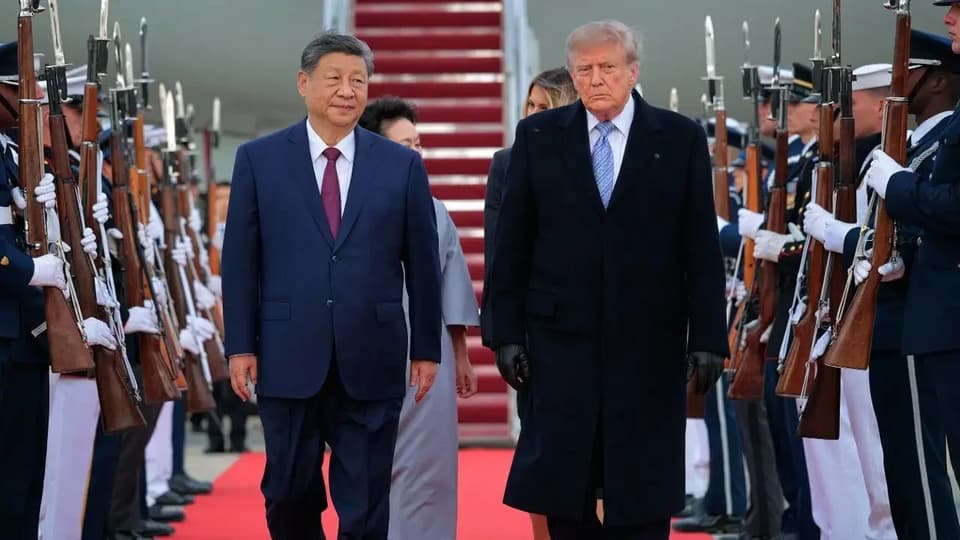
The United States and China agreed to reduce tariffs on $30 billion in non-sensitive goods and establish new communication channels for artificial intelligence and military crises following a three-day summit in Washington. The deal, reached through a newly formed Board of Trade, includes specific commitments on agricultural imports and coal purchases, marking a significant de-escalation from the peak tariffs of 2025.
Key points
- Reciprocal tariff reductions apply to $30 billion in goods, including US agricultural products, medical devices, and Chinese toys and car seats.
- A new Board of Trade and Board of Investment were established to manage ongoing bilateral disputes and investment opportunities.
- The two nations agreed to create a communication mechanism for AI incidents, with a specific dialogue scheduled for November.
- China committed to importing at least 10 million metric tons of US coal in 2027 and 2028.
- Both sides agreed to continue working on rare earth supply levels and fentanyl precursor controls.
Background
This agreement follows a series of interim truces since February 2025, when US tariffs on Chinese goods peaked at 145%. Previous negotiations in Geneva and South Korea had lowered these rates to 30% and 10% respectively. The current summit in Washington, the first state visit in over a decade, aimed to solidize these reductions and address lingering tensions regarding technology and supply chains.
How outlets are covering it
Fox News emphasizes the economic scope of the $30 billion tariff reduction and the specific product categories receiving preferential treatment. CBS News highlights the broader diplomatic framework, noting that while no major breakthroughs occurred, the establishment of military and AI crisis channels represents a move toward institutionalized stability. Axios focuses on the terminology shift, noting Trump's insistence on using 'super intelligence' instead of 'artificial intelligence' in official dialogues. Analysts cited by CBS suggest that while fundamental differences remain, the working-level engagement is a notable step toward durable stability.
Why it matters
The agreement reduces the risk of a renewed trade war and provides a structured mechanism for managing technological and military disputes. By lowering tariffs on essential consumer and agricultural goods, the deal aims to stabilize prices and supply chains for both nations. The new AI communication channel is critical for preventing accidental escalations in a sector where the US and China are competing for global dominance.
What to watch
Detailed tariff rates and product lists are expected to be released by the US Trade Representative on Monday. The two nations are scheduled to meet again at the Asia-Pacific Economic Cooperation summit in Shenzhen in November, followed by the G20 in Florida. Further negotiations on rare earth supply and investment impediments will continue through the newly established boards.
- US, China strike deal to lower tariffs on $30B in goods after Trump-Xi Washington summit foxnews.com
- Trump and Xi agree to set up AI safety channel as military and trade talks continue cbsnews.com
- China, US agree to AI dialogue, tariff cuts on $30 billion in goods during Xi visit Reuters
- U.S. and China agree to "super intelligence" dialogue amid AI tensions Axios
- Here’s a Comparison of US, China Readouts on Trump-Xi Summit bloomberg.com
Want the full story? Read the original reporting
Read on foxnews.com